Grains
Alfalfa
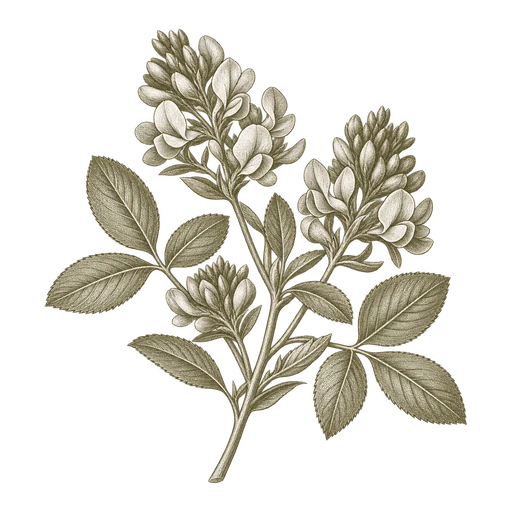
Alfalfa is a forage legume sourced as hay, silage, meal or pellets for livestock feed. Match the form to receiving and ration needs, then compare a lot-specific analysis on a consistent basis.
Explore ingredientPowdered sugar’s fine particles distinguish it from crystalline sucrose, while starch or another anticaking agent can make one powdered formulation behave differently from another. Understand both factors before substituting or scaling a food recipe.
Powdered sugar is sucrose milled into fine particles. Granulated sugar is also sucrose, but its larger crystals behave differently during mixing: particle size affects how the sweetener disperses and how it feels in the finished product. Powdered sugar can be useful when a recipe calls for a fine, readily incorporated sugar rather than distinct crystals.
The name alone does not tell you the whole formulation. Some powdered sugars contain starch or another anticaking agent to help limit clumping; other formulations may differ. That ingredient is part of the product being purchased, not an incidental detail to overlook.
An anticaking agent helps keep fine sugar particles from adhering to one another during storage and handling. In a recipe, however, it also becomes part of the blend. Starch can contribute solids and affect how the mixture handles moisture or develops texture. The effect depends on the amount and type of agent, the other ingredients, and the process; there is no single outcome that applies to every formula.
For that reason, powdered sugar containing starch should not automatically be treated as a one-for-one replacement for crystalline sucrose—or for a powdered product with a different formulation. Changing the product may affect sweetness per unit of ingredient, texture, mixing, or the balance of other solids. Whether those changes matter depends on the intended product.
In icing and frosting, fine particles can help create a smooth mixture and incorporate sugar without leaving the same crystal presence as granulated sugar. If the powdered sugar includes starch, it may also influence the finished body or consistency. A change in formula can therefore require a trial, especially where spread, firmness, or mouthfeel matters.
For dusting or dry blends, particle fineness affects appearance and dispersion. A starch-containing product may behave differently from one without that addition, including when exposed to moisture. In baking, recipes may be designed around a particular sugar form, so changing from granulated to powdered sugar changes both particle size and potentially the ingredient composition.
Start by identifying the product’s full ingredient composition, including whether it contains starch or another anticaking agent and which agent is used. Then compare that formulation with the product used in the existing recipe or pilot batch. A label or product specification can help distinguish products that share the same broad name.
When testing a substitution, keep the intended use and process in view. Compare the mix’s dispersion and handling, then assess the finished product for the attributes that matter to your application, such as smoothness, consistency, or appearance. Avoid assuming that a change in powdered sugar will produce the same result across fillings, icings, bakery mixes, and dry blends.
For a bulk inquiry, describe the powdered form and the application, and state whether a particular anticaking agent—or no such agent—is required. Include the quantity and unit, destination, packaging or receiving method, and any relevant formulation or quality requirements. These details help distinguish a suitable offer from one that merely shares the name powdered sugar.
Exact composition and commercial terms depend on the offered product and supplier. For sourcing, visit the Sugar page and specify that you need powdered sugar, not crystalline sucrose, along with the formulation details your recipe requires.
Not automatically. Both are based on sucrose, but powdered sugar has much finer particles and may include starch or another anticaking agent. Those differences can affect mixing and the finished texture, so evaluate the specific recipe before substituting.
Some formulations use starch or another anticaking agent to help reduce clumping of the fine sugar particles. Because that ingredient also enters the recipe, its presence and identity can matter to the formulation.
State that the required form is powdered sugar, identify any requirement for starch or another anticaking agent, and provide the application, quantity and unit, destination, packaging or receiving method, and relevant product requirements. The offered formulation should be checked against those needs.
Focused guides to the specification, application, and delivery questions behind this ingredient.
Receiving bulk sugar starts with the product form. Plan dry sugar handling to limit moisture and caking; plan liquid sugar or syrup receiving around compatible equipment and product-specific viscosity and temperature guidance.
Read this InsightA practical guide to comparing crystalline sugar specifications, including how category, test method and measurement basis shape the meaning of each result.
Read this InsightAlfalfa is a forage legume sourced as hay, silage, meal or pellets for livestock feed. Match the form to receiving and ration needs, then compare a lot-specific analysis on a consistent basis.
Explore ingredientAlfalfa meal is ground forage used in animal feed, with sun-cured and dehydrated processing routes and meal or pellet forms. Compare the offered process, physical form and analysis against the needs of the species and feed formulation.
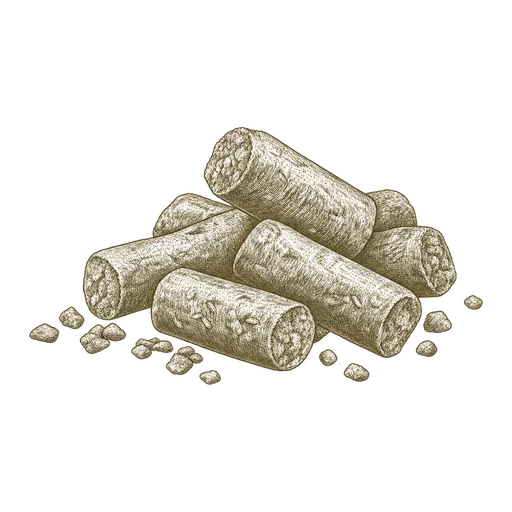
Explore ingredientAlfalfa pellets are ground, compressed forage used in livestock feeding and compound feeds. Compare the drying process, alfalfa material, forage analysis and pellet characteristics to choose a form that fits your ration and receiving setup.
Explore ingredientAlmond hulls are the dried outer layer of the almond fruit, sourced for ruminant feed as hull-only material or as a hull-and-shell mixture. Compare the lot’s composition, physical form, and handling needs before arranging a bulk shipment.
Explore ingredient