Grains
Alfalfa
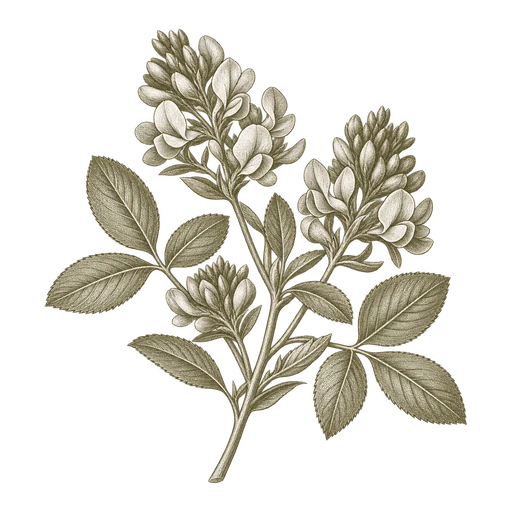
Alfalfa is a forage legume sourced as hay, silage, meal or pellets for livestock feed. Match the form to receiving and ration needs, then compare a lot-specific analysis on a consistent basis.
Explore ingredientA practical guide to comparing crystalline sugar specifications, including how category, test method and measurement basis shape the meaning of each result.
Crystalline sugar specifications are meaningful only when the product identity and category are clear. Granulated white sugar, coarser crystals and less-refined crystalline sugars can differ in appearance and composition; a value that is typical or required for one category is not automatically a suitable benchmark for another. Cane or beet origin may also be relevant to a purchase, but it does not by itself define the grade or establish a particular analysis.
Before comparing numbers, align the product name, intended use and specification framework. Then check that each result uses the same analytical method, units and reporting basis. A certificate that says “moisture,” for example, may not be directly comparable with one reporting loss on drying unless the method and basis are understood. For sourcing the exact crystalline product, start with the [Sugar page](/ingredients/sugar).
Polarization measures the rotation of polarized light by a sugar solution and is commonly used to assess sucrose content or apparent purity in specified sugar categories. Buyers use it to distinguish offers against a category requirement and to understand how much of the product is represented by the reported sucrose-related measure.
It should not be treated as a complete composition statement. The result depends on the stated method and reporting basis, and it does not replace measures such as moisture, ash or reducing sugars. Compare polarization values only when the product categories and test bases match; otherwise, the apparent difference may not be an apples-to-apples comparison.
Moisture indicates water present in the sugar. It matters to handling and storage because moisture can encourage crystals to cake or stick together. Loss on drying is a method-based measurement of weight lost under specified test conditions; it may be used as a moisture measure, but buyers should not assume it is interchangeable with a separately determined moisture result. The method, sample preparation and reporting basis help define what the number means.
Ash represents inorganic residue measured by the stated method. It can help distinguish sugar categories and reveal differences in non-sugar material, but its significance depends on the product and the purchaser’s process. Invert sugar refers to the glucose and fructose formed when sucrose breaks down. Its level can matter where a process is sensitive to reducing sugars, including because they can affect browning behavior. These measures are not substitutes for one another: each answers a different quality question.
Color provides a measure of appearance and can be an important acceptance criterion when the finished product depends on a consistent shade. A reported value is useful only when the specification identifies its method, scale and applicable sugar category. Color numbers from different methods or categories should not be compared as if they were the same test.
Particle size describes the distribution of crystal sizes, often through sieve-based reporting. It affects dissolution speed, flow, blending and the visual character of the finished product. A single label such as “fine” or “coarse” is less informative than a defined size distribution and test method. For applications requiring predictable dissolution or mixing, match the crystal profile to the process rather than choosing on color or polarization alone.
A practical comparison records the product category and form, the test method and basis for each result, and the acceptance criteria that matter to the plant. Include polarization, moisture or loss on drying, ash, invert sugar, color and particle-size distribution when they are relevant to that category and application. Not every purchase needs every measure, but omitting a critical one can make offers look more alike than they are.
Ask for values tied to the specific lot being offered and establish how any acceptance limits will be applied. Also specify whether results are reported as received or on another basis, and whether the method is a contractual requirement. Numerical limits should come from the applicable category, product specification or buyer’s process—not from an illustrative table assumed to cover all crystalline sugar.
For a useful quote, identify the sugar category and crystal form, intended application, quantity and unit, destination, receiving method, and required analytical measures. Packaging and freight details depend on the offer and destination. Once those requirements are clear, use the Sugar page to source the precise crystalline sugar product rather than comparing unlike specifications.
Polarization is a commonly used measure related to sucrose content or apparent purity in specified sugar categories, but it is not a complete composition analysis. Compare results using the same method, basis and product category.
Not automatically. Loss on drying records weight lost under defined test conditions, while a moisture result may use a different method. Compare the method and reporting basis before treating the results as equivalent.
Crystal size affects physical behavior: how sugar flows, blends and dissolves, as well as the appearance of a finished product. A defined size distribution is more useful for process control than a broad label such as fine or coarse.
Focused guides to the specification, application, and delivery questions behind this ingredient.
Receiving bulk sugar starts with the product form. Plan dry sugar handling to limit moisture and caking; plan liquid sugar or syrup receiving around compatible equipment and product-specific viscosity and temperature guidance.
Read this InsightPowdered sugar’s fine particles distinguish it from crystalline sucrose, while starch or another anticaking agent can make one powdered formulation behave differently from another. Understand both factors before substituting or scaling a food recipe.
Read this InsightAlfalfa is a forage legume sourced as hay, silage, meal or pellets for livestock feed. Match the form to receiving and ration needs, then compare a lot-specific analysis on a consistent basis.
Explore ingredientAlfalfa meal is ground forage used in animal feed, with sun-cured and dehydrated processing routes and meal or pellet forms. Compare the offered process, physical form and analysis against the needs of the species and feed formulation.
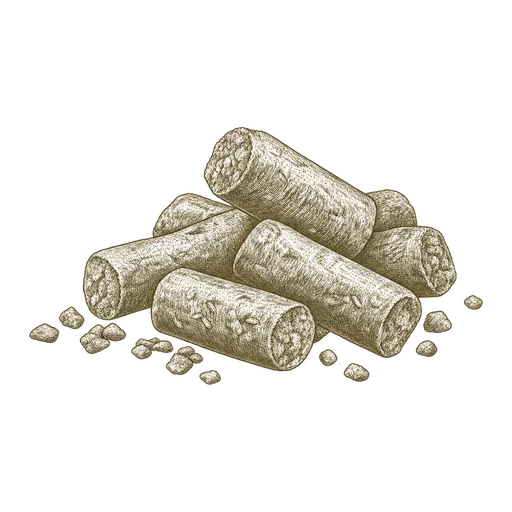
Explore ingredientAlfalfa pellets are ground, compressed forage used in livestock feeding and compound feeds. Compare the drying process, alfalfa material, forage analysis and pellet characteristics to choose a form that fits your ration and receiving setup.
Explore ingredientAlmond hulls are the dried outer layer of the almond fruit, sourced for ruminant feed as hull-only material or as a hull-and-shell mixture. Compare the lot’s composition, physical form, and handling needs before arranging a bulk shipment.
Explore ingredient