Start with what “peanut hearts” means
Raw peanut hearts can be considered for food processing only after the term is pinned down. In commercial descriptions, “hearts” may refer to edible peanut kernels, but it should not be assumed to mean a separated germ or embryo fraction. Those are different materials, and a process designed for ordinary peanut kernels may not work as intended with an isolated fraction.
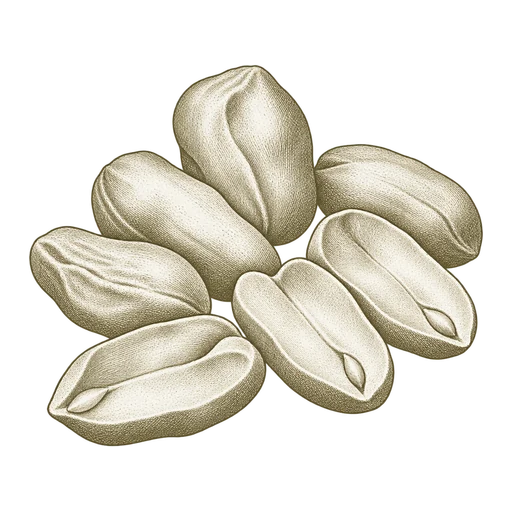
A peanut kernel is the edible seed removed from its shell. It contains the main seed tissues as well as a small embryo; an isolated germ fraction is only part of the seed. Ask for a clear product description and, where the distinction matters, a representative sample or product image. Confirm whether the material is whole, split, broken, blanched, or otherwise processed. Those details affect how it feeds into equipment and what the finished food will look like.
Peanut butter: kernels are the established starting point
Peanut butter is commonly made by processing peanut kernels into a paste, often after roasting. Raw kernels can therefore be a starting ingredient when the manufacturing line includes the required preparation step. “Raw,” however, does not establish whether a lot is suitable for a specific process: the processor still needs to know its physical condition, any prior treatment, and whether the material matches the intended roast, grind, and blending sequence.
Do not assume an isolated peanut germ fraction is interchangeable with whole kernels in a peanut butter formula. A fraction has a different physical identity and proportion of kernel components, so its behavior and contribution to the paste cannot be inferred from the product name alone. If a supplier uses “hearts” to describe a germ-only material, evaluate it as that specific ingredient, not as ordinary peanut kernels. Confirm the composition and process fit before adjusting a commercial formulation.
Other foods depend on form and processing
Peanut kernels are also used as roasted peanuts and as pieces or granules incorporated into foods. For these applications, kernel identity, size, and condition matter: whole or split kernels may suit different product formats than smaller pieces, while a raw ingredient requires whatever preparation the recipe and manufacturing process specify. Granules are a processed size form, not a synonym for an isolated germ.
The same distinction matters in bakery, confectionery, and snack formulations. A manufacturer may need recognizable pieces, a paste, or a kernel ingredient that will be roasted or ground in-house. Define the desired finished form first, then work backward to the incoming material and processing steps. A product labeled “peanut hearts” alone does not establish particle size, degree of processing, or suitability for any particular food.
Build the decision around identity and process
Before a trial or production order, resolve three questions. First, what is the material: whole peanut kernels, split or broken kernels, or a separated germ fraction? Second, what condition is it in: raw, roasted, blanched, or otherwise treated? Third, what must happen in your facility—roasting, grinding, sizing, or direct incorporation? Answers help prevent a mismatch between the quoted ingredient and the production specification.
Then compare the product description with your plant’s equipment and finished-product requirements. For peanut butter, consider how the incoming ingredient will be prepared and ground. For roasted peanuts or granules, define the required form and appearance. If an offer cannot clearly identify whether it is a kernel or a fraction, pause the formulation decision until that identity is clarified. You can review the [Raw Peanut Hearts sourcing page](/ingredients/raw-peanut-hearts) once your required form is defined.
Allergen controls and market labeling are part of the process
Peanuts are a major food allergen. Using peanut material requires attention to the receiving, storage, handling, processing, and cleaning controls in the facility’s allergen program. Keep the ingredient identifiable and segregated as required by your site procedures, and assess shared equipment and cross-contact pathways before scheduling production. These controls apply whether the input is whole kernels, pieces, paste, or a separated fraction.
Labeling obligations depend on the destination market and the finished product. Do not treat a supplier’s ingredient name or a general description as a complete labeling determination. Have the responsible regulatory or labeling team review the actual ingredient identity, formulation, process, and market-specific rules before release. The practical next step is to align the supplier’s product description and available lot information with your plant’s specification and food-safety procedures.
Common questions.
Can raw peanut hearts go directly into peanut butter?+
They may be a starting ingredient if they are peanut kernels and the manufacturing process includes the preparation steps required by the formula, commonly including roasting and grinding. The term “hearts” alone does not establish kernel identity or process condition, so clarify those before production.
Are peanut hearts the same as peanut germ?+
Not necessarily. “Peanut hearts” may be used to describe edible kernels, while the germ is a smaller, distinct part of the seed. Confirm whether the offered material is whole kernels or an isolated fraction; they should not be treated as interchangeable without process and formulation evaluation.
What should a food manufacturer clarify before buying raw peanut hearts?+
Define whether you need whole, split, broken, or other kernel material, or a separated fraction; establish its raw or processed condition; and specify the intended food and in-house steps. Also review the ingredient identity and handling plan with the facility’s allergen and destination-market labeling teams.