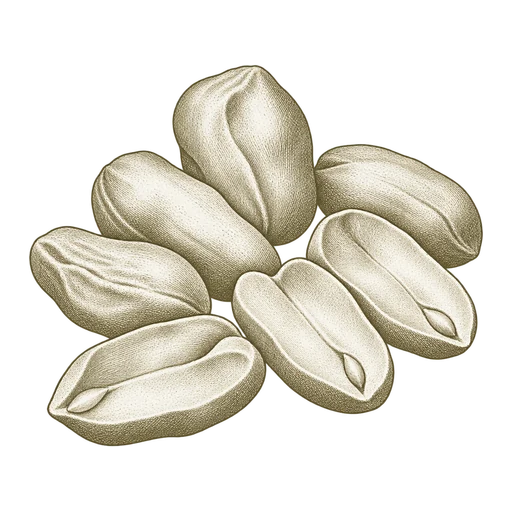
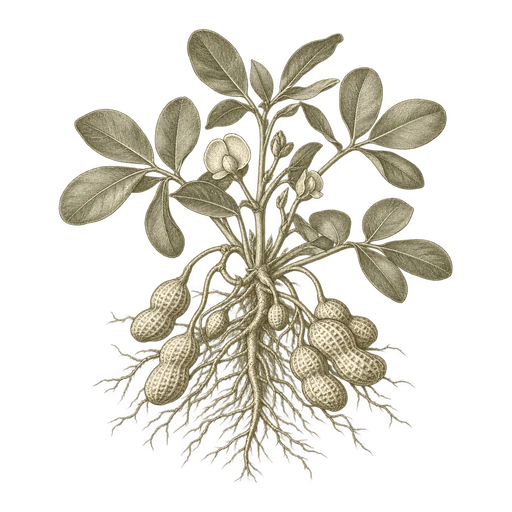
Peanut ingredients in this collection include peanuts, raw peanut hearts, raw pickouts, roasted pickouts and peanut granules. These names describe a range of forms and processing, not one shared specification. Buyers comparing bulk options should establish whether kernels are whole or split, their size and skin status, and whether the product is roasted or has additions. Granules need a particle-size specification, while lot-specific food-safety documentation, packaging and storage guidance help
Peanut granules are chopped peanut pieces used in foods such as chocolate, ice cream and biscuits. Compare particle size, roast and blanch status, added ingredients, and lot-specific quality documentation to find a product that fits your process.
Peanuts are sourced as whole kernels and processed products such as peanut meal, hulls and skins. Identify the exact form and intended use first, then compare the relevant analysis and aflatoxin documentation before arranging a bulk shipment.
Raw peanut hearts is an ambiguous trade description: it can refer to the peanut embryo or be used without clearly distinguishing it from intact kernels. Define the exact form, processing condition and lot quality before comparing bulk offers or matching the product to a food process.
Raw pickouts most likely means raw peanut kernels or pieces separated during processing, but the name does not define a standard grade. Compare the offered kernel form, sorting criteria and lot-specific testing—especially aflatoxin—against the intended use and receiving plan.
Roasted pickouts is an imprecise name for roasted peanut material, not a defined grade. Clarify kernel form, skin content, processing, additives and lot-specific quality information before matching a bulk purchase to food processing or another intended use.
This collection covers five named peanut ingredients, from peanuts and raw kernel forms to granules and roasted pickouts. The names alone do not establish whether a product is whole or split, skin-on or blanched, or roasted to a particular degree.
Raw versus roasted is a useful first distinction; kernel size and degree of breakage also matter. Granules are pieces rather than whole kernels, but their particle-size distribution and processing are product-specific. Ask for written definitions of “hearts” and “pickouts” before treating those terms as equivalent to a standard grade.
Specify the lot for bulk purchasing
Match the specification to the intended food process. For whole or split forms, compare size or grade basis, skin status, and limits for broken kernels, defects and foreign material. For granules, request particle-size distribution, test method, fines and oversize limits.
For roasted forms, clarify roast treatment, any oil, salt or other additions, and sensory acceptance criteria. Review lot-specific food-safety documentation, packaging and storage guidance as well. A grade or safety threshold defined for one specification should not be assumed to apply to every peanut type or product form.
Common questions.
Are raw peanut hearts and raw pickouts interchangeable?+
The names do not establish a shared definition. Request the seller’s description of kernel condition, size, skin status and tolerances before comparing or substituting them.
Are peanut granules always roasted?+
No. The name alone does not specify whether granules are raw or roasted, blanched, salted, or made to a particular particle-size distribution. Confirm these details in the product specification.
What should a bulk specification for peanut granules include?+
Include particle-size distribution and test method, fines and oversize limits, processing and additions, lot-specific food-safety documentation, packaging and storage guidance.
Can these peanut ingredients be assumed suitable for feed or pet food?+
No. Suitability is not established by the ingredient names. Verify intended use and applicable requirements for the specific product and lot.
Peanut ingredients · BUYER INSIGHTS
Go deeper before you source.
Focused guides to the specification, application, and delivery questions behind this ingredient.