Grains
Alfalfa
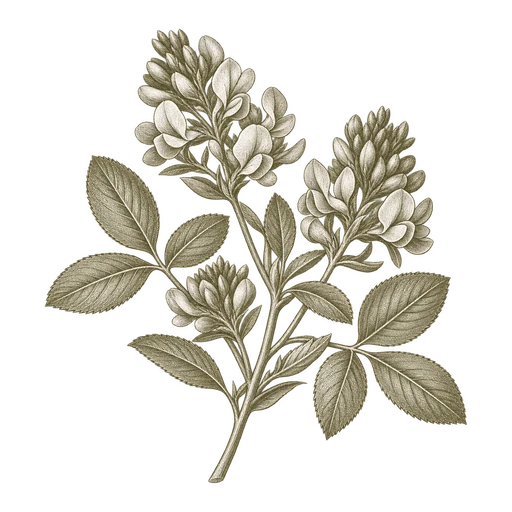
Alfalfa is a forage legume sourced as hay, silage, meal or pellets for livestock feed. Match the form to receiving and ration needs, then compare a lot-specific analysis on a consistent basis.
Explore ingredientWhole, ground and rolled flaxseed differ in seed disruption, particle size and handling. Understand those distinctions, clarify what a product labeled meal contains, and review the analysis with a qualified nutritionist before formulating animal feed.
Whole flaxseed is intact; ground flaxseed has been milled, while rolled flaxseed has been flattened or cracked. These forms are not interchangeable simply because they come from the same crop. Breaking the seed exposes its contents and changes particle size, which can affect how the ingredient mixes into a ration and how it is handled.
Whole seed has a protective outer coat around its oil-rich interior. Grinding disrupts that barrier, making the contents more accessible during digestion and more exposed to air during storage. Rolling also breaks or compresses the seed, but it does not necessarily produce the same particle size or degree of disruption as grinding. Ask what processing the supplier means by “ground” or “rolled,” rather than relying on the label alone.
Whole seed keeps its original shape and is easier to distinguish visually in a blend. Depending on the animal and feeding conditions, some intact seed may be less fully broken down than processed seed. That makes the choice a ration question—not a reason to assume whole seed will deliver a particular nutritional result. A nutritionist can assess whether intact seed makes sense for the species and ration purpose.
Ground flaxseed offers smaller particles and exposed seed contents, which can make it easier to incorporate into a mixed feed. The tradeoff is that finer material can behave differently in storage and mixing than intact seed. Rolled flax falls between those descriptions only in a general sense: the actual result depends on how much the seed has been flattened or cracked. Particle size and processing method matter when matching an ingredient to equipment and a finished feed.
A product described as flax meal should not automatically be treated as ground whole flaxseed. Trade descriptions can be used for ground seed as well as material left after oil extraction. Those products differ in how much oil remains, so their composition and formulation role can differ substantially.
Ask whether the offered product is full-fat ground seed or an oil-extracted flax product, and request its analysis. For a nutritionist comparing offers, oil or fat content, protein, fiber and moisture can help characterize the material. The reported values should be considered on the stated basis, such as as-fed or dry matter, so comparisons are meaningful. Do not infer a ration contribution from the word “meal” or from form alone.
The right form depends on the animal species, the purpose of adding flax, the rest of the ration and how feed is mixed and delivered. Flaxseed contains oil and fiber, so a nutritionist needs to consider the ingredient alongside the ration’s overall nutrient balance. The digestive setting and feeding conditions differ among species; a decision made for one animal or ration should not be carried over automatically to another.
Share the intended use and proposed product analysis with a qualified nutritionist before setting an inclusion level. No universal rate or performance result follows from choosing whole, ground or rolled seed. If the formulation calls for a particular particle size or oil contribution, state that requirement explicitly and check that the offered product and analysis match it.
Ground seed has more exposed surface than intact seed, including exposed oil. Protect it from moisture and unnecessary exposure to air, heat and light, and use storage practices suited to the actual product and facility. Whole seed also needs dry, appropriate storage, but its intact coat means the handling considerations are not identical. Do not assume a storage life from the form name alone.
For a useful quote, specify whole, ground or rolled flaxseed; if ground, describe any particle-size requirement. Include the quantity and unit, destination, packaging or receiving method, and the quality information needed by your nutritionist. Confirm whether a product called meal is full-fat ground seed or oil-extracted material, and compare the accompanying analysis on a consistent basis.
Visit the Flax page to source the identified seed form and discuss the details needed for your feed application.
Not necessarily. “Flax meal” can describe ground seed or an oil-extracted product. Confirm the processing method and oil or fat analysis before comparing products or using one in a formulation.
No. Grinding breaks the seed and exposes its contents, but the appropriate form depends on the animal, ration purpose, mixing process and product analysis. A qualified nutritionist should make the formulation decision.
Request the available analysis relevant to the formulation, including oil or fat, protein, fiber and moisture where applicable. Check whether values are reported as-fed or on a dry-matter basis, and verify the processing form.
Focused guides to the specification, application, and delivery questions behind this ingredient.
Prepare for bulk flaxseed delivery by aligning packaging and unloading with your facility, reviewing lot condition and arranging clean, appropriate storage.
Read this InsightFlax meal’s residual oil and reported protein reflect how much oil extraction removes, while heat treatment is a separate process variable. Compare lot results for fat, protein and moisture on a consistent basis rather than treating a process label or reference composition as a shipment specification.
Read this InsightAlfalfa is a forage legume sourced as hay, silage, meal or pellets for livestock feed. Match the form to receiving and ration needs, then compare a lot-specific analysis on a consistent basis.
Explore ingredientAlfalfa meal is ground forage used in animal feed, with sun-cured and dehydrated processing routes and meal or pellet forms. Compare the offered process, physical form and analysis against the needs of the species and feed formulation.
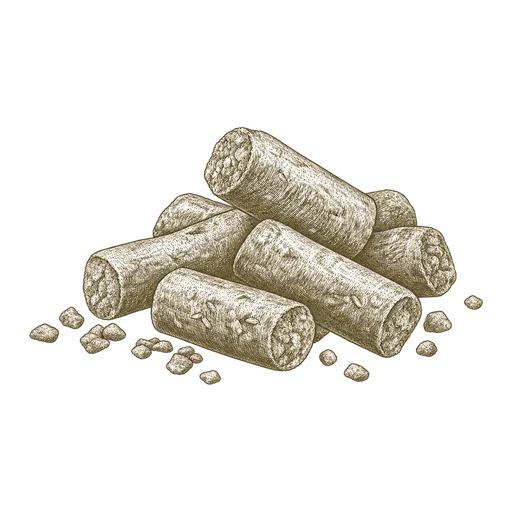
Explore ingredientAlfalfa pellets are ground, compressed forage used in livestock feeding and compound feeds. Compare the drying process, alfalfa material, forage analysis and pellet characteristics to choose a form that fits your ration and receiving setup.
Explore ingredientBeet pulp pellets are a dried, compacted sugar beet co-product used as a fibrous, energy-bearing ingredient in livestock feed. Compare molasses status, lot analysis and pellet handling needs to match the product to your ration and receiving setup.
Explore ingredient