Grains
Alfalfa
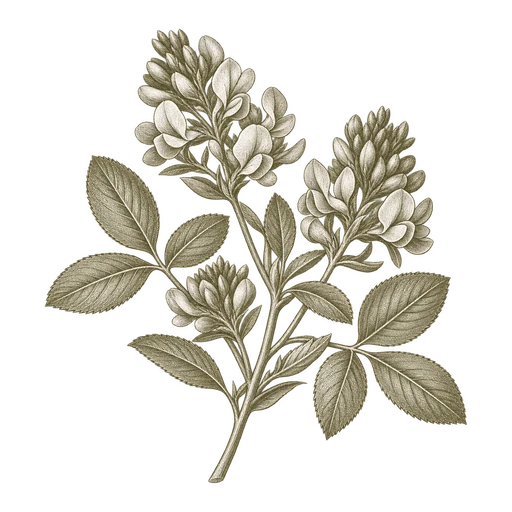
Alfalfa is a forage legume sourced as hay, silage, meal or pellets for livestock feed. Match the form to receiving and ration needs, then compare a lot-specific analysis on a consistent basis.
Explore ingredientA practical guide to interpreting corn syrup solids DE and comparing it with moisture, physical properties and the specification details that affect formulation decisions.
Dextrose equivalent (DE) is a measure of the reducing power of starch-derived sugars, expressed as dextrose on a dry-solids basis. In corn syrup solids, it gives buyers a useful indication of how far the starch has been hydrolyzed: a higher DE generally corresponds to more extensive hydrolysis and a greater proportion of smaller saccharides.
DE is an indicator, not a complete description of the carbohydrate profile. Two products with comparable DE values can still differ in the distribution of saccharides and in practical behavior. Treat DE as one formulation variable, alongside the physical and performance characteristics that matter in your process.
Before comparing offers, identify what DE is meant to control in your recipe or process. Your target may relate to sweetness, solids contribution, texture, browning behavior or another functional result. The relevant effect depends on the full formulation and processing conditions, so a DE value alone cannot predict finished-product performance.
Compare the offered value or range with the target used by your formulator. Make sure both refer to the same basis and interpretation. If your formulation sets a maximum or minimum, a supplier's typical result is not equivalent to a specification limit: a typical value describes expected performance, while a limit defines an acceptance boundary. Ask for that distinction to be explicit in the product specification.
DE is generally reported on a dry-solids basis, while moisture describes the water present in the supplied powder. Check the basis and test method stated for each figure rather than comparing numbers as though they describe the same thing. If a document does not make the basis clear, the values are difficult to interpret consistently.
Moisture matters because it affects how much dry carbohydrate a given weight of powder contributes. For formulation calculations, distinguish the as-received product weight from its dry solids. When reviewing a lot analysis, check whether the reported moisture result meets the product's stated limit and whether the result can be compared directly with the specification.
DE does not specify particle size, the amount of fines, flow behavior or how readily a powder disperses. Those properties can influence conveying, weighing, dust control and incorporation into a dry blend or liquid. Compare the physical description and any stated particle or solubility measures with the equipment and mixing sequence used at your facility.
Solubility should be considered under conditions relevant to your process, including the way the powder is added and the temperature and mixing available. A general description such as “soluble” may not answer whether it will disperse at your required rate or without persistent lumps. Where that performance is important, define the test conditions or acceptance criteria with your technical team rather than assuming DE predicts the result.
Review the product specification for the declared DE, its basis, and whether the figure is a typical result or a limit. Then compare the lot analysis with those stated requirements. The analysis helps establish whether a particular shipment's reported result aligns with the agreed product specification; it does not replace a clear specification or resolve an unstated test basis.
For a practical comparison, put the relevant items side by side: DE and its basis; moisture and its basis; particle characteristics; solubility or dispersion criteria; and the status of each stated value as a limit or typical result. Avoid assuming that a single DE range applies to all corn syrup solids. Confirm the offered grade's figures against its own specification and lot documentation.
When you are ready to compare available grades for a bulk purchase, use the Corn Syrup Solids page as the route to sourcing discussions. Include the DE target and the process properties that matter so the proposed specification can be assessed against your formulation.
Focused guides to the specification, application, and delivery questions behind this ingredient.
Plan bulk corn syrup solids receiving around your order details, facility constraints and the specific product’s storage instructions.
Read this InsightCorn syrup solids can enter a dry blend as a powder and may also need to disperse when the finished mix meets liquid. DE, particle characteristics and actual preparation conditions answer different formulation questions; define the required grade around the process.
Read this InsightAlfalfa is a forage legume sourced as hay, silage, meal or pellets for livestock feed. Match the form to receiving and ration needs, then compare a lot-specific analysis on a consistent basis.
Explore ingredientAlfalfa meal is ground forage used in animal feed, with sun-cured and dehydrated processing routes and meal or pellet forms. Compare the offered process, physical form and analysis against the needs of the species and feed formulation.
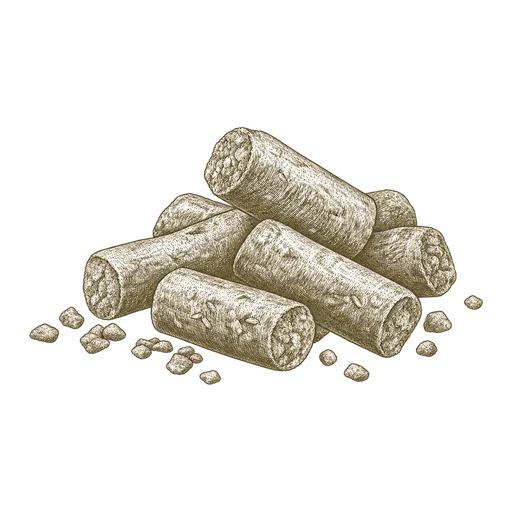
Explore ingredientAlfalfa pellets are ground, compressed forage used in livestock feeding and compound feeds. Compare the drying process, alfalfa material, forage analysis and pellet characteristics to choose a form that fits your ration and receiving setup.
Explore ingredientBeet pulp pellets are a dried, compacted sugar beet co-product used as a fibrous, energy-bearing ingredient in livestock feed. Compare molasses status, lot analysis and pellet handling needs to match the product to your ration and receiving setup.
Explore ingredient