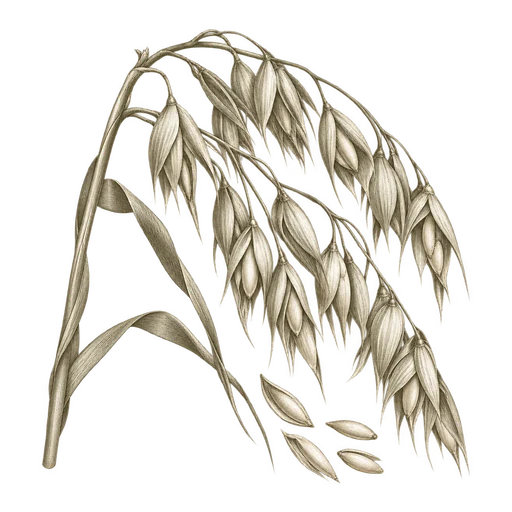
Other Seeds & Grains
Oat Groats
Oat groats are dehulled oat kernels used in food processing and feed formulations. Specify whole or cut form and processing history, then compare relevant quality measures on a consistent basis.
Explore ingredientOat processing produces forms that are not interchangeable by name alone. This topic covers the differences among oat grain, dehulled groats, flakes, and ground products, plus the processing and quality details to define when comparing bulk purchases.
Oat groats are dehulled oat kernels used in food processing and feed formulations. Specify whole or cut form and processing history, then compare relevant quality measures on a consistent basis.
Explore ingredientOatmeal can mean rolled oats, another oat form, or a distinct feed milling fraction. Name the exact product and intended use, then compare the relevant quality details and receiving needs for a bulk order.
Explore ingredientOats are sourced as whole grain and as distinct products such as groats, flakes, flour, bran and hulls. Match the form and its analysis to the food or feed application, then plan bulk receiving and storage around that specific material.
Explore ingredientOat processing changes the form of the grain, so broad names are not enough to identify a purchase. An oat groat is the dehulled kernel. Oats may refer to grain with or without the hull, while oatmeal can mean rolled flakes, cut groats, or ground oats. Oats & Oat Products is broader still; confirm the exact ingredient and form before comparing offers.
For flaked products, groats are commonly steamed or conditioned before rolling. Cut groats rolled into flakes differ from whole groats rolled intact, and thinner flakes cook faster. Heat treatment and prior cooking also affect how a product fits further processing, so specify whether you need raw material or a treated product.
Start with the intended use, then state whether the requirement is whole groats, cut groats, flakes, or ground oats. For flakes, define thickness or other particle-size needs; for groats or grain, clarify whether hulls are present and whether kernels are whole or cut. These details matter for cooking behavior and downstream handling.
Do not assume that “oatmeal” always means rolled oats or that a broad oat label implies a particular heat treatment or added ingredients. Confirm the processing state and ingredient composition against the recipe or manufacturing process.
For milling grain, buyers may assess cleanliness, kernel condition, test weight, and groat percentage. Protein, oil, or beta-glucan can also be relevant to a particular specification. For processed products, ask for measures suited to that form rather than applying raw-grain criteria automatically. Compare lot results on the same reporting basis and identify the test method where needed.
Storage and shelf-life considerations depend on the product and its processing. Review packaging, storage history, and any stated shelf-life basis for the specific lot rather than treating results for one oat form as universal.
Not necessarily. A groat is the dehulled kernel; the word oats alone does not establish whether the hull has been removed or what further processing has occurred.
No. The term can refer to flakes, cut groats, or ground oats. Specify the required form and, for flakes, the desired thickness or particle characteristics.
Choose measures that fit the product form and intended use. Milling grain may be assessed for cleanliness, test weight, and groat percentage; processed oats need suitable form-specific measures. Compare lot results on a consistent basis.
Ask for the product’s processing state, including whether it was steamed, conditioned, or otherwise heat-treated. A general label such as oatmeal does not establish that detail.
Focused guides to the specification, application, and delivery questions behind this ingredient.
Plan oat receiving around the product form, unloading setup, storage conditions and moisture information needed for your process.
Read this InsightOat flakes and oat flour differ in physical form and processing. Learn which questions to resolve when matching each form to a food manufacturing process.
Read this InsightA practical guide to interpreting whole-oat grade factors, understanding what lot data do and do not establish, and separating grain grades from specifications for processed oat products.
Read this InsightPlan bulk oats delivery around the product form, compatible receiving equipment, protection from moisture and contamination, and the records your destination requires.
Read this InsightOat flour, rolled oats and cut oats behave differently in bakery formulas. Compare their particle structure and processing in product-specific trials before defining a bulk sourcing specification.
Read this InsightCompare oat milling specifications by connecting physical quality, condition and applicable safety criteria to the mill’s process and finished product. Clear methods and acceptance limits make bulk offers easier to evaluate.
Read this Insight