Grains
Alfalfa
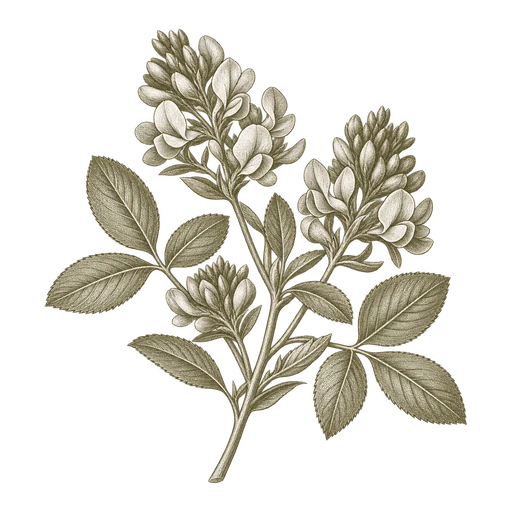
Alfalfa is a forage legume sourced as hay, silage, meal or pellets for livestock feed. Match the form to receiving and ration needs, then compare a lot-specific analysis on a consistent basis.
Explore ingredientPlan oat receiving around the product form, unloading setup, storage conditions and moisture information needed for your process.
Storage and receiving plans for oats depend first on the form being delivered. Whole oats, flakes and oat flour do not move or handle identically. A receiving area designed for whole grain may not be configured to manage a finer, dustier material such as flour, while flakes need handling that suits their physical form.
Before arranging an order, identify the product form and how it will arrive. Describe the unloading equipment your facility can use and any limits on access, receiving hours or temporary staging. If product must move from the delivery point into a silo, hopper or production area, confirm that the route and equipment suit that form of oats.
Packaging and unloading arrangements are specific to the offer, so do not assume a particular format is available. Give the supplier or broker your preferred packaging or receiving method and ask what the offered product requires. That conversation is more useful when you can describe the equipment and space at the destination.
Moisture matters because it affects grain and ingredient condition during storage and can influence processing. But a moisture result is not, by itself, a universal pass-or-fail storage rule for every oat product or use. The acceptable requirement depends on the product, its intended process and the buyer’s handling conditions.
When reviewing an offered result, ask what product it describes, how it was measured and what basis the result uses. A value without a clear measurement basis can be difficult to compare with an internal specification or another lot. If your process has a required limit, state it directly and ask whether the offered oats meet it.
Do not turn a result into a shelf-life promise. Storage duration also depends on conditions at the receiving site and on the form being stored. For a practical decision, pair the moisture result with product-specific handling guidance and your facility’s own storage requirements.
Before delivery, identify where the oats will be held and how they will be protected from moisture entering during unloading or storage. Keep the receiving and storage area clean, dry and appropriate for the ingredient’s intended use. Check that the planned route will not expose the product to rain, damp surfaces or a wet container or bin.
Consider the difference between intact oats and processed forms. Whole grain, flakes and flour may require different transfer and storage arrangements because their particle form and flow behavior differ. Fine material also calls for attention to dust during transfer and housekeeping around the receiving point. Use the handling guidance for the specific product rather than assuming one set of procedures fits all oat forms.
If oats are held in a shared storage area, consider whether the space, equipment and transfer path are suitable for the product’s food or feed use. Plan how the product will be kept separate from incompatible materials and how the receiving team will identify it after unloading.
A useful delivery request describes the product, quantity and destination together. Specify whether you need whole oats, flakes, flour or another defined form; state the quantity and unit; and provide the delivery location and timing requirements. Include packaging preferences and explain how your site unloads and receives the product.
Share the quality requirements that affect acceptance, including any moisture limit and the measurement basis your process uses. If you need an analysis or other product documentation, name the information required and how it will be used. This lets the parties discuss the actual offered product rather than relying on a generic assumption about oats.
Also identify constraints that could affect a delivery appointment or unloading, such as restricted access, equipment availability or limited receiving hours. Freight arrangements, packaging, timing and other commercial terms depend on the specific offer and destination; provide those details early so they can be considered together.
Before accepting a delivery plan, match four things: the oat form, the packaging or unloading method, the destination’s storage capacity and the quality information needed for acceptance. Confirm that the receiving team knows where the product will go and that the storage area is ready before the shipment arrives.
For a sourcing request, start with the [Oats & Oat Products] page. Include your intended form, quantity, destination, preferred receiving arrangement and any process-specific moisture requirement so the discussion can focus on a workable offer.
State the oat form, quantity and unit, destination, timing needs, packaging preference and how your facility can unload the product. Include relevant receiving constraints and any quality requirements, such as a moisture limit and its measurement basis.
No. Moisture affects storage and processing decisions, but a result alone does not establish a universal shelf life. Interpret it alongside the product form, the measurement basis, product-specific handling guidance and the conditions at your storage site.
Not necessarily. These forms differ physically and may require different transfer, unloading and housekeeping arrangements. Describe your equipment and receiving setup when discussing the specific form being offered.
Focused guides to the specification, application, and delivery questions behind this ingredient.
Oat flakes and oat flour differ in physical form and processing. Learn which questions to resolve when matching each form to a food manufacturing process.
Read this InsightA practical guide to interpreting whole-oat grade factors, understanding what lot data do and do not establish, and separating grain grades from specifications for processed oat products.
Read this InsightAlfalfa is a forage legume sourced as hay, silage, meal or pellets for livestock feed. Match the form to receiving and ration needs, then compare a lot-specific analysis on a consistent basis.
Explore ingredientAlfalfa meal is ground forage used in animal feed, with sun-cured and dehydrated processing routes and meal or pellet forms. Compare the offered process, physical form and analysis against the needs of the species and feed formulation.
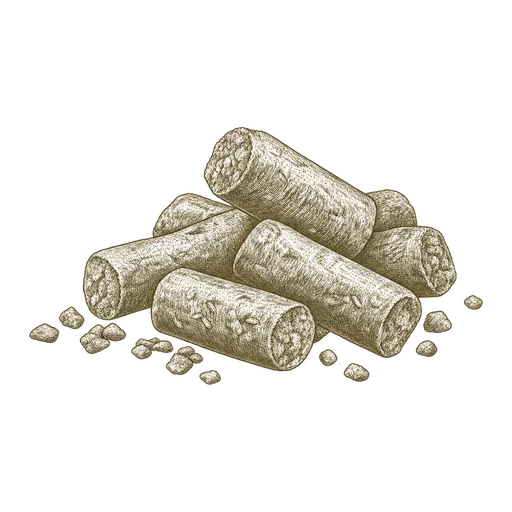
Explore ingredientAlfalfa pellets are ground, compressed forage used in livestock feeding and compound feeds. Compare the drying process, alfalfa material, forage analysis and pellet characteristics to choose a form that fits your ration and receiving setup.
Explore ingredientAlmond hulls are the dried outer layer of the almond fruit, sourced for ruminant feed as hull-only material or as a hull-and-shell mixture. Compare the lot’s composition, physical form, and handling needs before arranging a bulk shipment.
Explore ingredient