Grains
Alfalfa
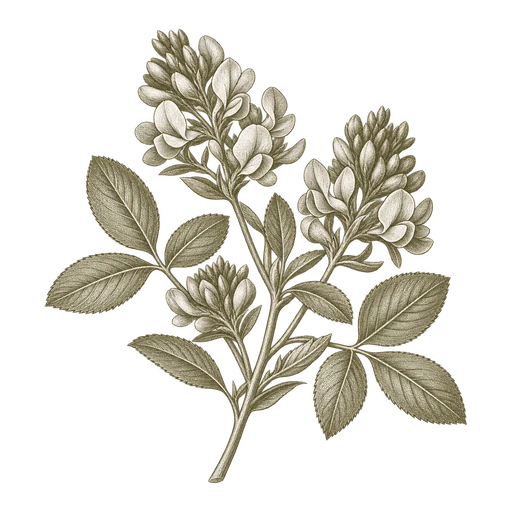
Alfalfa is a forage legume sourced as hay, silage, meal or pellets for livestock feed. Match the form to receiving and ration needs, then compare a lot-specific analysis on a consistent basis.
Explore ingredientCrystalline sucrose and liquid sugar require different specification comparisons. Establish product identity first, then compare crystal assay, moisture and particle size separately from liquid Brix and sucrose-specific composition.
Crystalline sucrose and liquid sugar are different product forms, so their analyses cannot be compared line by line. Crystalline sucrose is solid sugar crystals. A liquid offer may be a sucrose solution, but a product described as syrup can have a different composition. Before evaluating numbers, establish exactly what the seller means by “liquid sugar” or “syrup,” and whether the product is defined as sucrose in water or as a mixture of sugars.
That definition determines which measures are useful. A crystal specification describes a solid ingredient; a liquid specification needs to characterize both its dissolved solids and the nature of those solids. Similar-looking percentages do not necessarily refer to the same property or measurement basis.
For crystals, assay addresses sucrose content. Check whether the stated result is reported on an as-received basis or a dry basis: moisture affects the proportion of sucrose in the material as received, so results on different bases are not directly comparable. The analytical method and the product definition should also be clear when evaluating a specified assay.
Moisture is a separate measure that can matter for storage, flow and handling. It is not interchangeable with assay. Particle size describes the physical distribution of the crystals, which can affect feeding, dissolution and blending in a process. A typical particle-size value or range should be interpreted alongside the measurement method or distribution reported; a single average may not describe the full spread.
Other crystal measures, such as color or ash, may be relevant when a particular process or finished product has limits for them. They are not universal substitutes for assay, moisture or particle size. Compare only the characteristics that are actually specified for the offer and required by the application.
Brix is commonly used to express soluble-solids concentration on a sucrose-equivalent scale. A refractometer reading reflects how the liquid affects light; it does not independently identify every dissolved substance. In a liquid containing only sucrose and water, Brix can be useful for describing concentration. If other sugars or dissolved solids are present, the reading alone does not establish the sucrose content.
For that reason, do not treat a Brix value as a direct substitute for sucrose assay. Ask what the liquid product contains and how the reported values are defined. A useful comparison distinguishes the amount of soluble solids from the proportion attributable specifically to sucrose, where that distinction matters to the formulation.
Liquid specifications may also report properties such as density or color, depending on the product and use. These measures can help with process control or identification, but they do not resolve product identity by themselves. The specification should define the product and explain what each reported result measures.
Build separate comparisons for crystals and liquids rather than ranking both forms against one percentage. For crystalline sucrose, align product identity, assay basis, moisture and particle-size information. For liquid sucrose, align the exact product definition, soluble-solids measure and any sucrose-specific assay relevant to the application. Compare like with like, including analytical basis and method where available.
Then connect the measures to the receiving process. A crystal buyer may need a particle profile that dissolves and feeds appropriately; a liquid buyer may need concentration and composition information that supports dosing and formulation. Neither form is automatically preferable: the practical choice depends on how the facility stores, handles and uses the ingredient.
For each offer, request the full product name or definition, the analysis with units and basis, and the methods used for the measures that drive your decision. For crystals, distinguish assay from moisture and particle size. For liquids, establish whether the product is a sucrose solution or another syrup, and do not infer sucrose assay from Brix alone. If a specification uses a term or method that is unclear, resolve that before comparing the result with another offer.
Once the required form and quality measures are defined, use the [sucrose sourcing page](/ingredients/sucrose) to continue evaluating the ingredient for a bulk purchase. Exact specifications depend on the offered product and must be assessed on their stated terms.
Not necessarily. Brix describes soluble solids on a sucrose-equivalent scale, not the identity of every dissolved substance. If the liquid contains other sugars or dissolved solids, Brix alone does not establish its sucrose assay.
Start with product identity, sucrose assay and its reporting basis, moisture, and particle-size information. Add measures such as color or ash only when they matter to the intended process or product requirements.
No. Assay and Brix describe different properties, and the products have different forms. Compare each offer using measures that define its composition, with the reporting basis and analytical method made clear.
Focused guides to the specification, application, and delivery questions behind this ingredient.
Plan bulk sucrose receiving around the difference between crystalline and liquid forms, your facility’s unloading setup, and product-specific storage instructions.
Read this InsightCompare crystalline and liquid sucrose by looking at dry versus liquid receiving, recipe water balance, the recipe’s ingredient definition and the specifications your process needs.
Read this InsightAlfalfa is a forage legume sourced as hay, silage, meal or pellets for livestock feed. Match the form to receiving and ration needs, then compare a lot-specific analysis on a consistent basis.
Explore ingredientAlfalfa meal is ground forage used in animal feed, with sun-cured and dehydrated processing routes and meal or pellet forms. Compare the offered process, physical form and analysis against the needs of the species and feed formulation.
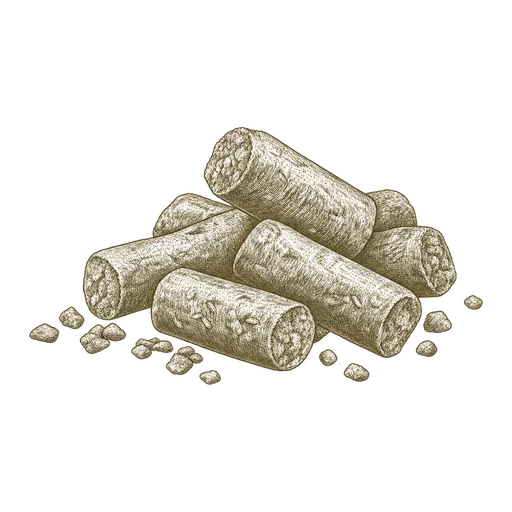
Explore ingredientAlfalfa pellets are ground, compressed forage used in livestock feeding and compound feeds. Compare the drying process, alfalfa material, forage analysis and pellet characteristics to choose a form that fits your ration and receiving setup.
Explore ingredientAlmond hulls are the dried outer layer of the almond fruit, sourced for ruminant feed as hull-only material or as a hull-and-shell mixture. Compare the lot’s composition, physical form, and handling needs before arranging a bulk shipment.
Explore ingredient