Choose the groat form around the next operation
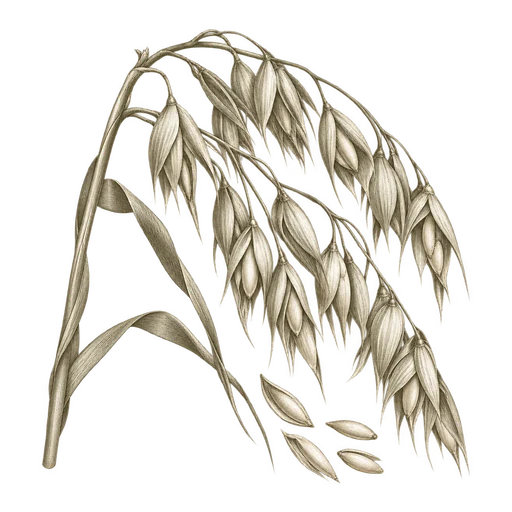
Whole oat groats are oat kernels with the inedible outer hull removed. Cut groats are those kernels divided into smaller pieces. The practical choice is whether your process needs an intact kernel or a defined smaller particle before its next step—not a general claim that one form performs better.
Start with the physical state your line needs at the point of use. If the recipe or operation calls for intact kernels, specify whole groats. If it calls for pieces, specify cut groats and describe the required cut in terms your processor can verify. A product name alone may not define particle size consistently across offers.
Map that choice to the actual sequence: receiving, any in-house size reduction, mixing or cooking, and the final product. If your process already mills or cuts the ingredient, buying intact groats may fit the sequence; if the next step requires pieces and no size-reduction stage is planned, a cut form may be the relevant starting point. The decision depends on your equipment and process, so avoid assuming a form will deliver an unverified result.
Whole and cut are not the same as rolled or milled
Whole and cut describe the groat’s size and integrity. They are not interchangeable with rolled oats or oat flour, which have undergone different physical processing. Rolled oats are flattened, while oat flour is ground into a much finer material. Those forms enter a recipe in a different physical state from intact or cut kernels.
That distinction matters when an ingredient specification, formula or production step names oats without defining the form. A request for “oats” could leave open whether the line requires groats, pieces, flakes or flour. State the intended form explicitly, then identify any further physical requirement—such as a particular cut—rather than relying on a broad product name.
Do not treat cut groats as a substitute for rolled oats or flour simply because all come from oats. The processing route and particle form differ. Whether one can replace another depends on the product design and process, which should be evaluated in the actual formulation rather than assumed from the shared grain.
Specify heat treatment separately
Physical form and heat-treatment history are separate characteristics. A whole or cut designation tells you about kernel size; it does not, by itself, tell you whether or how the oats were heat treated. Include processing condition as its own requirement when it matters to your formulation or process.
Oats contain naturally occurring enzymes, and heat treatment can affect enzyme activity. That makes treatment history relevant beyond appearance or particle size, but it does not establish a particular outcome in a finished food. Ask for the specific processing description applicable to the offered lot and assess it against your process needs. Avoid treating terms such as whole, cut or groats as proof of a heat-treatment condition.
If your line has a defined sequence or ingredient standard, align the requested condition with it before choosing between whole and cut. A groat in the desired size form may still differ from your needs if its processing history is unspecified. Conversely, a heat-treatment description does not tell you whether the product is intact or cut.
Translate the process into a purchase specification
For a clear comparison, write the requirement in separate parts: oat groats as the ingredient, whole or cut as the physical form, the required cut or size description if applicable, and the heat-treatment condition as a separate item. Add any food-quality requirements your process depends on, using the measures and acceptance criteria established by your own product specification.
Before requesting a quote, check the specification against the actual process. Identify where size reduction occurs, whether the finished product needs recognizable kernel pieces, and whether an ingredient processing condition is required. If the manufacturing process has not defined those points, resolve them with the product and process teams rather than choosing a form based on an assumed performance difference.
When the required form is established, use the [Oat Groats](/ingredients/oat-groats) page to proceed with sourcing. For a useful bulk inquiry, include the form, any required cut description, heat-treatment condition, order quantity and unit, destination, packaging or receiving method, and timing. Commercial details depend on the particular offer and shipment.
FAQs
**Are whole oat groats the same as rolled oats?** No. Whole groats are hulled oat kernels; rolled oats are flattened. Specify the form your recipe or process requires.
**Does cut oat groats mean a standard cut size?** The term identifies divided groats, but it may not communicate the precise particle size your process needs. State the required cut using a description your quality team and supplier can compare.
**Does buying cut groats tell me whether they were heat treated?** No. Cut describes physical form, not processing history. Specify and evaluate heat treatment separately when it is relevant to your process.
Common questions.
Are whole oat groats the same as rolled oats?+
No. Whole groats are hulled oat kernels; rolled oats are flattened. Specify the form your recipe or process requires.
Does cut oat groats mean a standard cut size?+
The term identifies divided groats, but it may not communicate the precise particle size your process needs. State the required cut using a description your quality team and supplier can compare.
Does buying cut groats tell me whether they were heat treated?+
No. Cut describes physical form, not processing history. Specify and evaluate heat treatment separately when it is relevant to your process.