Why a form-specific recommendation matters
A recommendation for apple pomace chips without hulls describes a particular material, not every product sold as apple pomace. Apple pomace is the material remaining after apples are processed for juice or similar products, but its moisture content and physical form depend on processing and handling. Wet, dried and ensiled pomace are not interchangeable simply because they share a name.
Form changes how much dry matter a given delivered weight represents, how the ingredient is handled and how it fits into a ration. A recommendation developed for one form may therefore give a poor basis for feeding another. Before applying any guidance to a dairy ration, match it to the exact product form and animal class it addresses.
Chips, wet pomace and dried material
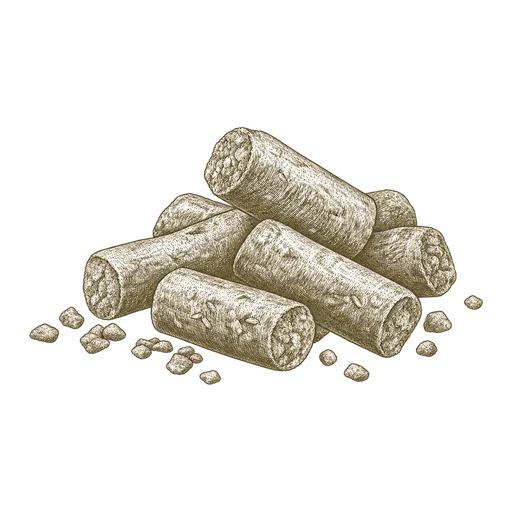
Chips are a physical form of processed pomace. The phrase “without hulls” is also part of the product description in the guidance being considered, so it should not be dropped when comparing that guidance with an offer. Ask what the supplier means by the description and whether the material being offered matches the referenced product; do not assume that all chips share the same processing details.
Wet pomace carries more water than dried pomace, so equal as-fed weights do not necessarily contribute equal amounts of dry matter. Dried material is more concentrated by weight in that basic sense, but its analysis still needs to be evaluated rather than inferred from its appearance or form. Ensiled pomace has undergone storage through ensiling; it should be assessed as the ensiled product, not treated as equivalent to fresh wet pomace or dried chips.
These differences affect both ration calculations and practical handling. Wet or ensiled material requires a receiving and storage plan suited to the product’s moisture and condition. Dried material has different handling characteristics, but dryness alone does not establish its nutrient contribution or suitability for a particular ration.
Read the offered analysis on a comparable basis
Start by identifying the exact form represented by the analysis and whether results are reported as-fed or on a dry-matter basis. The as-fed basis describes the ingredient as delivered, including its water; the dry-matter basis removes that water from the comparison. Keeping the basis clear helps prevent a moisture difference from being mistaken for a difference in nutrient concentration.
Review the analysis fields that the dairy nutritionist needs to evaluate the ingredient in the intended ration. Depending on the decision, that can include moisture or dry matter and relevant nutrient measures such as protein, fiber, energy-related values and other components used in the formulation. Do not substitute a general reference value for the actual offered lot, or apply an analysis for one form to another without a sound basis.
An analysis informs a formulation; it does not, by itself, establish an inclusion rate. Ration decisions depend on the complete diet, the product’s verified characteristics and the needs of the animals being fed. Have a qualified dairy nutritionist assess the actual offer and its role in the ration.
Make the recommendation match the animal and product
Check which dairy cattle the guidance addresses. A recommendation for one animal class or stage of production should not automatically be extended to another. Likewise, confirm whether it concerns chips without hulls, wet pomace, dried pomace or ensiled material. If either detail is missing, the recommendation is not specific enough to justify carrying its feeding direction over unchanged.
A practical review brings together three things: the exact product description, the analysis for the material being offered and the target animal group. The nutritionist can then decide whether the ingredient has a role in the total ration and how to account for it. No single label such as “apple pomace” answers those formulation questions.
From ration question to a defined bulk order
Before comparing bulk offers, write down the needed form and the analysis basis your nutritionist will use. Share the intended quantity and unit, destination, receiving setup and timing so that a quote can address the material and delivery requirements you actually need. Packaging and unloading arrangements should suit the form being purchased, especially where wet or ensiled material is involved.
For an offer under consideration, request the product description and lot-specific analysis that correspond to the material being quoted. Confirm the commercial details with the broker, since availability, packaging, freight and other terms depend on the specific offer. When you are ready to compare defined forms, visit the Apple Pomace page for sourcing.
Common questions.
Can guidance for apple pomace chips without hulls be used for wet pomace?+
Not automatically. Wet pomace differs in moisture and may differ in processing and analysis. Apply guidance only after matching the described form and animal class, then have a dairy nutritionist evaluate the offered material.
Why compare apple pomace on a dry-matter basis?+
Water contributes to as-fed weight but not dry matter. Comparing on a dry-matter basis helps separate moisture differences from nutrient concentration; keep the analysis basis clear when evaluating the ingredient.
Does dried or ensiled apple pomace have a standard dairy-cattle inclusion rate?+
Do not assume a universal rate. Form, analysis, animal class and the rest of the ration all matter. A dairy nutritionist should determine the ingredient’s role using the specific product information.