
Planning bulk sesame seed receiving and storage
Plan bulk sesame seed receiving around packaging, unloading capability, moisture management and storage aeration. Include destination and storage details in the procurement outline.
Read the guide
Practical guides to ingredients, specifications, and the questions worth asking before you buy.
Better ingredients.
Better questions.
Stronger connections.
Plan bulk sesame seed receiving around packaging, unloading capability, moisture management and storage aeration. Include destination and storage details in the procurement outline.
Read the guidePlan bulk dried-fig receiving around the actual package, your unloading setup and a clean, dry storage area. Obtain lot-specific date and handling information before setting inventory expectations.
Read the guideDried black soldier fly larvae can enter poultry formulations in different physical forms and with different fat content. Compare the exact product’s lot analysis and evaluate it within the complete diet for the intended poultry type rather than applying a universal inclusion recommendation.
Read the guidePrepare for bulk brown rice delivery by matching packaging and unloading arrangements to your facility, protecting the grain from moisture exposure, and building pest monitoring into storage routines.
Read the guideA practical receiving and storage plan for bulk red millet starts with quantity, destination, packaging and unloading. Treat general millet moisture guidance as context—not a guarantee—and assess the delivered lot and your facility’s storage conditions.
Read the guideCompare soy hull pellet analyses on the same basis, using moisture or dry matter to interpret protein, fiber and energy. Additive status matters because molasses or binder can affect the composition of the finished pellet.
Read the guideCompare bulk rice by its processing form, written grade definition and the kernel characteristics that matter to your use—not by a grade name alone.
Read the guideCompare chickpea protein flour, concentrate and isolate on a consistent basis. Learn how moisture affects protein calculations and how fat, fiber and ash help describe an offer.
Read the guideA receiving and storage guide for bulk blueberry pomace, comparing practical planning considerations for wet residue, dried material and powder.
Read the guide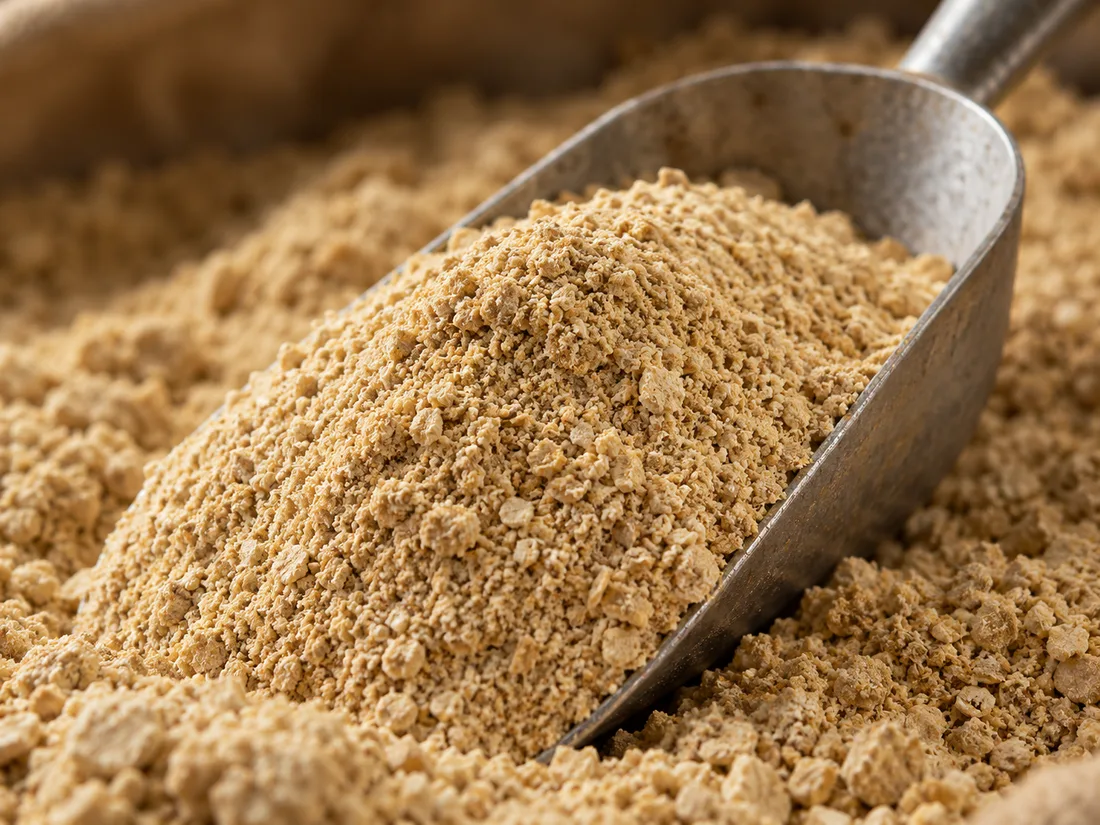
Whole soybeans retain their oil, while soybean meal is the solid residue after oil extraction. That difference affects each ingredient’s role in a livestock ration, and whole beans also require attention to heat treatment. Compare the specific product and intended animal with a nutritionist before choosing a form.
Read the guideCompare canola meal analyses on a consistent basis, and account for how solvent extraction or mechanical pressing affects residual oil and interpretation of the lot’s composition.
Read the guide
Compare soybean hulls analyses for cattle feed by aligning moisture, crude protein, fiber and energy results on a clear, consistent basis. Learn why as-fed and dry-matter values differ and how to use lot analysis alongside ration requirements.
Read the guideExplore ingredient specifications or share your volume, delivery needs, and buying requirements.