Grains
Alfalfa
Alfalfa is a forage legume sourced as hay, silage, meal or pellets for livestock feed. Match the form to receiving and ration needs, then compare a lot-specific analysis on a consistent basis.
Explore ingredientPlan bulk molasses receiving around the product form, site access, transfer equipment, storage protection and delivery timing. Cold conditions can make liquid molasses more viscous, so pumping and any temperature management should be discussed for the specific product.
Before arranging a bulk molasses order, identify whether the product is liquid or dry and map how it will move from the delivery point into storage. These forms call for different receiving arrangements: liquid molasses needs a compatible transfer route and contained storage, while dry molasses needs a suitable dry-product receiving and storage setup.
Walk the path from the vehicle’s expected stopping point to the intended storage location. Identify access restrictions, hose or connection requirements, transfer distance, and any site rules that could affect unloading. Check that the receiving point is available during the planned delivery window and that staff can monitor the transfer.
If the ingredient will enter a feed or manufacturing process shortly after receipt, include that transfer step in the plan. The storage location, equipment and work schedule should accommodate the actual form of molasses rather than relying on assumptions about how it will arrive.
Liquid molasses becomes more viscous in cold conditions. A product that flows adequately under one set of conditions may move more slowly when colder, so consider seasonal temperatures, the route from receiving to storage, and the equipment used to pump or transfer it.
Discuss pumping capability and any temperature-management procedure with the supplier before delivery. If heating is part of the proposed handling plan, the appropriate method and parameters depend on the specific product and equipment. Do not assume that a generic heating setting is suitable, or that the delivery can be unloaded using a particular pump or connection.
Share relevant site details when arranging the order: the receiving connection, available transfer equipment, approximate route to storage, and any temperature controls already in place. That information helps the supplier assess whether the planned product and unloading approach are compatible.
Choose storage that is appropriate for the product’s physical form and protects it from contamination. For liquid molasses, consider whether the receiving and storage equipment can be kept clean and closed when not in use, and whether the transfer route can be managed without exposing the product to foreign material. For dry molasses, plan to keep the product protected from moisture and contamination during receiving and storage.
Keep the storage area and transfer equipment orderly, and avoid mixing a new delivery with residual material unless that practice suits the product and the facility’s quality procedures. Identify who is responsible for checking the receiving area, managing connections, and closing or securing equipment after transfer.
Storage conditions and handling instructions can depend on the specific molasses product. Obtain the supplier’s guidance for the offered form, including any relevant temperature or moisture precautions, rather than applying a storage limit or procedure intended for a different product.
Match the delivery window to the storage capacity and the people and equipment available to receive the product. Confirm that the storage location will be ready, the unloading route will be clear, and the appropriate staff will be present. If production or feed mixing is scheduled soon after receipt, allow time for unloading and any transfer into the point of use.
For repeat orders, compare expected usage with remaining storage capacity before setting a delivery date. A delivery that arrives before there is room to receive it can disrupt site operations; waiting until storage is nearly empty can leave less flexibility if timing changes. The suitable interval depends on the buyer’s usage, storage and supply arrangements.
In the request, provide the molasses form, quantity and unit, destination, preferred timing, and receiving details. For delivered pricing, the destination and receiving setup matter alongside the product and order quantity; commercial terms such as freight and timing depend on the specific offer.
Before confirming an order, ensure the product form matches the site’s storage and transfer capabilities. For liquid molasses, resolve questions about pumping, connections and cold-weather flow. For dry molasses, verify that the receiving method and storage area are suitable for a dry product.
Make sure the supplier has the information needed to discuss handling: unloading access, available equipment, storage arrangements and relevant temperature or moisture controls. Ask for product-specific handling guidance where the site’s procedures depend on it. Then confirm the delivery timing against available capacity and staffing.
Use the [molasses page] to submit the source, form, quantity, destination and receiving details for a sourcing inquiry. Including those details at the outset makes it easier to discuss an offer that can be received and stored at your facility.
Yes. Cold conditions can increase liquid molasses viscosity and slow its flow. Consider the season, transfer route and pumping equipment, and discuss product-specific handling guidance with the supplier before delivery.
Heating may be part of a handling plan, but the appropriate method and parameters depend on the specific molasses product and equipment. Get supplier guidance rather than applying a generic temperature or heating procedure.
Provide the product form, quantity and unit, destination, preferred timing, and receiving details. Describe unloading access, transfer equipment and storage arrangements so the delivery plan can be assessed against your facility.
Focused guides to the specification, application, and delivery questions behind this ingredient.
Molasses can supply rapidly fermented sugars, improve palatability and help reduce dust in cattle feed. Its role depends on product form, lot analysis and how it fits the complete ration.
Read this InsightCompare cane and beet molasses analyses on a consistent basis. Learn how to interpret dry matter, moisture, sugars, crude protein, ash, minerals and liquid-flow information before sourcing bulk feed molasses.
Read this InsightAlfalfa is a forage legume sourced as hay, silage, meal or pellets for livestock feed. Match the form to receiving and ration needs, then compare a lot-specific analysis on a consistent basis.
Explore ingredientAlfalfa meal is ground forage used in animal feed, with sun-cured and dehydrated processing routes and meal or pellet forms. Compare the offered process, physical form and analysis against the needs of the species and feed formulation.
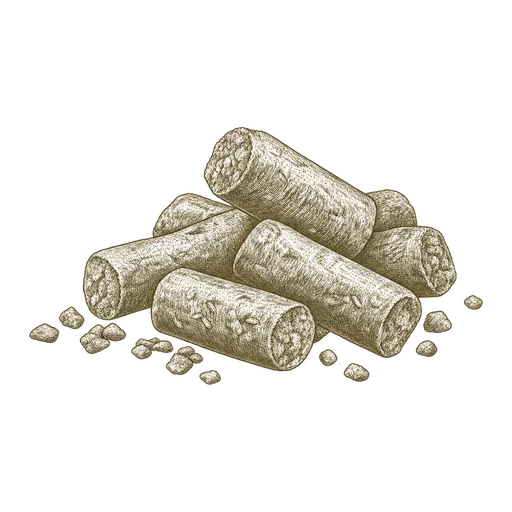
Explore ingredientAlfalfa pellets are ground, compressed forage used in livestock feeding and compound feeds. Compare the drying process, alfalfa material, forage analysis and pellet characteristics to choose a form that fits your ration and receiving setup.
Explore ingredientBeet pulp pellets are a dried, compacted sugar beet co-product used as a fibrous, energy-bearing ingredient in livestock feed. Compare molasses status, lot analysis and pellet handling needs to match the product to your ration and receiving setup.
Explore ingredient