
Planning delivery and storage for raw peanut hearts
Plan a raw peanut hearts shipment by defining the product and quantity, matching packaging and unloading to your site, and preparing dry storage that preserves lot identity.
Read the guide
Practical guides to ingredients, specifications, and the questions worth asking before you buy.
Better ingredients.
Better questions.
Stronger connections.
Plan a raw peanut hearts shipment by defining the product and quantity, matching packaging and unloading to your site, and preparing dry storage that preserves lot identity.
Read the guideChoosing regular or instantized whole milk powder for a beverage or dry mix starts with how the finished product meets liquid. Compare dispersibility information and evaluate the offered powder under the intended mixing conditions.
Read the guideA practical guide to defining raw or roasted, whole or broken sunflower hearts—and the cleanliness, condition and food-safety requirements needed for sunflower seed butter.
Read the guidePear pomace can be evaluated as a cattle or sheep ration component, but its role depends on the specific product, lot analysis and ration context. Distinguish the offered form and intended species before making formulation or sourcing decisions.
Read the guideA practical guide to interpreting peanut oil composition and oxidation measures together, so bulk buyers can define meaningful lot requirements instead of relying on one test result.
Read the guideA receiving and storage guide for bulk blueberry pomace, comparing practical planning considerations for wet residue, dried material and powder.
Read the guide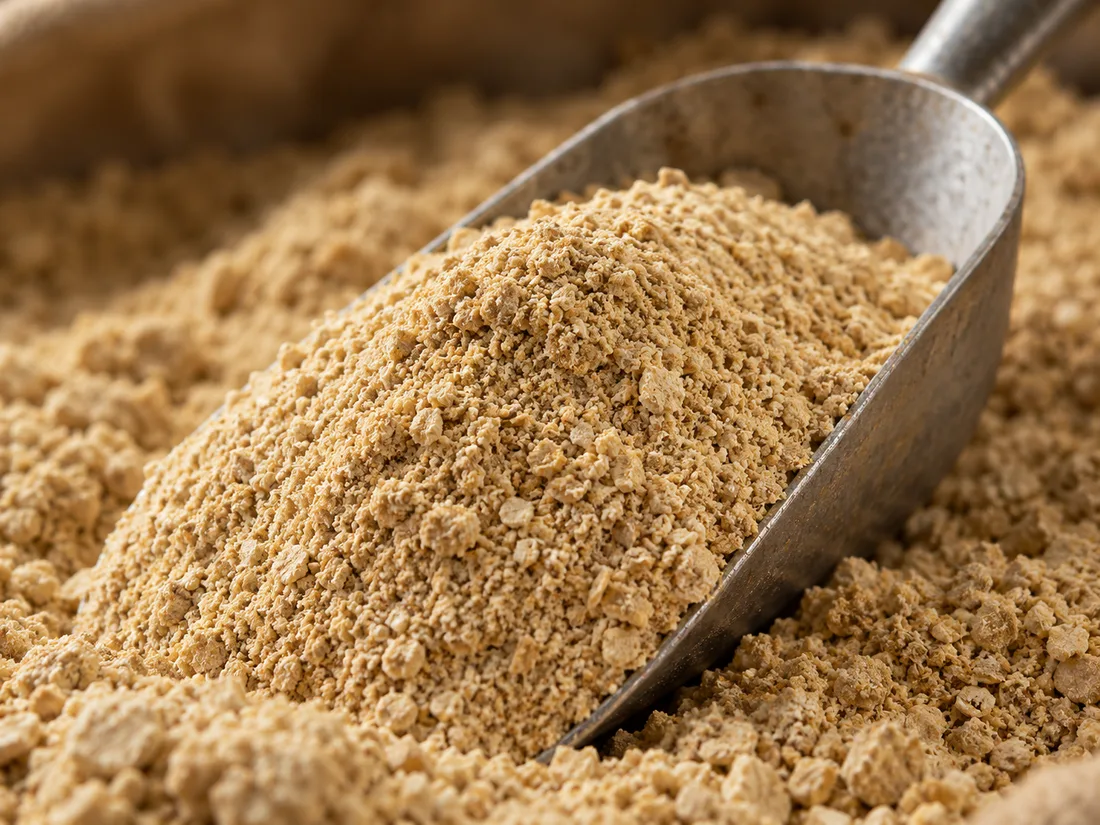
Soybean meal protein percentages reported as-fed and on a dry-matter basis cannot be compared directly. Align moisture, reporting basis, method information, and the context of each COA before evaluating supplier values.
Read the guideChoose pickling cucumber size around the finished product and processing line. A useful specification defines the size measurement, acceptable uniformity, firmness and condition—not just the product name.
Read the guide
Compare brewer’s grain analysis on a consistent basis: understand how moisture changes as-fed results, what dry-matter conversion can and cannot do, and how protein, fiber, fat and ash support feed evaluation.
Read the guide
Plan bulk flaxseed oil packaging around your receiving equipment, protect the oil from light, and review lot-specific storage history before accepting an offer.
Read the guideU.S. durum grade describes grain condition under official grading factors, while subclass classifies the proportion of hard, vitreous kernels. Mill buyers need both context and separate, lot-relevant analyses to build a complete milling specification.
Read the guideCompare popcorn moisture, popping performance and kernel condition using clearly defined sample bases and test methods.
Read the guideExplore ingredient specifications or share your volume, delivery needs, and buying requirements.