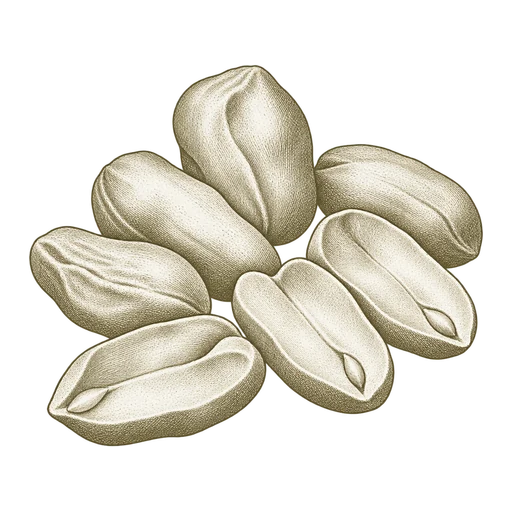
Start with the product’s physical form
For peanut food processing, the first question is what the supplier means by “roasted pickouts.” The term can describe selected or broken peanut kernels, but it does not by itself specify piece size, shape, skin content or whether the lot includes other ingredients. Establish the ingredient identity and physical form before deciding whether it belongs in a process.
Form affects how the material fits into handling and manufacturing steps. Larger pieces remain visible in applications such as inclusions or toppings; smaller pieces can distribute differently through a mixture. These are practical distinctions, not a promise that a particular lot will feed, mix or finish in a specific way. Compare the described product with the size and appearance your process requires.
Size distribution and skin content change the result
A product described by an average or nominal size may still contain a range of piece sizes. That range matters when uniform appearance, consistent portioning or predictable distribution is important. Ask how size is described and whether the available information represents the lot as a whole. If your equipment has limits on particle size, define those limits from your own process rather than assuming “pickouts” means a uniform cut.
Skin content is another visible difference. Peanut skins can affect the appearance and texture of a finished product, and skin-on material is not interchangeable with a product specified as skinless. Clarify whether skins are present, whether that is intentional, and how the condition is characterized. The buyer’s decision depends on the intended product and process; skin content alone does not establish quality or suitability.
Roast character is not a complete food specification
Roasting affects a peanut’s color, aroma and flavor, so roast character should be evaluated against the sensory profile and appearance expected in the finished food. A description such as “roasted” does not define roast intensity or prove that the lot matches a particular product standard. Where roast consistency matters, request a description or lot-specific information that allows your team to assess the offered material.
Roasting alone does not establish that a lot meets a buyer’s food requirements. Review the ingredient identity, processing history and documentation available for that lot against your company’s requirements and intended use. Any applicable allergen, handling, traceability or other food-quality review belongs in that assessment; do not infer it from the product name or roast description.
Check whether anything has been added
Roasted pickouts may be offered with or without added ingredients, so establish whether the lot is plain peanut or includes additions such as salt, oil or flavoring. Even a small difference in the ingredient statement can matter to a formulation, finished-product declaration or customer specification. Do not assume that a roasted product is unseasoned.
Request the ingredient statement and relevant lot documentation, then compare them with the requirements for your process and finished food. If you need a single-ingredient product, state that explicitly. If additions are acceptable, identify which ones are permitted. These checks establish what the material is; they do not guarantee a particular formulation outcome.
Make the application decision from the offered lot
Roasted peanut pieces may be considered for uses such as inclusions in confectionery or bakery products, toppings, or other foods where peanut pieces are wanted. Whether they fit depends on their actual size distribution, skin condition, roast character and ingredient statement, as well as the receiving and processing steps at your facility. These examples describe potential applications, not established suitability or performance for every lot.
Before committing to a process, compare the offered lot’s product description and documentation with the physical, sensory and ingredient requirements that matter to your finished product. Include any internal review your operation requires; do not treat roasting as a substitute for that review. For product details and a sourcing request, see the Roasted Pickouts ingredient page and specify the form and application you have in mind.
Common questions.
Does “roasted pickouts” specify a uniform piece size?+
No. The name alone does not establish a uniform size or size distribution. Ask how the offered lot’s physical form and size are described, especially if your equipment or finished product depends on a defined piece size.
Does roasted mean the pickouts are ready for any food application?+
No. Roasting does not establish that a lot meets your food requirements. Evaluate its identity, processing history, ingredient statement and available lot documentation against your intended use and internal requirements.
Why ask whether roasted pickouts contain added ingredients?+
Added salt, oil or flavoring can affect a formulation and the ingredient statement for the finished food. Request the offered lot’s ingredient information rather than assuming the product is plain peanut.