What coarse sunflower chips bring to a bird-feed blend
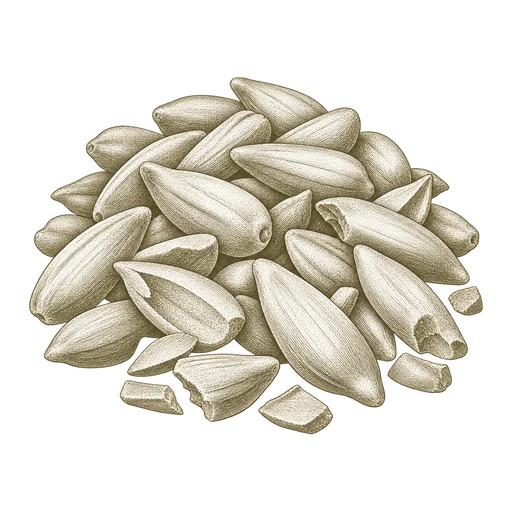
Coarse sunflower chips are pieces of hulled sunflower kernel. Removing the hull and breaking the kernel into pieces changes how the ingredient looks and handles in a blend: it is no longer an intact seed, but it is also not a finely ground meal. For wild-bird feed manufacturers, that middle ground makes particle size a practical formulation and equipment question.
The word “coarse” does not define a single universal particle size. Piece dimensions and the amount of smaller material can differ between offers, so buyers should ask for a grade description or other documentation that identifies the product. Do not assume two products labeled coarse will behave identically in a feeder or finished mix.
Chips, whole seed and sunflower meal are not interchangeable
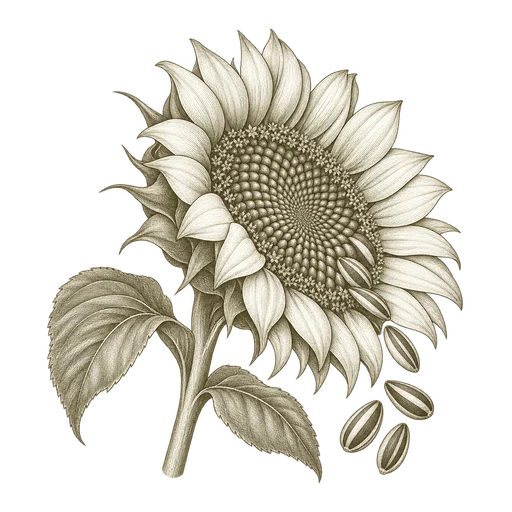
Whole sunflower seed retains its intact seed shape; depending on the product, it may also retain its hull. Its larger, more defined pieces behave differently from chips when ingredients are blended, conveyed or presented through feeder openings. Confirm whether a whole-seed comparison refers to in-shell seed or whole hulled kernels, since those are distinct forms.
Coarse chips are hulled kernel pieces, so they have less intact structure than whole seed. Sunflower meal is a more finely processed material associated with oil extraction. Its particle form and composition differ from kernel pieces, and the term meal alone does not establish a particular grind or analysis. A blend designed around one form may not remain physically consistent if another is substituted.
Match particle size to the feeder and the blend
Particle size matters first at the point of use. Pieces must pass through the intended feeder openings and handling equipment without causing a fit problem; very small fragments can behave differently from larger chips during blending and may separate from larger ingredients. These are physical considerations, not a basis for claiming that a particular chip size suits a particular bird species.
Think about the complete path from mixing to feeding. Compare the chips’ size and fines with the other components in the blend, and consider whether differences in particle size could lead to separation during movement or storage. If the product is intended for a feeder with restricted openings, test the documented grade against that equipment before committing to a production-scale formulation. Avoid relying on the word “coarse” alone.
Verify the offered grade and intended use
Before ordering, establish exactly what the supplier means by coarse sunflower chips: hulled kernel pieces, the stated size description, and any information available about fines or particle distribution. Request the product specification or lot documentation and review whether it identifies the form clearly. If composition matters to the finished feed, use the relevant analysis rather than inferring it from appearance or product name.
Also confirm that the product documentation and handling information fit the intended bird-feed application. This is especially important when comparing chips with whole sunflower seed or sunflower meal, because the shared sunflower name does not make their physical form or processing history equivalent. For current product details and sourcing, visit the [Coarse Chips page](https://bulkagexchange.com/ingredients/coarse-chips).
A practical comparison before purchase
A useful comparison starts with the feeder opening, blend design and handling equipment, then checks the product form and particle description against those needs. Ask for enough information to distinguish kernel chips from whole seed and oil-extraction meal, and to understand the amount of small material in the offered grade. When documentation does not answer a question important to your process, resolve it before using the ingredient in a production blend.
For a bulk inquiry, specify the desired chip form, quantity and unit, destination, required packaging or receiving method, and the quality or documentation requirements relevant to your feed. A broker can then address the actual offered product and commercial terms. If the physical form is the main decision, begin with the [Coarse Chips](https://bulkagexchange.com/ingredients/coarse-chips) sourcing page.
BEFORE YOU REQUESTYour sourcing checklist.
- Specify coarse hulled kernel pieces and request the offered particle-size description, including information on fines when available.
- State the intended feeder openings, mixing or conveying constraints, and the other ingredient forms in the blend.
- Clarify whether comparisons are with in-shell whole seed, whole hulled kernels or sunflower meal.
- Give the required quantity and unit, destination, packaging or receiving method, timing, and relevant quality documentation needs.
Common questions.
Are coarse sunflower chips the same as whole sunflower seed?+
No. Coarse chips are pieces of hulled kernel, while whole sunflower seed retains an intact seed shape and may retain its hull. Confirm whether a whole-seed offer is in-shell or hulled before comparing.
How does particle size affect wild-bird feed?+
It affects how the ingredient passes through feeder openings and how it behaves during blending and handling. The grade should be compared with the equipment and other particle sizes in the finished mix; “coarse” alone does not define a precise size.
How do coarse chips differ from sunflower meal?+
Chips are pieces of hulled kernel; sunflower meal is a more finely processed material associated with oil extraction. Their physical form and composition are not interchangeable, so review the offered product description and relevant documentation.