Grains
Alfalfa
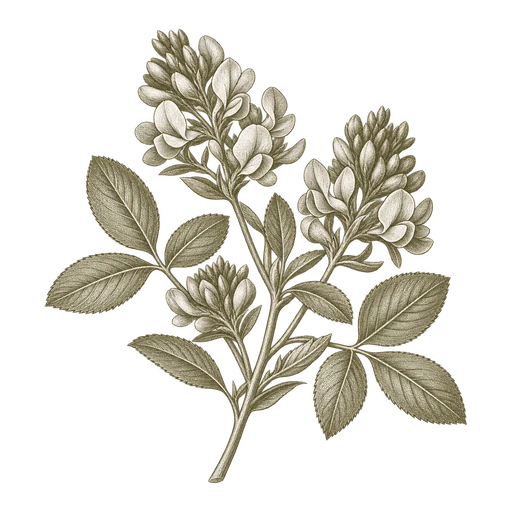
Alfalfa is a forage legume sourced as hay, silage, meal or pellets for livestock feed. Match the form to receiving and ration needs, then compare a lot-specific analysis on a consistent basis.
Explore ingredientRolling, grinding and steam flaking produce different barley particle forms and affect how the kernel’s starch is exposed. Compare the processing description and available particle information in the context of the complete cattle ration and feeding management.
Rolling, grinding and steam flaking all disrupt the barley kernel, but they produce different particle shapes and distributions. Those differences affect how the grain mixes into a ration and how readily its starch is exposed during digestion. The right choice depends on the complete ration and feeding management, not on a single processing method being best in every situation.
Barley’s outer covering can remain attached to the kernel in covered types. Processing cracks or breaks the kernel and covering, exposing more of the starchy interior. The degree of disruption matters: intact or lightly processed kernels differ from smaller, more thoroughly reduced particles in surface area and physical behavior.
Dry rolling passes grain between rollers to crack and flatten kernels without steam conditioning. It generally produces recognizable pieces rather than a uniform powder, although the result depends on how the equipment is set and the grain is processed. A roll can also create fines—small particles produced alongside larger pieces—so a description such as “rolled” does not tell a buyer the full particle profile.
For cattle-feed use, a buyer evaluating rolled barley should distinguish the intended degree of cracking from the actual distribution of particles. Too many fine particles can affect how the grain handles, separates in a mix or is consumed. Ask for documented particle information when consistency is important; do not assume that all rolled barley has the same texture.
Grinding reduces barley into smaller particles than rolling typically does. Smaller particles expose more surface area, and the product may include a broad range of particle sizes, including fines. That can change how the grain flows and disperses during ration mixing compared with cracked kernels or flakes.
The tradeoff is that “ground” alone is not a precise description. Screen size, mill setup and other processing details can affect the finished distribution. When comparing offers, ask what “ground” means for that product and whether particle-size information is available. This helps a nutritionist or feed manager assess it alongside the ration’s other ingredients and the farm’s mixing and feeding practices.
Steam flaking conditions barley with heat and moisture before it passes through rollers, producing flattened flakes. Conditioning and flaking change the kernel’s physical structure and starch accessibility compared with dry rolling or grinding. The resulting product is not interchangeable with a dry-processed grain simply because both have passed through rollers.
Flake thickness and consistency are relevant when evaluating this form, but the name “steam flaked” does not establish a particular processing result. Buyers should obtain the offered processing description and any documented particle or flake information, then evaluate it against the ration and feeding system. Heat and moisture exposure also make it important to understand how the product is handled after processing.
Barley starch is fermentable in the rumen, and processing affects how much of the kernel’s interior is exposed. The ration’s other ingredients, cattle class and feeding management influence how a particular barley form fits. More extensive disruption is not automatically a better choice: the practical question is whether the grain’s processing state works with the rest of the ration and the management system.
For a useful comparison, specify whether you are considering dry-rolled, ground or steam-flaked barley. Request the processor’s description of the treatment and any available particle information, and share the intended cattle-feed use with the person evaluating the ration. Avoid comparing offers on the processing label alone.
For barley sourcing, product forms and a route to discuss a bulk request, visit the [barley ingredient page](/ingredients/barley).
No. Rolling cracks or flattens kernels, while grinding reduces them into smaller particles. Their particle shapes and distributions can differ, so the processing label and any available particle information matter when comparing products.
Dry rolling can produce small particles along with larger cracked kernels. The amount depends on the grain and processing setup, so “rolled” by itself does not describe the full particle distribution.
Steam flaking conditions barley with heat and moisture before flattening it between rollers. This changes the kernel’s physical structure and starch accessibility; it is distinct from dry rolling and grinding.
There is no universal choice based on processing method alone. Evaluate the barley’s processing and particle characteristics in the context of the complete ration and feeding management.
Focused guides to the specification, application, and delivery questions behind this ingredient.
Plan bulk barley receiving around the product form, order size, destination, site equipment and storage conditions. The lot’s moisture, temperature and condition—together with the intended holding period and local handling practices—should guide the storage plan.
Read this InsightFeed barley quality is best judged against its intended use. Understand what moisture, test weight, foreign material, damaged kernels, contaminant results and processing consistency can tell you—and what each measure cannot establish—before setting lot-specific acceptance criteria.
Read this InsightAlfalfa is a forage legume sourced as hay, silage, meal or pellets for livestock feed. Match the form to receiving and ration needs, then compare a lot-specific analysis on a consistent basis.
Explore ingredientAmaranth can be sourced as grain, leaf meal or whole-plant forage, and those forms are not interchangeable in feed formulation. Specify the plant material, species and processing method, then compare lot analysis suited to the intended animal and use.
Explore ingredientBrewers rice is a broken-rice milling fraction used in brewing, fermented products and animal feed. Compare broken, granulated or ground forms and review lot-specific physical and analytical details before sourcing in bulk.
Explore ingredientBrown rice is hulled rice with its bran layers retained, sourced as whole kernels or flour for food uses. Specify grain class, processing state and quality requirements, then match packaging and storage plans to your facility.
Explore ingredient