Start with the exact product
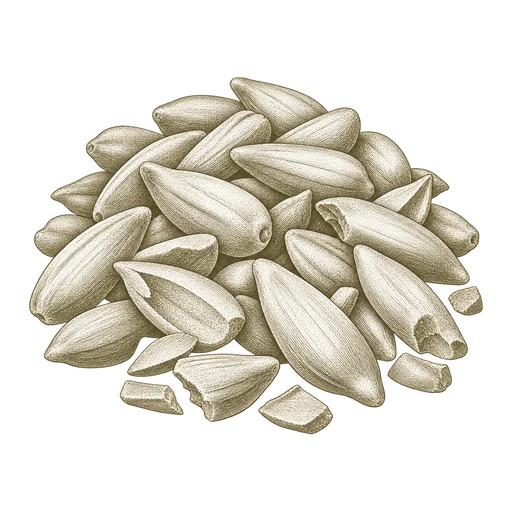
A useful bakery-kernel specification begins by naming what the product is. “Bakery kernels” can describe different seeds or kernel ingredients, so identify the species rather than relying on a broad trade name. If the requirement is sunflower kernels, say so explicitly; if the product is a blend, list each ingredient and its intended proportion or labeling requirement.
Then state the physical form: whole, chopped, or ground. Form affects appearance in the finished food, how kernels disperse through a mix, and which size or count measures make sense. Two offers cannot be compared fairly if one describes whole kernels and the other describes pieces, or if the ingredient lists differ.
Define each measure and its basis
A quality limit is meaningful only when both parties understand how it is measured. For size or count, specify whether the requirement concerns whole kernels, pieces, or a defined sample, and use the same method and reporting basis when comparing lots. Count can help describe size consistency, while a size distribution may be more informative when the finished product depends on an even visual appearance.
Moisture, damage, breakage, and foreign material are also useful measures for sunflower kernels, but their definitions and measurement methods need to be clear. Moisture relates to the condition of the kernels in storage and processing. Damage and breakage describe physical integrity, while foreign-material limits address unwanted material in the sample. For chopped or ground kernels, set expectations suited to that form rather than applying whole-kernel criteria.
There is no single limit that suits every recipe or processing line. Establish the maximum, minimum, or target that matters to your use, identify the measurement basis, and ensure that a test result is reported against that same requirement.
Connect specifications to the finished product
For toppings and visible inclusions, kernel size, breakage, and appearance can affect how evenly pieces distribute and how consistent the finished product looks. For doughs, fillings, or ground-kernel applications, particle size and the proportion of fines may matter more than the count of intact kernels. Specify the characteristic that affects your process instead of requesting a general “bakery grade” without defining what it means.
Sensory condition deserves its own description. Set expectations for normal appearance, odor, and taste for the exact product and processing state. Because kernels contain oil, an undesirable stale or rancid note can matter in a finished food even where a visual inspection alone does not reveal the issue. Sensory acceptance criteria should be clear enough that the supplier and receiving team know what condition is acceptable.
Make lot testing and allergen information useful
Ask which lot-specific results are available and compare them with the measures in your specification. A test report is most useful when it identifies the product and lot, states the test or measurement basis, and reports the relevant result. If a measure is critical to your process, decide whether it must be tested on each lot or handled another way in your quality program; do not assume that every requested test is routinely included.
Allergen information depends on the exact ingredient and how it is handled or processed. State the information your food-safety and labeling review requires, and distinguish ingredient declarations from information about possible cross-contact. The appropriate evidence depends on the specific product and its lot documentation; a generic statement about kernels is not a substitute for product-specific information.
Compare offers on the same terms
Before comparing quality limits, send suppliers one product description: species, ingredient list, physical form, intended use, and measurement basis. Add the required limits for size or count, moisture, damage, breakage, and foreign material where relevant, along with sensory expectations and the lot-testing information you need. Mark which requirements are essential and which are preferences.
This approach makes differences between offers visible without imposing a limit that may not fit your process. For a sourcing request, share the specification and the quantity, delivery destination, and timing you need. Visit the Bakery Kernels page to begin a request and describe the product and quality criteria you want to compare.
Common questions.
Should a bakery-kernel specification name the seed species?+
Yes. Identify the species and list all ingredients, especially if the product is a blend. A broad name such as “bakery kernels” may not be precise enough to compare composition, quality requirements, or labeling information.
Which quality measures should I include for sunflower kernels?+
Depending on the application, specify size or count, moisture, damage, breakage, foreign material, and sensory condition. Define the sample, measurement basis, and acceptable limit for each measure that matters; there is no universal set of limits for every product or use.
What should I look for on a lot test report?+
Check that the report identifies the product and lot, states the test or measurement basis, and gives results for the measures in your specification. If a result is essential to acceptance, establish how it will be tested and documented for the lot.