
Citrus pulp in beef cattle rations: understanding its role
Citrus pulp can contribute energy and fiber to growing beef cattle rations, but its analysis must be evaluated alongside forage, protein and every other ration component.
Read the guidePractical guides to ingredients, specifications, and the questions worth asking before you buy.
Better ingredients.
Better questions.
Stronger connections.
Citrus pulp can contribute energy and fiber to growing beef cattle rations, but its analysis must be evaluated alongside forage, protein and every other ration component.
Read the guideCranberry pomace powder can contribute fruit solids and fiber, but its composition and behavior depend on the material and processing. Compare the fiber method and basis, particle size and hydration data, then test the powder in the intended recipe.
Read the guideA practical guide to comparing bulk red-lentil lots by form, moisture, foreign material, seed condition, color and measurement basis—without confusing inspection factors with universal acceptance limits.
Read the guide
Plan dried black soldier fly larvae receiving around the form your process uses, your facility’s unloading limits and the lot’s storage directions. Drying does not eliminate storage-related changes to fat quality.
Read the guideInstant WPC 80 is processed to improve wetting and dispersion, but “instant” is not a promise of identical results in every formula. Assess the powder in your own mixing process and verify lecithin source and ingredient details before sourcing.
Read the guideCompare beet pulp pellet offers by molasses status and lot-specific analysis. Moisture or dry matter, protein, fiber fractions, energy estimates and minerals are useful only when their basis and context are clear.
Read the guide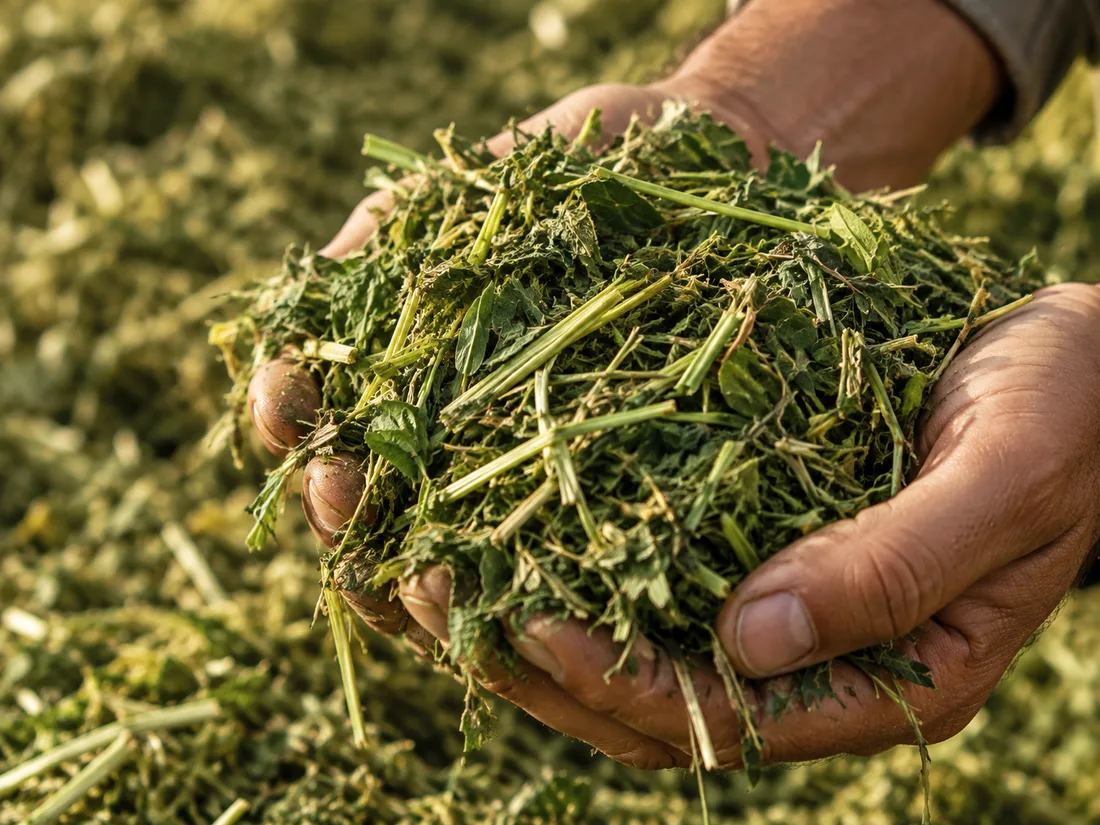
Soy hull pellets can contribute digestible fiber and energy to forage-based cattle rations, but their pelleted form does not replace the physical role of long-stem forage. Their use depends on the complete ration, roughage, feeding management, and professional formulation.
Read the guideWheat middlings can contribute fiber and bulk to gestating-sow diets and energy, protein and fiber to beef cattle rations. Their role depends on species, ration design and the actual lot analysis.
Read the guideRolled oats are flattened flakes; steel-cut oats are cut groat pieces. Compare their shape, mixing behavior and intended role in a pilot bake before changing forms in a commercial recipe.
Read the guideCompare peanut split size, fragments, roasting condition, and blanching to specify an input that matches your peanut butter process.
Read the guideCompare soy protein concentrate analyses on a consistent basis. Protein, moisture, ash and crude fiber results only become useful for purchasing when reporting basis, methods and application-specific requirements are clear.
Read the guideA practical look at how swine nutritionists can evaluate peanut meal’s protein, fiber, residual oil and amino-acid profile within a complete ration.
Read the guideExplore ingredient specifications or share your volume, delivery needs, and buying requirements.