Grains
Alfalfa
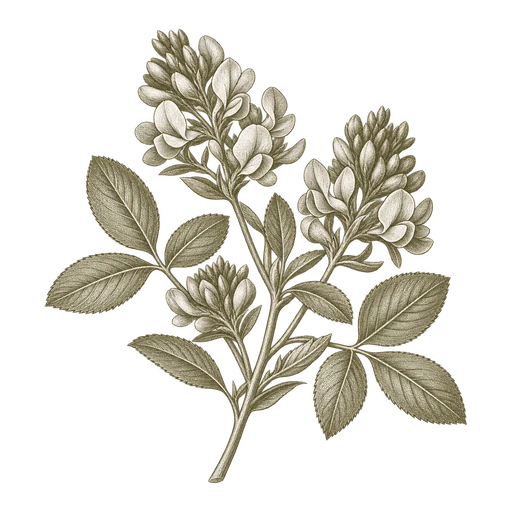
Alfalfa is a forage legume sourced as hay, silage, meal or pellets for livestock feed. Match the form to receiving and ration needs, then compare a lot-specific analysis on a consistent basis.
Explore ingredientWhole peanut hulls can add bulky fibrous material to cattle rations, but their low energy and protein content—and the difference between whole, ground and pelleted forms—make full-ration evaluation essential.
Whole peanut hulls are the outer shells left after peanuts are shelled. In a cattle ration, their main potential role is as a bulky, fibrous ingredient—not as a concentrated source of energy or protein. That distinction matters: adding hulls changes the ration’s physical and nutrient balance, and those changes need to be considered together.
Their low energy and protein content means whole hulls cannot be treated as a substitute for a nutrient-dense feed or a complete ration. A nutritionist evaluating them will consider the rest of the diet, including forage, energy sources and protein sources, as well as the cattle’s production needs.
A laboratory fiber result describes chemical composition; it does not, on its own, show how an ingredient behaves physically in the rumen. Particle size and the structure of the complete ration also matter when assessing roughage. Whole hulls retain a coarse form, but that does not establish that they provide enough physically effective fiber for a particular diet or animal group.
This is why whole peanut hulls should be viewed as a possible ration component rather than assumed to replace forage. The nutritionist needs to assess what other roughage is present, its physical form and quality, and how the complete ration meets the animals’ needs. The same hulls can have a different role depending on whether the ration already contains substantial forage or relies more heavily on processed ingredients.
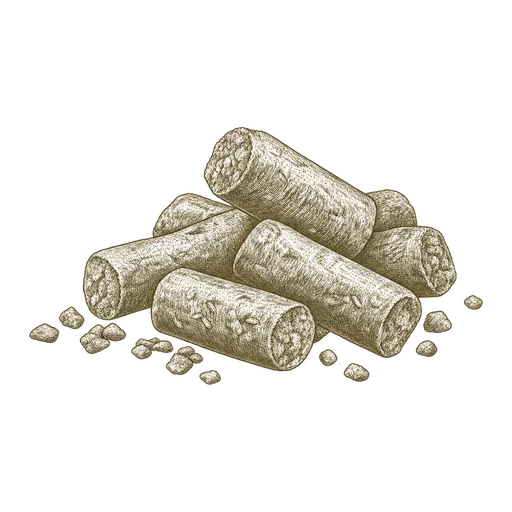
Whole hulls retain their original, coarse shape and take up more space than a ground or compacted product. That physical form can matter where the goal is to include bulky material, but it also affects storage, mixing and the way cattle encounter the ingredient in a ration. Whole pieces may not distribute or behave like smaller particles in every feeding system.
Grinding reduces particle size, while pelleting compacts processed material into a denser, more uniform form. These changes can help with handling and consistency in a feed-mixing process, but they also change the hulls’ physical structure. For cattle diets, processing deserves particular attention: smaller particles or compacted feed should not automatically be assumed to provide the same roughage effect as coarse material. A nutritionist should assess the actual form alongside the rest of the ration, rather than treating whole, ground and pelleted hulls as equivalent by weight.
Animal class is central to the decision. For example, the nutritional demands of growing or lactating cattle differ from those of animals with lower production demands. The appropriate role for a low-energy, low-protein ingredient therefore depends on who will consume it and what else is in the diet; there is no sound inclusion recommendation based on the hulls alone.
Before deciding whether whole hulls belong in a formulation, the nutritionist should review the full-ration analysis and the hulls’ available composition information. Relevant considerations include energy, protein, fiber, moisture and physical form, interpreted in the context of the other ingredients. This review can show whether the ration needs another source of energy or protein, whether the roughage contribution is appropriate, and whether particle size fits the feeding system.
Start by defining the intended use: which cattle will receive the ration, what other roughages it contains, and whether the hulls must remain whole through receiving and mixing. If a nutritionist’s formulation depends on a particular particle form, specify that rather than ordering simply by the name “peanut hulls.”
For a bulk inquiry, provide the requested form, quantity and unit, delivery destination, timing and receiving method. Include the quality information the nutritionist needs to evaluate the ingredient in the ration. Exact analysis, packaging and commercial terms depend on the specific offer. For sourcing, see the [Peanut Hulls ingredient page](/ingredients/peanut-hulls).
Do not assume so. Whole hulls are bulky and fibrous, but their form alone does not establish that they provide enough effective roughage for a particular ration. A nutritionist should assess the complete diet, including its existing forage and physical structure.
No. Grinding reduces particle size, and pelleting compacts processed material; both change the hulls’ physical structure and handling. Their roughage role should be evaluated in the actual ration rather than assumed to match whole hulls.
Review the cattle class, the full-ration analysis, the hulls’ available nutrient information and their physical form. Because peanut hulls are low in energy and protein, the assessment should account for how the rest of the ration supplies those nutrients as well as how its roughage is provided.
Focused guides to the specification, application, and delivery questions behind this ingredient.
Plan bulk peanut hulls receiving around the shipment’s quantity, packaging, unloading requirements, available space and the lot’s moisture condition.
Read this InsightCompare peanut hull analyses on a consistent reporting basis. Learn what moisture, protein, fiber, energy, fat and mineral results can tell you—and what to verify before using an analysis to evaluate an offered lot.
Read this InsightAlfalfa is a forage legume sourced as hay, silage, meal or pellets for livestock feed. Match the form to receiving and ration needs, then compare a lot-specific analysis on a consistent basis.
Explore ingredientAlfalfa meal is ground forage used in animal feed, with sun-cured and dehydrated processing routes and meal or pellet forms. Compare the offered process, physical form and analysis against the needs of the species and feed formulation.
Explore ingredientAlfalfa pellets are ground, compressed forage used in livestock feeding and compound feeds. Compare the drying process, alfalfa material, forage analysis and pellet characteristics to choose a form that fits your ration and receiving setup.
Explore ingredientAlmond hulls are the dried outer layer of the almond fruit, sourced for ruminant feed as hull-only material or as a hull-and-shell mixture. Compare the lot’s composition, physical form, and handling needs before arranging a bulk shipment.
Explore ingredient