
Brewer’s Yeast Bulk Receiving and Storage Planning
Plan bulk brewer’s yeast receiving around product form, shipment details, unloading capability and storage instructions suited to the offered product.
Read the guide
Practical guides to ingredients, specifications, and the questions worth asking before you buy.
Better ingredients.
Better questions.
Stronger connections.
Plan bulk brewer’s yeast receiving around product form, shipment details, unloading capability and storage instructions suited to the offered product.
Read the guideInstant WPC 80 is processed to improve wetting and dispersion, but “instant” is not a promise of identical results in every formula. Assess the powder in your own mixing process and verify lecithin source and ingredient details before sourcing.
Read the guideChoose between whole-kernel brown rice and brown rice flour by identifying the form your manufacturing process needs. Milling changes rice’s physical form; cooking and parboiling are separate processing states.
Read the guideCracked corn supplies starch-rich grain energy, but its role in a beef cattle ration depends on the cattle, forage, other ingredients and feeding management. Understand when processing matters and what to review with a nutritionist.
Read the guide
Compare the grade basis with current lot information for shelled pecans. Moisture, kernel development, color, defects, size and uniformity each describe a different purchase consideration.
Read the guideBulk peaches need form-specific receiving plans. Fresh fruit is perishable, dried peaches rely on packaging that maintains their low-moisture condition, and liquids or processing by-products require handling guidance for the actual product.
Read the guidePear pomace can be evaluated as a cattle or sheep ration component, but its role depends on the specific product, lot analysis and ration context. Distinguish the offered form and intended species before making formulation or sourcing decisions.
Read the guidePlan bulk sucrose receiving around the difference between crystalline and liquid forms, your facility’s unloading setup, and product-specific storage instructions.
Read the guideA practical evaluation of venison meal in dog-food formulation, covering lot composition, analytical basis, bone content and the ingredient’s role in the complete recipe.
Read the guideSplit yellow pea flour can be evaluated in wheat-based and other food formulations, but milling characteristics and recipe conditions shape its performance. Understand the particle-size and functional requirements of your process before defining a bulk specification.
Read the guide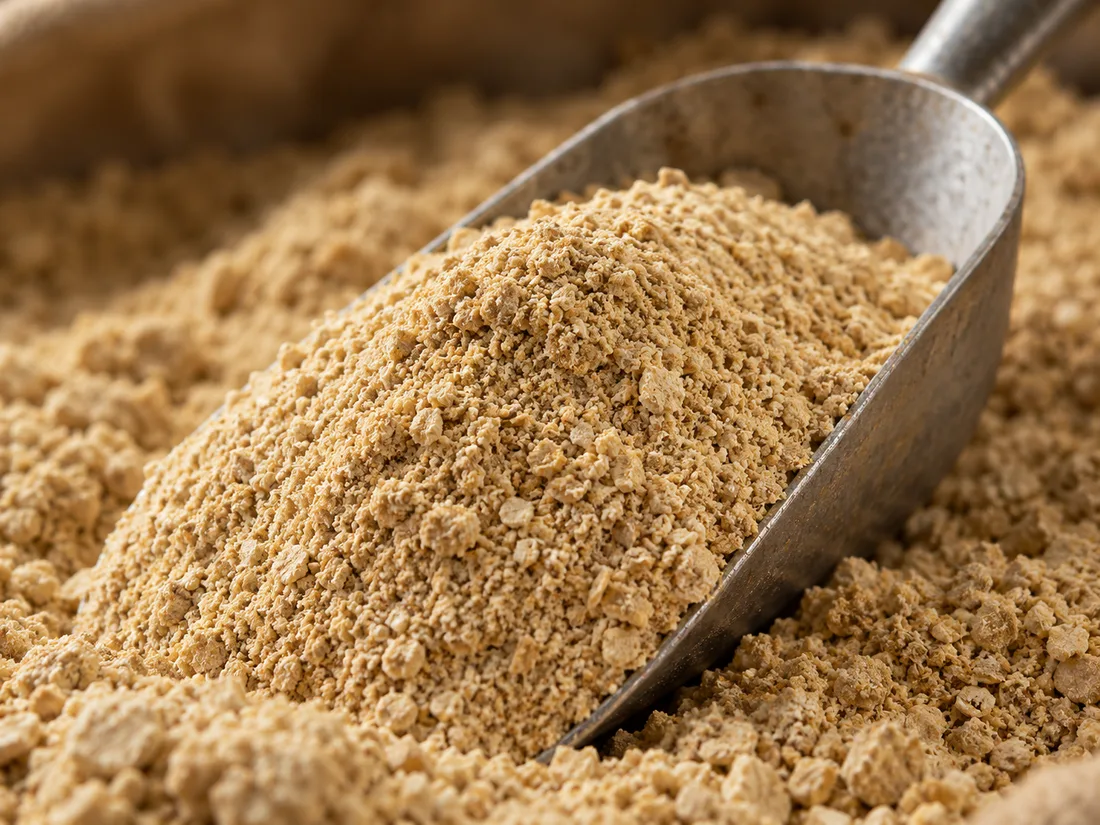
Soybean meal protein percentages reported as-fed and on a dry-matter basis cannot be compared directly. Align moisture, reporting basis, method information, and the context of each COA before evaluating supplier values.
Read the guidePlan fine sunflower chips orders around the site’s receiving setup: align quantity, destination and timing with suitable packaging, unloading capability and storage instructions for the actual offer.
Read the guideExplore ingredient specifications or share your volume, delivery needs, and buying requirements.