Start with the ration, not a target inclusion rate
Dried mealworms should be assessed as one ingredient within a complete poultry ration, not as a stand-alone protein addition. Start by defining the birds and the feed they will receive: species, production purpose, life stage, current formula, and whether the feed is mash, crumble, or pellet. Those details shape the formulator’s questions about nutrient contribution and how the ingredient will fit the manufacturing process.
There is no single inclusion rate that can be recommended from the ingredient name alone. A formulation decision depends on the dried mealworms’ verified composition, the rest of the ration, and the relevant nutritional requirements. Avoid carrying over a rate or performance claim from a different bird type, age, product, or feeding program without checking that it applies.
Choose a physical form that fits the feed process
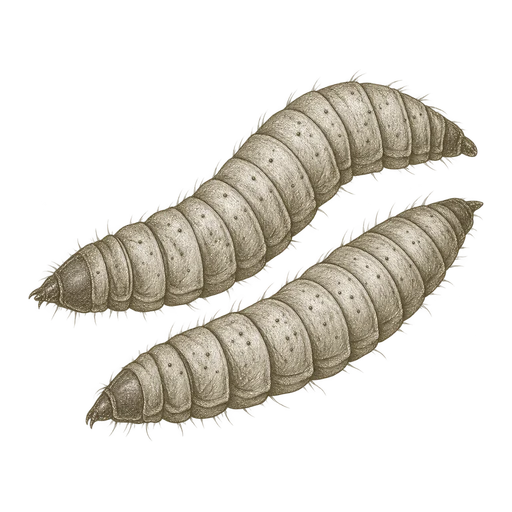
Whole dried larvae remain visually distinct in a feed or supplement. That form may be easier to recognize and handle as a separate component, but it does not distribute through a mixed ration in the same way as a ground ingredient. Buyers should consider particle size and whether the intended feed is mixed uniformly or offered with visible components.
Meal or powder is ground material. Smaller particles can be incorporated into a blend differently from whole larvae, but the exact grind matters: a coarser meal and a fine powder can behave differently during conveying, mixing, and handling. Ask for a clear description of the offered form rather than assuming that “meal” or “powder” means a consistent particle size across suppliers.
The right choice is the one the feed mill can receive, meter, mix, and deliver as intended. Compare the form with the plant’s equipment and the physical form of the existing ration. If the product is meant to remain visible, a ground form may not meet that objective; if uniform distribution is important, whole larvae may require particular attention in the mixing plan.
Use analysis to understand nutrient contribution
Protein and fat are central to evaluating dried mealworms in a poultry formula, but headline values alone do not establish how much the ingredient contributes to the finished ration. The formulator needs a representative, lot-specific analysis and must interpret it alongside the other ingredients. Protein analysis describes quantity; when protein quality is a formulation consideration, the relevant amino-acid information may also be needed.
Fat content affects the ingredient’s contribution to the ration’s overall lipid and energy balance. Moisture and other requested analytical measures can help buyers compare offers and assess handling or quality needs. Ask what the reported values measure and how they are expressed, so comparisons use the same basis. Do not assume that two products with the same ingredient name have interchangeable nutritional profiles.
The analysis should answer a specific formulation question. For example, the nutritionist may need to determine how the ingredient changes the ration’s protein and fat balance or whether additional compositional detail is necessary. Set the required measures with the formulator before comparing products, and distinguish verified results for the offered lot from general product descriptions.
Keep bird and life-stage claims specific
A poultry ration is designed for a defined bird and feeding purpose. A claim about suitability, nutrient contribution, or performance should therefore identify the species, life stage, product form, and conditions it addresses. Broad statements about all poultry do not provide enough context to make a formulation decision.
For a commercial review, have the nutritionist evaluate the proposed ingredient against the intended ration and applicable requirements. Confirm any species- or life-stage-specific claim using evidence relevant to the actual dried mealworm product. This is especially important when a claim relies on a particular form or analysis rather than applying generally to dried mealworms.
Turn the formulation decision into a sourcing specification
Once the formulator defines the required form and analytical profile, those details can become part of a clear sourcing request. Specify whole larvae, meal, or powder; the quantity and unit; delivery destination; and the analysis required for comparison. Include the intended feed process and any receiving constraints that could affect packaging or handling.
Ask that the analytical information correspond to the product being offered, and identify any additional quality or documentation needs before comparing quotations. Exact composition, packaging, availability, and commercial terms depend on the offer and must be established for the order. For product forms and sourcing, see the Dried Mealworms ingredient page after the formulation requirements are defined.
Common questions.
Should poultry feed use whole dried mealworms or meal?+
Choose based on how the ingredient should appear and move through the feed process. Whole larvae remain distinct, while meal or powder is ground and can be incorporated differently into a blend. Compare particle size and the mill’s mixing and handling needs before selecting a form.
What analysis matters when formulating with dried mealworms?+
Protein and fat are important starting points, interpreted alongside the full ration. Depending on the formulation question, the nutritionist may also require amino-acid information, moisture, or other measures. Use results for the offered product and compare values reported on the same basis.
Is there a standard inclusion rate for dried mealworms in poultry feed?+
No single rate can be set from the ingredient name alone. The appropriate formulation depends on the product’s verified analysis, the bird and feeding purpose, and the rest of the ration. Have a qualified formulator assess the specific product and application rather than relying on an unqualified general rate.