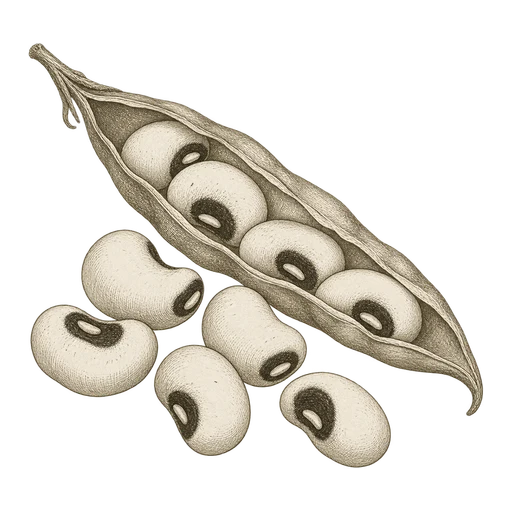
Seed and forage are different feed materials
Common-vetch seed is not interchangeable with vetch hay, silage or other forage. Seed is the plant’s reproductive material; forage consists of harvested vegetative growth, sometimes with flowers or seed depending on harvest stage. Their physical forms, nutrient contributions and potential feed concerns are not the same, so formulation information for one form should not be applied automatically to another.
Start by identifying the offered product precisely: common-vetch seed, another vetch species, or a vetch forage product. The word “vetch” alone may not resolve those distinctions. Identity matters because findings for a particular species, cultivar, plant part or preparation cannot be assumed to describe every product sold under a broader name.
Begin with the animal group and the complete ration
The relevant question is not simply whether vetch seed can be included in feed. It is whether a defined lot can be used in a ration for a particular animal group, at a level and in a form assessed by a qualified nutrition professional. Species, age or production stage, the rest of the diet and the product’s analysis all shape that evaluation.
Do not carry an inclusion rate or trial result from one species or diet into another without professional assessment. A result tied to a specific cultivar, processing method or experimental ration is not a universal feeding direction. The nutrition professional should review the seed’s identity and analysis alongside the full ration, rather than treating one nutrient value as proof of suitability.
Raw versus processed seed
Raw seed and processed seed are not equivalent descriptions for formulation. Processing can change physical characteristics such as particle size and how the material is handled or mixed. The word “processed,” however, does not by itself establish which treatment was used or how that treatment affects compounds of concern.
Ask what processing the lot has undergone and whether the offered material is raw, whole, cracked, ground or otherwise treated. If a supplier describes processing as reducing an anti-nutritional factor, the claim needs to be supported for that product and process by relevant analysis. Do not assume a treatment is effective—or that processing eliminates the need for evaluation—without evidence specific to the offer.
Why lot-specific anti-nutritional-factor results matter
Common-vetch seed can raise concerns about anti-nutritional factors. Results from a different lot, cultivar, species or processing treatment may not represent the seed under consideration. A lot-specific result gives a nutrition professional evidence to assess the actual material rather than relying on a general description or an unrelated trial.
When reviewing an analysis, establish which factor was tested, the method or reporting basis, and whether the sample represents the lot being offered. Also compare the result with the intended animal group and the professional’s formulation criteria. A test result is one part of the decision; it does not independently establish a safe or appropriate inclusion level.
Questions to settle before formulation
For a useful evaluation, provide the intended animal group, the seed’s confirmed identity, its raw or processed form, and the available lot analysis. Explain how the material would enter the ration and share the other ingredients and relevant formulation constraints with the nutrition professional. If the product is being considered as a replacement for another ingredient, identify what it would replace; similar labels do not mean ingredients have identical nutritional or formulation roles.
Before buying, ask for the offered product’s name and plant part, processing description and relevant analysis. Align the quote with your required quantity, delivery destination, packaging or receiving method, and timing. Exact lot details and commercial terms depend on the offer. For product forms and bulk sourcing options, visit the [Vetch](/ingredients/vetch) page.
Common questions.
Is common-vetch seed the same as vetch forage?+
No. Seed is the reproductive material; hay and silage are forage products made from harvested plant growth. Their form and feed characteristics differ, so identify the exact product before using formulation information.
Can a feed inclusion rate for vetch seed be used for every animal group?+
No universal rate should be inferred across species, diets, seed lots or processing methods. A qualified nutrition professional should evaluate the specific product and complete ration for the intended animal group.
What analysis should buyers request for common-vetch seed?+
Request the offered lot’s product identity and relevant analysis, including results for anti-nutritional factors when those are needed for the intended evaluation. The nutrition professional can specify the factors, methods and reporting basis relevant to the animal group and ration.