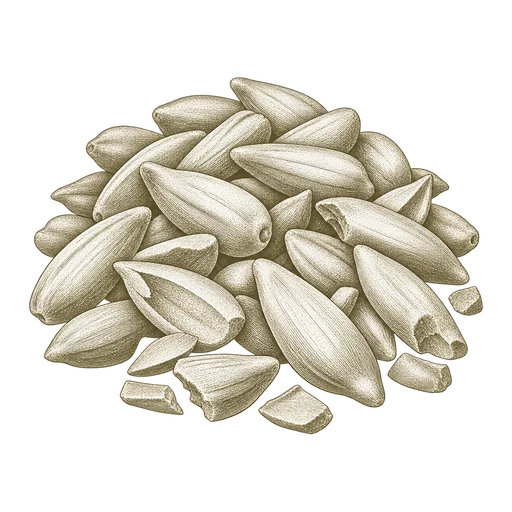
Start by defining the product form
Before comparing striped sunflower seed quality, make clear whether the purchase is for whole, in-hull seed or hulled kernels. These are different products: whole seed includes the hull, while hulled product is the kernel after the hull has been removed. A specification or sample for one cannot stand in for the other.
For whole seed, describe the intended use and how size affects sorting, dispensing or presentation. For kernels, clarify whether whole kernels, broken pieces or a mixture are acceptable. State whether the purchase is for food, feed or another use; intended use can change which attributes matter and what acceptance requirements apply. The product page for [Striped sunflower seed](/stripes) is the natural starting point for sourcing once you know which form you need.
Make size measurable
“Large” or “uniform” is not a complete size specification. Describe how size should be assessed, such as by a stated screen or sieve method, count, or another agreed measure. The right measure depends on what the receiving and processing equipment needs to handle. If appearance or feeding equipment depends on consistency, explain that purpose rather than relying on an undefined size label.
Ask for the measurement basis and sampling method alongside any reported result. A size figure is only useful for comparing offers when the method and sample basis match. If a supplier uses a grading term, ask what physical criteria it represents and whether that term applies to whole seed or kernels.
Separate cleanliness and condition factors
Moisture, foreign material, damage, insects and odor describe different aspects of lot condition; one result does not substitute for another. Moisture is relevant to storage and deterioration risk. Foreign material can include material that is not the intended seed product, while damaged seeds or kernels can affect appearance, handling and the usable portion of a shipment.
Insect presence and unusual or stale odors are condition concerns worth addressing directly in an acceptance specification. For odor, define what the buyer considers unacceptable rather than using a vague requirement for “good odor.” For foreign material and damage, identify which categories matter to the intended process and how they are to be measured. Any offered limits should be stated with units, a sampling basis and a test or inspection method—not inferred from a general grade name.
Use kernel yield only when the method is clear
Kernel-to-hull yield can help compare whole striped sunflower seed when the buyer needs to estimate how much kernel is recovered after dehulling. It is not interchangeable with a kernel specification: it describes the result of processing a whole-seed sample, not simply the condition of hulled product.
If yield matters, agree on the starting sample, dehulling procedure and calculation. Clarify whether the recovered kernels are weighed as collected or after additional cleaning, and how broken kernels or remaining hull fragments are treated. Without a shared method, reported yields from different lots or suppliers may not be comparable. If your operation buys finished kernels, specify kernel characteristics directly instead of using whole-seed yield as a proxy.
Turn grading observations into an acceptance specification
A grade or inspection description summarizes product characteristics; it does not automatically define the limits your purchase requires. Write down the attributes that affect your operation, the acceptable outcome for each, and how a sample or delivered lot will be evaluated. Include product form, size measure, moisture basis, foreign-material and damage definitions, insect and odor criteria, and a yield method only where relevant.
When comparing offers, check that the reported values refer to the same product form, methods and sampling basis. Request the actual lot analysis or inspection details associated with the offer, and establish how the delivered lot will be represented before relying on a pre-shipment sample. For a practical next step, define those requirements and then use the striped sunflower seed page to pursue a sourcing conversation.
Common questions.
What is the difference between whole striped sunflower seed and hulled product?+
Whole seed retains its hull; hulled product is the kernel after the hull is removed. Specify which form you need, because size, condition and yield criteria apply differently to each.
How should I compare kernel-to-hull yield?+
Compare yield only when the starting sample, dehulling procedure, cleaning steps and calculation are the same. Otherwise, differences in method can make reported results misleading.
Is a grade name enough to set striped sunflower seed quality requirements?+
Not by itself. A grade may describe product characteristics, but your purchase specification should state the particular limits, measurement methods and sampling basis that matter to your use.