Start with the feeder and the birds
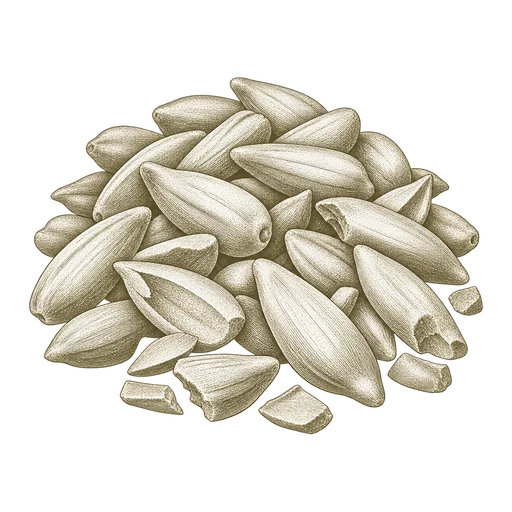
Striped sunflower seed is a larger seed with a tougher shell than black-oil sunflower. That difference matters at the feeder: birds need to handle and open the seed before they can eat the kernel. Choose striped seed when its size and shell suit the birds you want to serve and the feeders you use—not simply because both products are sunflower seed.
The best choice depends on the birds visiting a particular feeding site. Larger birds and birds able to crack a firm shell may use striped seed, while smaller birds can find its size or shell more difficult to manage. These are practical tendencies, not a universal species rule. Local bird populations, feeder access and competing food sources all affect what gets eaten.
How striped seed differs from black-oil sunflower
The visible shell and seed size are the main purchasing distinctions. Striped sunflower seed has a larger seed and thicker shell; black-oil sunflower is smaller and has a thinner shell that is generally easier for birds to open. As a result, black-oil seed is often the more accessible option when a feeder is meant to serve a broad range of birds, while striped seed can work where the target birds can handle it.
Neither type is automatically the better choice for every feeder program. A shell that is harder to open can reduce access for some birds, while seed size can influence whether it fits or flows reliably through a feeder. Before choosing a bulk product, consider the feeder opening, feeding behavior and target birds together. A seed that suits the birds but bridges in the feeder—or passes through an opening poorly—can undermine the intended use.
What changes when seed goes into a mix
In a mixed bird feed, striped sunflower seed is one component among seeds with different sizes, shapes and eating characteristics. Birds may select the components they can handle most easily, so the mix they encounter at the feeder can become different from the mix as delivered. If striped seed is left behind while other ingredients are eaten, that affects both feeding results and the composition of the remaining material.
Assess a proposed mix by looking at the whole formulation and its intended birds, rather than treating striped sunflower as a universal replacement for black-oil seed. The relative size of the seed matters for blending, flow and separation during handling; the shell matters for access at the feeder. Evaluate these practical factors alongside the other ingredients and the feeding system. Avoid assuming that a recipe or inclusion level is appropriate without a defined target use.
Match the product designation to the intended use
A name such as striped sunflower seed describes the seed type, but does not by itself establish a product’s intended use or a particular quality grade. For a bird-feeding application, state whether the material is intended for direct feeder use or as an ingredient in a formulated mix. If the supplier offer carries a specific product designation, use that description when assessing whether it matches the application.
Physical condition also matters in a bulk purchase. Seed that is broken, contaminated with unwanted material, or inconsistent in size can behave differently in a feeder or blend than the material a recipe was designed around. Set requirements according to the actual use: for example, whether the seed must meet a defined size expectation, cleanliness standard or other documented condition. Do not infer a specification from the word “striped.”
Make the bulk choice practical
Before requesting a quote, define the target birds, feeder type and whether the seed will be fed alone or blended. Share the required form, quantity and unit, destination, timing, packaging preference and receiving method. These details help match the offer to your operation and make it possible to consider how the product will be handled on arrival.
For a mix, provide the intended ingredient list or describe the formulation goal, and identify any requirements for size, cleanliness or product designation. For direct feeding, explain the feeder openings and the birds you aim to serve. Compare striped sunflower seed with black-oil sunflower on access, feeder performance and the feeding outcome you want—not on the seed name alone. For product details and sourcing, visit the [Striped sunflower seed page](/ingredients/stripes). Exact offer specifications and commercial terms depend on the supplier.
Common questions.
Is striped sunflower seed interchangeable with black-oil sunflower in a bird-feed mix?+
Not automatically. Striped seed is larger and has a tougher shell, so access and feeder performance can differ. Consider the target birds, feeder design, mix behavior and intended product designation before substituting it.
Which birds can eat striped sunflower seed?+
Birds that can handle and crack the seed may use it, but ability varies. Consider the birds at the feeding site and the feeder they use rather than relying on a universal species list.
What should a bulk buyer specify when sourcing striped sunflower seed?+
State whether it is for direct feeding or a mix, plus the quantity and unit, destination, timing, packaging and receiving method. Include any required product designation and relevant expectations for seed size, cleanliness or condition.