Grains
Alfalfa
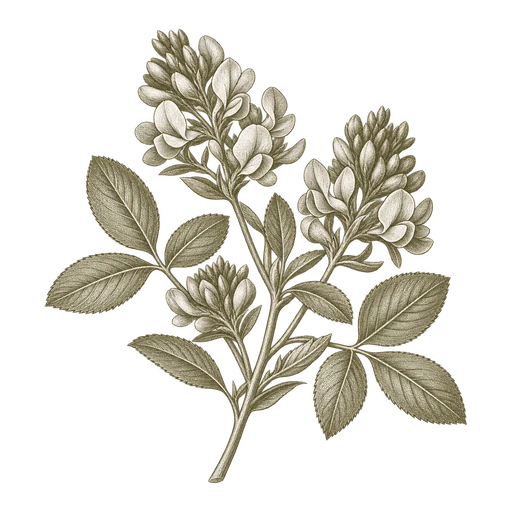
Alfalfa is a forage legume sourced as hay, silage, meal or pellets for livestock feed. Match the form to receiving and ration needs, then compare a lot-specific analysis on a consistent basis.
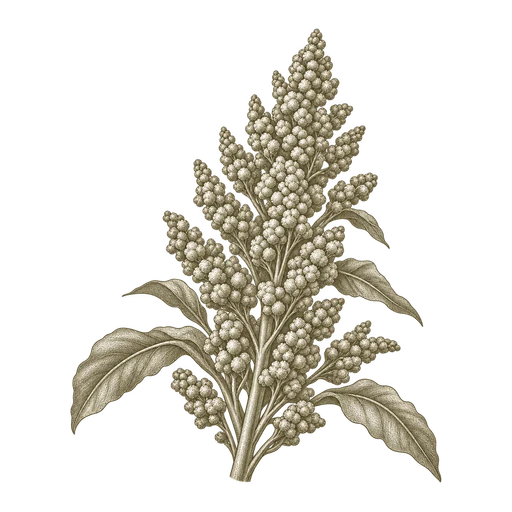
Explore ingredientQuinoa flour and whole quinoa play different roles in bakery recipes. Understand how milling, particle size, processing status and gluten structure shape the formulation questions to resolve before sourcing in bulk.
Quinoa flour is milled quinoa seed. Whole quinoa remains intact or nearly intact, so it contributes discrete pieces to a bakery product; flour disperses through the dough or batter and becomes part of its continuous mixture. The two forms are not interchangeable just because they come from the same crop.
In bread, flour can contribute to the dough’s solids and flavor throughout the loaf. Whole quinoa is more likely to be noticed as individual inclusions, depending on how it is prepared and used. In biscuits, flour changes the composition of the dough, while whole seed contributes texture in particular bites. Which role you want should guide the choice of form.
Quinoa flour does not provide the gluten network that wheat flour develops when mixed with water. In a wheat-based bread, replacing some wheat flour with quinoa flour therefore changes the ingredients responsible for dough structure. The result depends on the recipe and process; quinoa flour should not be treated as a like-for-like substitute for wheat flour.
That distinction matters less in products whose structure comes from a different combination of ingredients or from the biscuit-making process. Even there, flour composition can affect how the dough mixes and handles. Formulators should evaluate quinoa flour within the complete recipe rather than assume one substitution rule applies to breads, biscuits and other baked goods alike.
Milling determines the flour’s particle size and uniformity. Finer particles distribute more readily through a mix, while coarser material can create a more noticeable graininess or texture. Particle size can also influence how flour takes up liquid and how evenly it is incorporated. These are practical reasons to specify a flour’s grind when consistency between batches matters.
A recipe developed with one particle size may not produce the same mixing or finished texture with another. When comparing bulk offers, ask for the product description or specification that identifies the milling characteristics, and assess a sample in the intended recipe if possible. Do not rely on the word “flour” alone to describe the texture you need.
Quinoa flour’s flavor and color can be noticeable in baked goods, and may vary with the seed and its processing. The specific product’s description should clarify whether it is raw or has undergone a heat treatment; do not assume processing status from the ingredient name. Processing can matter to the intended recipe and to how the ingredient is handled during manufacture.
For a bread or biscuit development trial, consider flavor, color, particle size and processing status together. Record the flour identity and the recipe conditions so that a change in texture or taste can be related to a defined ingredient, rather than attributed to “quinoa flour” as a single uniform material.
Start by deciding whether quinoa should function as dispersed flour or as a whole-seed inclusion. For flour, define the intended bakery product, the role it should play in the recipe, and the particle texture that suits the process. Then identify any processing-status requirement and the product details needed to evaluate the ingredient consistently.
Before moving from development to a bulk order, compare the offered product description with the flour used in trials. Give the broker your required form, quantity, destination and receiving arrangement; exact specifications, packaging and commercial terms depend on the offer. Visit the quinoa ingredient page to explore sourcing the form that fits your formulation.
Not as a direct form-for-form swap. Flour disperses through dough or batter, while whole quinoa remains as seed pieces. The change affects the ingredient’s role and may affect texture and recipe balance, so evaluate the flour in the intended formulation.
Quinoa flour does not form the gluten network associated with wheat flour, so it is not a like-for-like replacement. Its effect depends on the rest of the recipe and process; test the intended formulation rather than assuming a universal substitution.
Identify quinoa flour rather than whole seed, the particle texture required, any processing-status requirement, and the intended bakery use. For a bulk quote, also provide quantity, destination and receiving details. Confirm the offered product’s specifications and commercial terms for the particular order.
Focused guides to the specification, application, and delivery questions behind this ingredient.
Plan bulk quinoa receiving by matching the product form and offered packaging to your facility’s unloading equipment, storage capacity and dry, pest-protected storage conditions.
Read this InsightCompare quinoa offers by first matching the product form, then evaluating moisture, particle size, foreign material, protein reporting basis and any relevant saponin-processing or test information.
Read this InsightAlfalfa is a forage legume sourced as hay, silage, meal or pellets for livestock feed. Match the form to receiving and ration needs, then compare a lot-specific analysis on a consistent basis.
Explore ingredientAmaranth can be sourced as grain, leaf meal or whole-plant forage, and those forms are not interchangeable in feed formulation. Specify the plant material, species and processing method, then compare lot analysis suited to the intended animal and use.
Explore ingredientBarley is a cereal grain used in cattle feed, malting, food and industrial processing. Whole and processed forms serve different needs; identify the intended use, processing state and receiving requirements when sourcing a bulk order.
Explore ingredientBrewers rice is a broken-rice milling fraction used in brewing, fermented products and animal feed. Compare broken, granulated or ground forms and review lot-specific physical and analytical details before sourcing in bulk.
Explore ingredient