Grains
Alfalfa
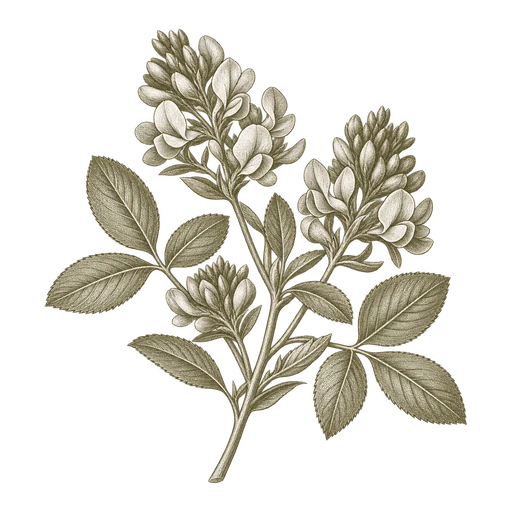
Alfalfa is a forage legume sourced as hay, silage, meal or pellets for livestock feed. Match the form to receiving and ration needs, then compare a lot-specific analysis on a consistent basis.
Explore ingredientPeanut hull pellets supply processed fiber, but their compact form is not equivalent to long-stem hay. Understand the physical-fiber distinction and discuss the pellets’ role in the full cattle ration with a ruminant nutritionist.
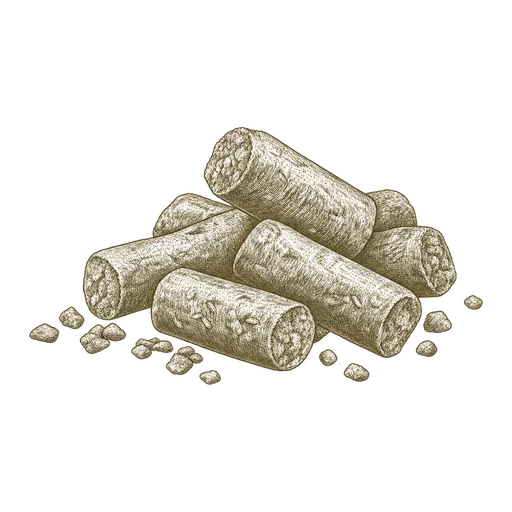
Peanut hull pellets are a processed, compact form of peanut hulls used as a feed ingredient. Their fiber content is only part of the ration question: the physical structure of the material also matters. Pelleting compresses material into a uniform shape, but the finished pellet does not retain the long, loose structure of hay.
That distinction matters in cattle diets because physically effective fiber describes more than the presence of fiber on an analysis. Particle size and structure influence how an ingredient contributes to chewing and rumination. A pellet can deliver hull material in a convenient form without being equivalent to long-stem forage.
Long-stem hay has coarse plant structure that cattle must handle and chew. Loose peanut hulls retain a less compact form than pellets, although their particle size and consistency can vary. Pelleted hulls are denser and easier to handle as a uniform ingredient, but that form can reduce the physical length and separation of the material compared with forage.
So, “contains fiber” and “supplies the same effective fiber as hay” are not interchangeable claims. Do not count peanut hull pellets as a direct replacement for long-stem roughage based on the ingredient name or a total-fiber figure alone. The intended roughage role needs to be evaluated in the context of the complete diet.
A ruminant nutritionist can evaluate how peanut hull pellets fit alongside the rest of the ration, including its forage sources, particle structure, and overall nutrient balance. The relevant question is not simply whether the pellets contain fiber, but what role they are expected to play and whether the ration has enough suitable physically effective roughage from its other ingredients.
Bring the nutritionist the current ration and the intended use for the pellets. Ask whether they are being considered as a supplemental feed ingredient, a partial roughage contribution, or another defined role. Also ask what form of forage remains in the diet and how the nutritionist will account for physical fiber across the whole ration. These questions support a formulation decision without assuming an inclusion rate or promising a feeding outcome.
An analysis helps describe the material, but it does not by itself show how the pellets will contribute physically in a ration. Review the offered product’s identity and form alongside the analysis, and establish what the reported measurements represent. Fiber measures can help a nutritionist compare ingredients, while particle size and the pellet’s physical characteristics help clarify how processing may affect its roughage role.
Ask whether the analysis applies to the offered product and whether its reporting basis is clear. If the proposed use depends on physical fiber, discuss what information about particle size or processing is available and whether it is sufficient for the nutritionist’s assessment. Do not infer that all peanut hull pellets have the same composition or physical characteristics.
Before arranging a bulk order, define the ration role with the person responsible for formulation. Then compare that use with the offered form and analysis. The purchase description should identify peanut hull pellets specifically—not loose hulls or another peanut co-product—so the ingredient being evaluated is the ingredient being quoted.
Share the intended quantity, unit, delivery destination, timing, and receiving method when requesting a quote. Packaging and unloading details affect whether the shipment can be received at your facility; exact commercial terms depend on the offer. For product information and sourcing, visit the Peanut Hull Pellets page.
No. Pellets contain processed hull material but do not retain the long, coarse structure of long-stem hay. Their contribution to the ration’s physical fiber should be evaluated separately, with the full diet in view.
Not on its own. Analysis describes the material’s measured composition, while particle structure and the rest of the ration affect its roughage role. Review the offered analysis and form with a ruminant nutritionist.
Ask what role the pellets would serve in the complete ration, what forage remains, and how physical fiber will be assessed across ingredients. Also establish the offered product form and analysis before sourcing.
Focused guides to the specification, application, and delivery questions behind this ingredient.
Plan a peanut hull pellet order around your site’s quantity, timing, unloading equipment and storage conditions. Knowing which lot-specific details to request helps prevent receiving and material-flow surprises.
Read this InsightA practical guide to comparing peanut hull pellet analyses: align moisture basis, units and nutrient definitions before comparing values, and evaluate energy figures and pellet condition in context.
Read this InsightAlfalfa is a forage legume sourced as hay, silage, meal or pellets for livestock feed. Match the form to receiving and ration needs, then compare a lot-specific analysis on a consistent basis.
Explore ingredientAlfalfa meal is ground forage used in animal feed, with sun-cured and dehydrated processing routes and meal or pellet forms. Compare the offered process, physical form and analysis against the needs of the species and feed formulation.
Explore ingredientAlfalfa pellets are ground, compressed forage used in livestock feeding and compound feeds. Compare the drying process, alfalfa material, forage analysis and pellet characteristics to choose a form that fits your ration and receiving setup.
Explore ingredientAlmond hulls are the dried outer layer of the almond fruit, sourced for ruminant feed as hull-only material or as a hull-and-shell mixture. Compare the lot’s composition, physical form, and handling needs before arranging a bulk shipment.
Explore ingredient