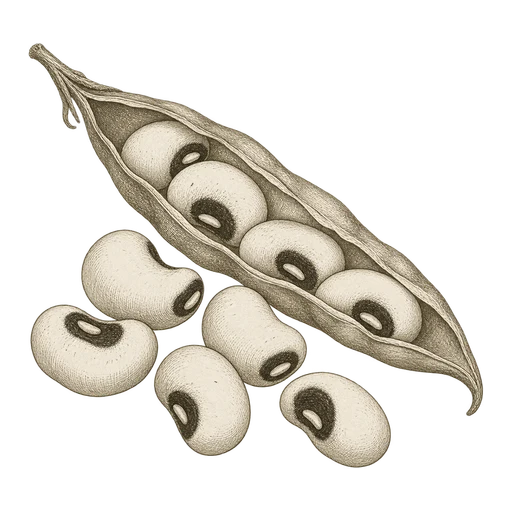
Start with what the flour is made from
Pea flour specifications are meaningful only when the product’s starting material and processing are clear. Pea type, crop lot, dehulling and milling can all influence the flour’s composition and behavior. A flour made from whole peas retains more of the seed coat than one made from dehulled peas, which can affect fiber content, color and the texture of the finished food.
Fractionation adds another distinction. Processing can separate pea components into ingredients with different protein or starch profiles. A fractionated pea ingredient is not automatically equivalent to ordinary ground pea flour, even if both are sold in powder form. Identify whether the offer is whole-pea flour, dehulled flour or a fractionated product before comparing its analysis or expected performance.
Particle size is a distribution, not one number
Milling determines how large the flour particles are and how much variation there is across the batch. Finer particles can disperse and hydrate differently from coarser ones, affecting mixing, texture and the time needed to incorporate the flour. Particle size alone does not predict a finished product’s quality: the formulation, mixing conditions and heating process also matter.
Ask how particle size is described. A sieve analysis reports the share retained or passing through specified openings; laser diffraction describes a distribution using a different measurement approach. Results from different methods are not automatically interchangeable. Where relevant, compare the full distribution or reported percentiles rather than relying on an undefined label such as “fine.” The method and sample preparation are part of the specification.
Read protein and moisture on a comparable basis
Protein is a useful composition measure, but the basis of reporting matters. An as-is result includes the sample’s moisture, while a dry-matter result expresses composition after accounting for water. Comparing figures on different bases can make two otherwise similar flours appear farther apart—or closer together—than they are. Keep the stated basis with every value and check that it matches the way your formulation or quality system evaluates ingredients.
Moisture also affects how a flour handles and how its composition reads. It can influence powder flow, clumping and storage management, as well as the comparability of as-is analytical results. Compare moisture results using the same analytical approach where possible; do not treat a specification value as meaningful without its method and reporting basis.
Use functional tests to answer a process question
A composition panel does not fully describe how pea flour will behave in a process. Water absorption can help when the concern is hydration, dough or batter consistency, or the amount of water needed to reach a target texture. The test conditions matter, so results are most useful when the method resembles the intended use or allows a valid comparison between offers.
Viscosity data can help when a process depends on thickening or on how a mixture flows during heating and cooling. Results depend on the test protocol and conditions, including how the sample is prepared and measured. Starch-damage data can be relevant when milling effects on water uptake or pasting behavior are important. It is not necessary for every application; request it when it addresses a defined formulation or process concern, and compare only results generated by compatible methods.
Build a specification around the application
For a useful comparison, record product identity, pea type or processing description, particle-size method and distribution, protein basis, and moisture method and basis. Add water absorption, viscosity or starch-damage testing only when it answers a specific question about mixing, hydration, texture or thermal processing. Establish the methods and acceptable limits with the supplier for the particular product and use; there is no single particle-size or functional threshold that fits every pea flour application.
Before requesting a quote, describe the process the flour must enter and the property that matters most—for example, a target particle distribution, a hydration behavior or a measured viscosity under a defined method. Then compare the actual specification and analysis for the offered lot against those requirements. For buyers sourcing pea flour, the [Pea Flour page](/ingredients/pea-flour) is the natural next step. Exact values, methods and lot analyses are product-specific and should be confirmed for the offer.
Common questions.
Is finer pea flour always better?+
No. Finer flour may disperse or hydrate differently, but the best particle distribution depends on the formulation, mixing equipment and finished texture. Compare distributions measured by the same method and test the flour in the relevant process.
Why can two pea flour protein results differ?+
The products may differ in pea type, dehulling or fractionation, and protein can be reported on an as-is or dry-matter basis. Check product identity, reporting basis and analytical method before treating the values as directly comparable.
When should I request viscosity or starch-damage data?+
Request these tests when thickening, flow, hydration or milling-related starch behavior is important to your process. Specify the test method and conditions, because results from different protocols may not support a direct comparison.