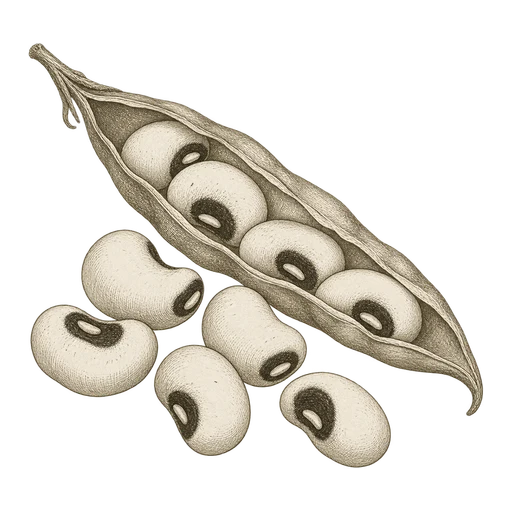
When cull beans enter a cattle-feed discussion
Cull Great Northern beans may be considered as a feed ingredient when a lot is unsuitable for its intended food market but still warrants evaluation for a different use. “Cull” describes a market disposition, not a consistent feed grade: beans can differ in size, appearance, damage, moisture, cleanliness and processing history. Those differences matter because a nutritionist cannot infer feeding value or safety from the name of the ingredient alone.
Start by identifying what the material actually is: whole dry beans, broken beans, screenings, or another stream, and whether it has been cooked or otherwise processed. Food-market rejection does not by itself establish that a lot is suitable for cattle. Material with spoilage, foreign matter, chemical contamination or an unclear history raises questions distinct from ordinary variation in bean size or color.
Evaluate the lot before its nutrient contribution
The first formulation question is whether the delivered material is consistent enough to characterize. Record its physical form and condition, and ask for an analysis representative of the lot. Moisture is relevant both to the actual amount of dry matter delivered and to storage decisions. Protein, fiber, fat and energy-related results help a nutrition professional compare the beans with other ingredients in the ration; the results should be interpreted on a clearly stated basis, such as as-fed or dry matter.
A single nutrient figure cannot describe every cull lot. Processing, damage and the proportion of broken or otherwise altered beans may change how an analysis represents the material and how it behaves in handling or mixing. If the beans are mixed with other fractions, a sample and analysis for the combined lot are more useful than assuming the whole-bean composition applies unchanged.
Place the beans in the whole ration
Great Northern beans should be evaluated as one component of a complete cattle ration, not as a stand-alone supplement. The nutritionist needs the animal class and production context, the existing forage and concentrate program, and the nutrients the ration is intended to supply. Those factors determine whether the bean lot contributes something useful or simply duplicates nutrients already present.
The bean’s condition and form also affect the practical formulation question. Whole beans, broken material and processed beans are not automatically interchangeable: particle size and processing can influence mixing, sorting and how the ingredient is incorporated into a feeding program. Any proposed use should account for the actual material offered rather than assuming that a food-grade whole bean and a cull fraction behave the same.
Treat lectin status as a processing question
Common beans contain lectins, including phytohaemagglutinin, and raw or inadequately heated beans raise a different question from properly processed beans. Heating can reduce lectin activity, but the word “cull” does not establish whether a lot has received a particular treatment or whether treatment was sufficient. Ask what processing occurred and whether there is information specific to the offered material.
Cattle-specific feeding evidence must be interpreted in context. Trials can differ in the bean material, processing, ration, animal group and study conditions; results from one setup do not establish a universal inclusion level or prove suitability for every cull lot. Nor should cattle findings be transferred to other species. A nutrition professional should judge whether the available evidence matches the ingredient and feeding situation under consideration.
Define the decision before sourcing
Before requesting a quote, define the intended form and the information needed to evaluate it: lot condition, processing history, representative analysis and any relevant contamination or quality checks. Also specify quantity and destination, since these affect how the material must be packaged, received and stored. Commercial terms and lot details depend on the specific offer.
Once the cattle-feed use and analysis requirements are clear, visit the Great Northern Beans page to explore sourcing. Treat any offered material as a lot to assess against the ration plan—not as a standardized cattle supplement by name alone.
BEFORE YOU REQUESTYour sourcing checklist.
- Specify whether the material is whole beans, broken beans, screenings or another fraction, and describe its condition.
- Request the processing history and a representative lot analysis; establish whether results are reported as-fed or on a dry-matter basis.
- Share the intended cattle class, ration context, quantity, destination and receiving constraints with the nutrition professional and sourcing contact.
Common questions.
Can cull Great Northern beans be used in cattle supplements?+
Possibly, but “cull” does not define a consistent feed ingredient. Suitability depends on the lot’s condition, processing history, analysis and role in the complete ration. A cattle nutrition professional should assess the specific material.
Why does processing matter when evaluating Great Northern beans for cattle?+
Common beans contain lectins, and raw or inadequately heated beans raise a lectin-related concern. The label “cull” does not tell you whether or how the lot was heated. Processing information should be evaluated for the actual material rather than assumed.
Do cattle trials establish one inclusion level for cull beans?+
No universal inclusion level follows from cattle trials that differ in bean material, processing, ration and study conditions. Evidence from a particular setup should not be generalized to every lot, ration or animal group, and cattle findings do not establish suitability for other species.