Kernel form is explicit
With the hull removed, the purchased ingredient is the kernel itself. This is a different receiving and formulation choice from whole seed that still includes hulls.
Ingredient intelligence · quote-ready sourcing
Also searched as Sunflower kernels, Sunflower seed kernels
Sunflower hearts are dehulled sunflower kernels used in food formulations and some feed applications. Compare whole or broken form, processing state and lot analysis against the intended use before arranging a bulk shipment.
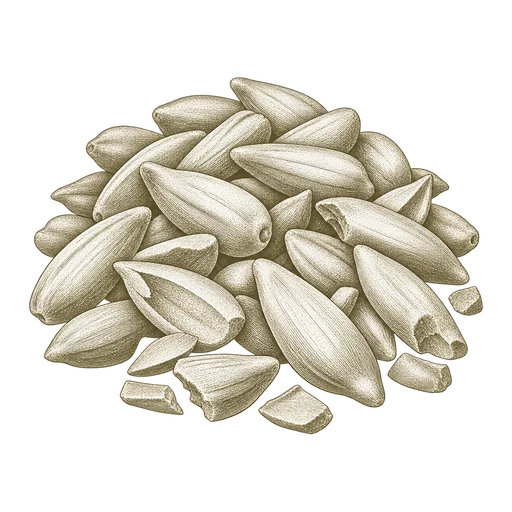
Sunflower hearts are the edible kernel after the hull is removed. Dehulling distinguishes them from whole sunflower seed, but does not establish a commercial grade, cleanliness level, or intended use.
Offers can differ by kernel integrity and processing, including raw or roasted product. Those differences affect how the ingredient fits a recipe or formulation, so state the required form rather than relying on the word “hearts.”
With the hull removed, the purchased ingredient is the kernel itself. This is a different receiving and formulation choice from whole seed that still includes hulls.
Intact kernels and broken pieces can affect appearance, texture and ingredient handling differently. Define the acceptable form for the finished product or production line.
Moisture, protein, fat and fiber results help food or feed teams evaluate the actual material. Reporting basis matters because dry-matter and as-fed values cannot be compared directly.
| Characteristic | Why it matters |
|---|---|
| Intended use and processing | Food or feed use and raw or roasted status determine which product and quality requirements apply. |
| Kernel form | Whole or broken kernels affect finished-product appearance, texture and handling. |
| Moisture and reporting basis | Moisture is relevant to product condition and storage; the reporting basis is needed for consistent analysis comparisons. |
| Protein, fat and fiber | These measures help formulation teams assess the ingredient against a recipe or ration. |
| Foreign material and kernel condition | Cleaning, damaged kernels and rancidity are relevant to quality expectations and intended use. |
No numerical commercial specification is established here. Compare current lot information with the requirements for the specific application.
For formulation, request current lot analysis for the measures that affect your recipe, such as moisture, crude protein, crude fat and fiber. Compare results on the same reporting basis; dry-matter and as-fed values are not directly interchangeable. A research sample’s composition is not a reliable specification for a commercial lot.
For food applications, define the quality criteria that matter to the finished product, including kernel condition, foreign material and any required contaminant or microbiological testing. Requirements depend on the product and program. A whole sunflower seed grading standard does not establish a grade for dehulled kernels.
Packaging, unloading and storage arrangements depend on the offered lot and the receiving facility. Include the quantity and unit, destination, packaging preference or receiving method, and timing in the request so the shipment can be evaluated against your operation.
Protect kernels from moisture and contamination and follow the storage guidance supplied for the specific product. Do not transfer storage limits for whole sunflower seed to dehulled kernels. For stored lots, kernel condition and signs of rancidity are useful quality considerations.
Sunflower kernels can be used as food ingredients. Specify whole or broken form and whether the product must be raw or roasted; define applicable requirements for kernel condition, foreign material and any required testing.
Kernels are an input for sunflower seed butter. The finished product depends on suitable kernel quality and processing, so identify the intended food program and its specific cleanliness, condition and testing criteria.
Dehulled sunflower seed has been studied as part of formulated broiler diets. That research context is not a general inclusion recommendation; use the offered lot analysis and have a nutrition professional assess its role in the intended ration.
Specify food or feed use, raw or roasted status, whole or broken form, quantity and unit, destination and timing. These details identify the product and help align the requested lot with its intended application.
State the packaging preference or receiving method and describe any facility constraints that affect unloading. Packaging and shipment arrangements need to fit both the offered product and the equipment at the destination.
Plan storage that protects the kernels from moisture and contamination, and follow the handling guidance for the specific lot. Whole-seed storage limits do not establish suitable limits for dehulled kernels; include any facility conditions that affect receiving and storage.
Cracked corn is mechanically broken corn grain used as an energy ingredient in livestock feed. Compare particle size, fines and lot analysis with the ration and receiving system before arranging a bulk order.
Explore ingredientDried black soldier fly larvae are an animal-feed ingredient available whole or ground, with some products partly defatted. Compare form, fat status and lot analysis to match the ingredient to your feed process and receiving setup.
Explore ingredientDried mealworms are Tenebrio molitor larvae supplied whole or ground into meal and powder for animal-feed applications. Choose the form to fit receiving and mixing needs, and compare nutrient analysis on a consistent basis because processing and test methods affect reported composition.
Explore ingredientHulled millet is millet grain with its outer covering removed, sold as whole grain and also used in flour or precooked forms. Species and processing status distinguish offers and help food manufacturers match the ingredient to their production method.
Explore ingredientSunflower hearts are the kernels inside sunflower seeds after the hull has been removed. The term does not specify whether they are raw or roasted, whole or broken, or intended for food or feed.
Start with intended use, processing state and kernel form. Then compare current lot results for relevant measures such as moisture, protein, fat, fiber and foreign material, using the same reporting basis. Food buyers may also need defined testing and condition requirements.
Keep the product protected from moisture and contamination and follow storage guidance for the specific lot; whole-seed storage limits do not automatically apply to kernels. Delivered pricing depends on the offered product, quantity, packaging, destination and timing, which should be included in the request.
Send your volume, destination, and key specifications. A broker can follow up with availability and commercial terms.