Color is a defined attribute
The U.S. green-lentil designation describes clear seed with naturally uniform green color. This helps buyers specify appearance separately from processing form and regular grade.
Ingredient intelligence · quote-ready sourcing
Green lentils are dry pulse seeds sold in forms such as whole, split, dehulled and flour. Compare the processing form, grade documentation, color, moisture and cleanliness against the needs of your food process or reviewed feed formulation.
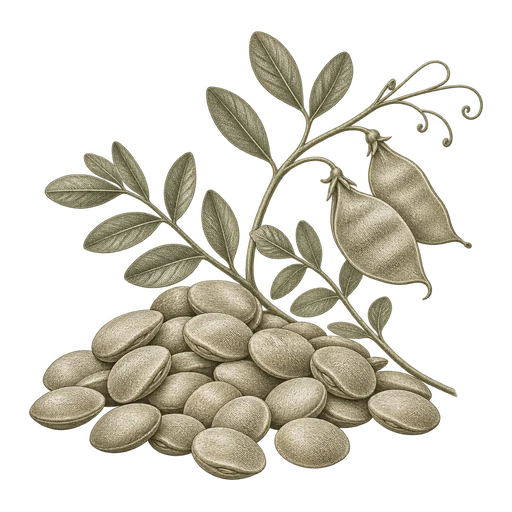
Green lentils are dry seeds of Lens culinaris. In U.S. grading, the green special designation refers to clear-seeded lentils with naturally uniform green color; it does not establish a cultivar or processing method.
Whole, split, dehulled and ground forms differ physically and are not interchangeable descriptions. Identify the form separately from any requested grade or green designation.
Lentils are used in cooked foods and flour applications. Off-grade lentils can be used as livestock feed material, but the particular lot and intended species require formulation-specific review.
The U.S. green-lentil designation describes clear seed with naturally uniform green color. This helps buyers specify appearance separately from processing form and regular grade.
Splitting changes seed size, dehulling removes the hull, and grinding produces flour. Those physical differences affect how the ingredient enters a food process.
Grade, moisture, foreign material, defects and color describe different aspects of a lot. Reviewing them separately gives a clearer comparison than relying on a grade label alone.
| Characteristic | Why it matters |
|---|---|
| U.S. grade and green designation | A grade and the color-based special designation are distinct claims; request documentation for the claims required. |
| Moisture | The lot result informs quality comparison and storage planning; the U.S. grading threshold is not a storage guarantee. |
| Foreign material and defects | Stones, defective seed, skinned or wrinkled lentils and other material affect lot cleanliness and grade. |
| Color and uniformity | These matter when the green appearance is part of the product requirement. |
| Processing form | Whole, split, dehulled and ground products have different physical characteristics and process roles. |
| Size or sieve information | Useful where the buyer's process requires a defined size; compare the stated measure and basis. |
The U.S. standard classifies lentils above 14.0% moisture as Sample Grade. This is a grading rule, not a guarantee of suitable storage. Compare lot results on a clear, consistent basis; grade factors are determined after dockage removal, while color is assessed after specified material is removed.
For human food, lentils are used as a pulse ingredient in cooked foods and as a source material for flour. The appropriate form depends on the process: whole seed preserves its shape, while split, dehulled or ground material enters a recipe differently. Lentils contain protein and fiber, but those general characteristics are not a substitute for the nutritional analysis of a specific lot.
Lentils that do not meet food-grade standards have been used as livestock-feed material, but that does not establish the suitability of every off-grade lot for every species or ration. Feed buyers need the lot’s identity and analysis reviewed against the intended formulation by their nutrition professional; do not infer a feed-use specification from the green color or a food grade.
A useful green-lentil specification can address grade, natural green color and uniformity, defective seed, foreign material, stones, skinned or wrinkled lentils, contrasting lentils and other admixture. These factors help distinguish visual quality and cleanliness. When comparing results, note the stated basis: U.S. grade factors are determined after dockage removal, and color is assessed after specified material is removed.
Moisture is a separate measure, not a guarantee of storage life. Under the U.S. standard, lentils above 14.0% moisture fall into Sample Grade; this is a grading threshold, not a recommended storage target for every facility. Request the actual lot result and its test basis, along with grade documentation and any size or sieve information needed by your process.
Treat form, quality and receiving as linked decisions. A whole-seed order and a dehulled or split order may call for different processing and handling arrangements, while the destination’s unloading equipment and storage setup determine which packaging or delivery arrangement is practical. State those constraints with the quantity and delivery location when requesting a quote.
Keep moisture and storage history in view when evaluating a lot. Harvest and storage moisture guidance is not a receiving specification, and a grade threshold alone cannot establish how a shipment was stored. Set acceptance requirements using the actual moisture result and your facility’s handling needs, and protect stored lentils from moisture and contamination.
Whole lentils retain their seed shape and suit foods where intact lentils are wanted. Specify whole seed and the color or grade requirements that matter to the finished product.
Splitting reduces the seed into pieces, while dehulling removes the outer hull. Identify each treatment needed so the form matches the food process rather than relying on the broad name green lentils.
Lentils can be ground into flour for food applications. If hull content or particle size matters to the formulation, make those requirements explicit rather than assuming a particular milling result.
Off-grade lentils may serve as feed material, but suitability depends on the actual lot and intended species. Have the lot information assessed for the specific formulation; food-grade or green-designation language does not establish feed suitability.
State whole, split, dehulled or flour form, any required grade and green designation, quantity and unit, destination, and timing. Those details distinguish the product needed from the broader green-lentil description and shape the delivered quote.
Describe the packaging preference, unloading equipment and receiving constraints at the destination. Packaging and delivery arrangements depend on the offered lot and route, so include what your facility can receive before comparing options.
Use the actual lot moisture result and available storage history when planning receipt; a grade threshold is not a storage-life guarantee. Keep the handling plan focused on preventing moisture exposure and contamination in the receiving and storage areas.
Austrian winter peas are a field pea type supplied for uses including cover cropping, forage and livestock feed. Specify whether you need planting seed, dry grain, hay or silage, since each form serves a different purpose and has different quality considerations.
Explore ingredientDry black beans are used in packaged foods, prepared dishes and canning. Compare whole versus broken or split composition, and assess canning performance separately when the beans will be processed.
Explore ingredientChickpeas are dry edible pulses sold as Kabuli or Desi seed, whole, split, dehulled or milled into flour. Choose class and form to match the food process or formulation, and compare lot moisture, size, defects and receiving needs.
Explore ingredientFaba beans are grain-legume seeds used in food and feed, supplied in forms ranging from whole or split seed to milled and more highly processed ingredients. Choose by intended use and form, then compare the relevant lot analysis and handling needs.
Explore ingredientCommonly distinguished forms include whole, split, dehulled, split and dehulled, and ground into flour. These are processing distinctions, not a guarantee that every form is offered. Name the exact form needed and clarify whether the hull should remain.
No. In the U.S. standard, green lentils are a special designation for clear-seeded lentils with a naturally and uniformly green color. A U.S. grade is a separate claim and should be supported by the lot’s grade documentation.
The specified form and grade, quantity, packaging, destination, timing and freight arrangement all affect a delivered quote. Provide those details together; any offered lot’s price and commercial terms are confirmed by the broker handling the request.
Send your volume, destination, and key specifications. A broker can follow up with availability and commercial terms.


