Form affects finished appearance
Whole seeds retain their shape, while split lentils are divided. Naming the required form helps align the ingredient with a recipe, pack format or processing step.
Ingredient intelligence · quote-ready sourcing
French green lentils are sold as whole or split lentil seeds for food uses where form, color and cooking characteristics matter. The name does not guarantee French origin or Puy identity, so compare lot identity, physical quality and intended-use requirements when sourcing in bulk.
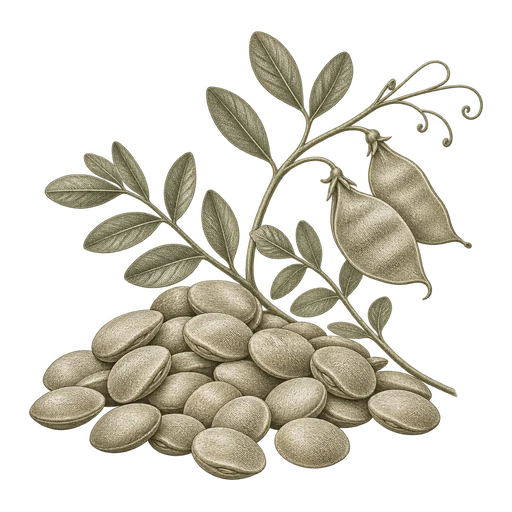
French green lentils are seeds of Lens culinaris sold under a market name. The name does not define a separate U.S. grade or establish a cultivar or country of origin. Buyers who require a particular origin or identity should specify it and request supporting documentation.
Lentille verte du Puy is a distinct protected designation for Anicia lentils grown in a defined area of France. Its described pale-green color with dark green-blue marbling, thin skin and non-floury kernel are specific to that product identity and should not be treated as guaranteed attributes of all French green lentils.
Whole or split form, seed size, color, moisture and foreign material can all matter to food processing. Compare these characteristics alongside the intended use; the product name by itself does not communicate a complete quality specification.
Whole seeds retain their shape, while split lentils are divided. Naming the required form helps align the ingredient with a recipe, pack format or processing step.
A green or marbled appearance does not establish French origin or protected Puy status. Buyers who need a particular identity should evaluate the lot’s stated variety and origin documentation.
Moisture, damaged or skinned seeds, stones and other foreign material can be assessed in a lot report. Reviewing the measurement and sampling basis makes quality comparisons more meaningful.
| Characteristic | Why it matters |
|---|---|
| Identity and origin | Separates the broad market name from a stated cultivar, country or protected designation. |
| Whole or split form | Affects seed appearance and suitability for the intended recipe or process. |
| Size and color | Useful when the finished product requires a consistent appearance or defined seed size. |
| Moisture | A reported quality measure relevant to grading and receiving decisions. |
| Foreign material and damaged seeds | Stone, foreign-material, insect-damage, heat-damage and skinned-seed results help characterize physical cleanliness and condition. |
| Grade and sampling basis | Establishes which grading framework and sample the reported results represent. |
The U.S. lentil standard is a general grading framework, not an automatic specification for every lot marketed as French green lentils. Obtain the actual lot analysis or inspection documentation for an offer.
A useful lot review goes beyond the name on a sales sheet. Moisture, splits or skinned seeds, foreign material, stones, insect damage, heat damage, color and size distribution can affect cleaning, appearance and processing. Request the actual lot analysis or inspection record, including how the sample was taken and the basis used for reported percentages.
The U.S. standard provides a grading framework for lentils generally, not a guaranteed specification for every commercial lot. For example, its dockage-free U.S. No. 1 grade sets limits for defective lentils, foreign material and skinned lentils and requires good color. Such grade limits are meaningful only when the lot is represented and documented under that grading system.
French green lentils are purchased for food products in which lentil flavor, color and seed form are part of the finished result, including prepared dishes, salads, soups and packaged dry pulses. The intended use determines whether whole seeds, split product, a particular appearance or tighter foreign-material limits matter most.
Cooking behavior should be tied to the specific product rather than inferred from the name. The protected Puy product is described as having a thin skin and non-floury kernel, but this does not establish the same cooking result for every French green lentil lot. If cooking time, hydration or finished texture matters to production, define the desired outcome and evaluate a representative sample.
Start the sourcing request with identity, form, quantity and destination. State whether the requirement is for whole or split lentils, the intended food use, and whether French origin or the protected Lentille verte du Puy designation is essential. If it is, require the corresponding identity and origin documentation rather than relying on the common market name.
Packaging, inspection documents, freight and delivery timing depend on the lot and commercial offer. Share receiving constraints and the quality measures that matter to your process; compare delivered offers using consistent units and the same grade, analysis and packaging assumptions.
Whole lentils can be specified where the finished dish calls for visible, intact seeds. Define form, size and appearance needs; the French green name alone does not guarantee a particular cooked texture.
Lentils are used as a primary ingredient in soups and other prepared foods. The choice between whole and split product should reflect the desired appearance and process, with cooking expectations assessed against the offered lot.
Where lentils remain visible in a finished salad or chilled product, seed integrity and color can be important purchase criteria. Specify those characteristics rather than assuming every lot has the same appearance.
Whole product can be sold as a dry pulse ingredient. Size, color, foreign material and any origin or protected-name claims help define the product description and quality requirements.
State whole or split form, any required size or identity, quantity and unit, destination and requested timing. If French origin or Lentille verte du Puy is essential, identify that explicitly because the common market name does not establish either.
Specify the packaging and receiving method your facility can handle, along with any constraints on unloading or inspection. Packaging and freight arrangements depend on the lot and commercial offer, so these details are needed to evaluate a workable delivery.
Moisture, live insects and objectionable odor are relevant lentil quality concerns. Identify the receiving and storage controls your facility uses and request the lot’s moisture and condition information; do not assume a storage duration or condition from the product name.
Austrian winter peas are a field pea type supplied for uses including cover cropping, forage and livestock feed. Specify whether you need planting seed, dry grain, hay or silage, since each form serves a different purpose and has different quality considerations.
Explore ingredientDry black beans are used in packaged foods, prepared dishes and canning. Compare whole versus broken or split composition, and assess canning performance separately when the beans will be processed.
Explore ingredientBlack-eyed peas are mature dry cowpea seeds sourced for human-food markets and processing. Compare whole or processed form, grain condition, moisture context, and the receiving and storage plan before arranging a bulk order.
Explore ingredientChickpea flour is milled from chickpeas for use in breads, baked goods, tortillas, pasta, batters and other foods. Processing history and particle size affect formulation behavior, so compare those details alongside analysis and receiving requirements when sourcing in bulk.
Explore ingredientNo. “French green lentils” alone is a market name and does not establish French origin. Lentille verte du Puy is a protected designation with a defined variety and growing area; ask for identity and origin documentation if those are requirements.
Whole lentils retain their intact seed shape, while split lentils are divided. The form affects appearance and how the ingredient enters a recipe or processing line, so specify the required form rather than relying on the product name.
Compare the lot’s identity, moisture, size, color, splits or skinned seeds, foreign material, stones and damaged-seed results. Check the sampling and reporting basis, and distinguish a documented grade from a supplier’s general product description.
Send your volume, destination, and key specifications. A broker can follow up with availability and commercial terms.