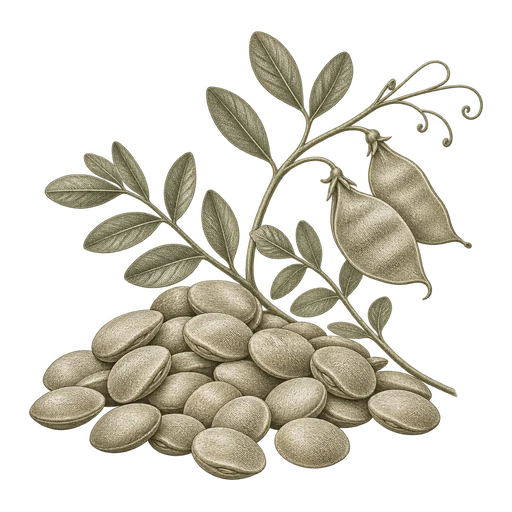
Distinct forms for different processes
Whole and split beans retain seed structure, while meal and flour are ground. The difference affects particle size and how the material enters a blend or recipe.
Ingredient intelligence · quote-ready sourcing
Also searched as Fava beans, Field beans, Broad beans
Faba beans are grain-legume seeds used in food and feed, supplied in forms ranging from whole or split seed to milled and more highly processed ingredients. Choose by intended use and form, then compare the relevant lot analysis and handling needs.

Faba beans are the seeds of Vicia faba, a grain legume also known as fava, field or broad bean. Seed size and color vary, and the crop name does not identify a specific grade or intended use.
Commercial forms range from whole or split seed to meal and flour; concentrates and isolates are further processed ingredients. Processing and form affect composition, handling and performance, so identify the exact material needed for a food or feed application.
Whole and split beans retain seed structure, while meal and flour are ground. The difference affects particle size and how the material enters a blend or recipe.
Faba beans contribute protein and energy, but composition varies. Lot analysis gives nutritionists a basis for evaluating the ingredient within a complete diet.
Flour, concentrate and isolate are not interchangeable: processing can change functional behavior, flavor and color. Match the ingredient type to the role it needs to perform in the finished food.
| Characteristic | Why it matters |
|---|---|
| Form and processing | Distinguishes whole or split seed from meal, flour, concentrate or isolate, which handle and function differently. |
| Protein, fiber and energy-related analysis | Supports feed formulation comparisons; review the analytical basis so results can be compared consistently. |
| Moisture and physical condition | Relevant to storage management and to evaluating damage or splits in whole seed. |
| Antinutritional-factor results | Factors such as tannins, vicine and convicine can vary; relevance depends on intended species, diet or food process. |
| Food functional and safety information | Food applications may depend on processing, functional properties, allergen and microbiological information. |
The measures required depend on whether the ingredient is intended for food or feed. Request lot-specific results and identify the analytical basis; no numerical offered specification is established here.
Faba beans contribute protein and energy to feed formulations, but their composition is variable. Protein, fiber, moisture and energy-related measures help a nutritionist compare a lot with the diet’s requirements; the analytical basis matters when comparing results from different offers.
Tannins, vicine, convicine, phytate and enzyme inhibitors are among the compounds that can vary with cultivar and growing conditions. Their relevance depends on the intended animal and complete diet. Grinding, dehulling, cooking and extrusion are among the processing methods used, but the word “processed” alone does not establish a particular nutritional effect.
Faba beans are used as dried beans and in ingredients such as flour for products including breads and pasta. Food processing can change flavor, color and functional behavior, so the right form depends on how the ingredient needs to work in the finished product.
Feed material should not be treated as a food ingredient by default. For a human-food application, establish that the offered material is intended for food use and review the relevant processing, safety, allergen, microbiological and functional-property information for that product.
A useful comparison includes the lot’s analytical results and their basis, moisture, physical condition and any intended-use-specific measures. For feed, the nutritionist may also need energy-related values, fiber and relevant antinutritional-factor results. For food, processing history and functional properties can be central to performance.
Whole faba beans are plump seeds and can be damaged during handling. Moisture and temperature also matter in storage management. Discuss the form, packaging and receiving setup alongside the quality requirements, and keep the beans protected from excess moisture and avoidable mechanical damage.
Faba beans can contribute protein and energy in livestock diets. The nutritionist should evaluate the lot’s analysis, animal class and the complete ration; crop identity alone does not establish suitability or an inclusion rate.
Whole or split beans and ground meal present different physical forms to a mill or mixing process. Specify the required form and the analysis needed to compare it with other feed ingredients.
Flour can be incorporated into foods such as breads and pasta. Its role depends on the recipe and the flour’s functional, flavor and color characteristics, which can be affected by processing.
Concentrates and isolates are more highly processed than whole beans or flour and have distinct ingredient properties. Identify the required ingredient type and the function it needs to perform in the finished product.
Identify whole, split, milled or further processed material, and state whether it is for food or feed. Include quantity and unit, destination and timing because form and intended use determine which quality information and delivery details matter.
State the required packaging or receiving method and describe unloading constraints at the destination. Whole seed, split beans and milled material differ physically, so the receiving setup should be matched to the offered form rather than assumed.
Include the facility’s approach to moisture and temperature management. Whole faba beans can be mechanically damaged during handling, so plan to limit avoidable impact and keep the material protected from excess moisture.
Austrian winter peas are a field pea type supplied for uses including cover cropping, forage and livestock feed. Specify whether you need planting seed, dry grain, hay or silage, since each form serves a different purpose and has different quality considerations.
Explore ingredientDry black beans are used in packaged foods, prepared dishes and canning. Compare whole versus broken or split composition, and assess canning performance separately when the beans will be processed.
Explore ingredientChickpeas are dry edible pulses sold as Kabuli or Desi seed, whole, split, dehulled or milled into flour. Choose class and form to match the food process or formulation, and compare lot moisture, size, defects and receiving needs.
Explore ingredientGreen lentils are dry pulse seeds sold in forms such as whole, split, dehulled and flour. Compare the processing form, grade documentation, color, moisture and cleanliness against the needs of your food process or reviewed feed formulation.
Explore ingredientCommercial forms can include whole or split beans, meal or flour, and more highly processed ingredients such as concentrates or isolates. These forms differ in processing, composition and handling, so identify the specific form needed for the application.
Not by assumption. Food and feed uses have different requirements, and processing affects properties such as flavor, color and functionality. Establish the intended use and review the relevant information for the offered material before incorporating it.
Delivered pricing depends on the offered form and quality requirements, quantity, destination, packaging or receiving arrangement, timing and freight. Provide those details to get a quote for the specific requirement.
Send your volume, destination, and key specifications. A broker can follow up with availability and commercial terms.