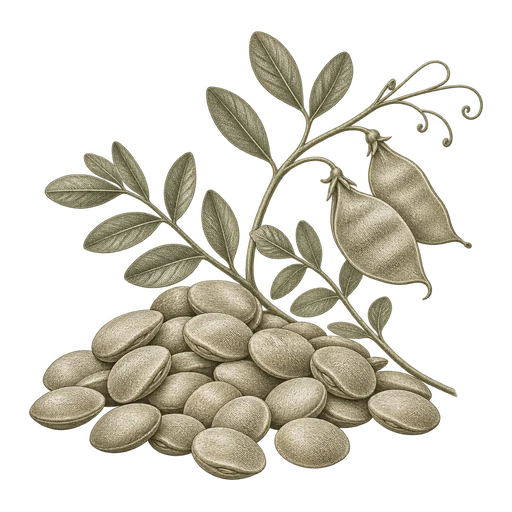
Class affects appearance
Kabuli and Desi chickpeas differ in typical size and color. Naming the class helps align a purchase with the appearance and seed characteristics required by the process.
Ingredient intelligence · quote-ready sourcing
Also searched as Garbanzo beans
Chickpeas are dry edible pulses sold as Kabuli or Desi seed, whole, split, dehulled or milled into flour. Choose class and form to match the food process or formulation, and compare lot moisture, size, defects and receiving needs.

Chickpeas, or garbanzo beans, are the dry edible seeds of Cicer arietinum, an annual grain legume. Kabuli chickpeas are generally larger and lighter-colored; Desi chickpeas are generally smaller and darker. Class and size influence appearance and can matter to processors seeking consistent seed dimensions.
Bulk forms include whole seed, split or dehulled seed, and flour. Whole chickpeas are suited to processes that retain intact seed; flour is a milled ingredient for batters, doughs and blended foods. Processing such as soaking, cooking, roasting, fermentation or dehulling can alter the ingredient, so distinguish the form supplied from further processing at the plant.
Kabuli and Desi chickpeas differ in typical size and color. Naming the class helps align a purchase with the appearance and seed characteristics required by the process.
Whole seed preserves an intact kernel, while split or dehulled seed and flour are processed forms. Matching the form to the line avoids treating ingredients with different physical structures as interchangeable.
Moisture, damaged kernels, foreign material and signs of heating or infestation describe physical condition. These checks support receiving and storage decisions but do not replace food-safety or formulation requirements.
| Characteristic | Why it matters |
|---|---|
| Class and size | Kabuli and Desi differ in typical color and size; size distribution can matter for appearance and processing consistency. |
| Physical form | Whole, split, dehulled and flour forms have different structures and uses in production. |
| Moisture and grade | For U.S. grading, 14.0% is the maximum moisture for U.S. No. 1, No. 2 and No. 3; above that, chickpeas receive the special grade High Moisture. Grading is not a storage guarantee. |
| Foreign material and defects | Foreign material, damaged kernels, stones and contrasting classes are relevant physical-condition measures in grading. |
| Feed analysis and processing | For feed formulations, request analysis and processing details relevant to the animal species and diet; a single value or food-grade designation does not establish feed suitability. |
No single analysis applies to every chickpea class, form or end use. Compare lot-specific results on the stated measurement basis.
Useful comparisons include Kabuli or Desi class, whole or processed state, seed size distribution, foreign material, damaged kernels and moisture. These measures answer different questions: class and size relate to appearance and processing uniformity; defect and foreign-material results describe physical condition; moisture informs handling and storage decisions.
For U.S. grain grading, chickpeas above 14.0% moisture receive the special grade High Moisture; 14.0% is the maximum for U.S. No. 1, No. 2 and No. 3 grades. This is a grading criterion, not a guarantee of storage stability or food safety. For feed formulations, request analysis suited to the intended diet and identify processing history; food-grade identity alone does not establish suitability for a particular animal or ration.
A useful bulk requirement names the chickpea class and form, quantity and unit, destination, timing, and how the site receives and unloads product. Packaging and shipment arrangements depend on the offered lot and destination, so receiving equipment and site constraints should be part of the freight discussion.
Moisture and physical condition matter in storage. Discuss the lot’s moisture and storage history, and inspect for signs of heating, infestation, weather damage or unusual odor at receipt. Keep chickpeas protected from moisture and contamination under conditions appropriate to the facility; do not treat a grade threshold as a storage limit.
Whole seed is used in cooked and canned foods, soups and pastes where the finished product retains chickpea pieces. Class, seed size and condition can affect appearance and processing consistency.
Milled chickpeas are used in products such as baked goods, pasta, noodles and biscuits. Flour is a distinct ingredient from whole seed; particle characteristics and the recipe determine how it performs in a particular formulation.
Splitting and dehulling change the seed’s physical structure before further processing. Specify this state when a process calls for prepared seed rather than intact whole chickpeas.
Chickpeas are considered as a feed ingredient in some formulations, but suitability depends on animal species, diet, composition and processing. A nutritionist should assess the offered analysis rather than infer suitability from food use or class.
Specify Kabuli or Desi, whole or processed form, quantity and unit, destination, and required timing. Class and form affect whether the product matches the intended process.
Describe the site’s unloading method, access constraints and packaging needs. These details help assess whether a shipment arrangement fits the receiving facility without assuming a particular package or transport option is available.
Discuss lot moisture and storage history, and plan to protect the seed from moisture and contamination. At receipt, check physical condition for signs of heating, infestation, weather damage or unusual odor; a grading moisture threshold does not guarantee storage stability.
Austrian winter peas are a field pea type supplied for uses including cover cropping, forage and livestock feed. Specify whether you need planting seed, dry grain, hay or silage, since each form serves a different purpose and has different quality considerations.
Explore ingredientDry black beans are used in packaged foods, prepared dishes and canning. Compare whole versus broken or split composition, and assess canning performance separately when the beans will be processed.
Explore ingredientFaba beans are grain-legume seeds used in food and feed, supplied in forms ranging from whole or split seed to milled and more highly processed ingredients. Choose by intended use and form, then compare the relevant lot analysis and handling needs.
Explore ingredientGreen lentils are dry pulse seeds sold in forms such as whole, split, dehulled and flour. Compare the processing form, grade documentation, color, moisture and cleanliness against the needs of your food process or reviewed feed formulation.
Explore ingredientKabuli chickpeas are generally larger and lighter-colored; Desi chickpeas are generally smaller and darker. The class and seed size matter when appearance or processing consistency is important.
Common commercial forms include whole seed, split or dehulled seed, and flour. The form needed depends on whether the process uses intact cooked seed or a ground ingredient; the offered form and packaging are confirmed for each requirement.
Class, physical form, quantity, quality requirements, destination and timing all affect a delivered quote. Provide the receiving method and any required grade or analysis so the broker can evaluate the relevant lot and freight.
Send your volume, destination, and key specifications. A broker can follow up with availability and commercial terms.