Churned, concentrated and dried formsMilkfat-based food ingredientsComposition differs by form
Ingredient intelligence · quote-ready sourcing
Butter ProductsBulk sourcing
Butter products include churned butter, concentrated milkfat products and formulated powders. Choose the exact form first: composition, recipe role, quality measures and temperature or storage needs differ across these ingredients.
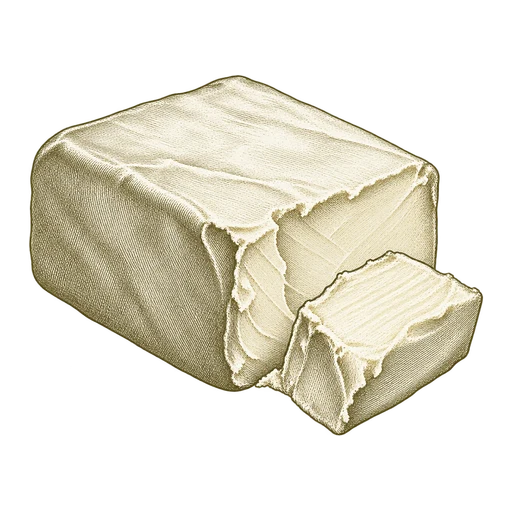
Butter is made by churning milk or cream and working the separated butterfat into a semisolid product. In the United States, butter contains at least 80% milkfat by weight; salt and other formulation differences matter to flavor and use.
02
Butteroil and anhydrous milkfat are concentrated milkfat products with different composition limits in USDA dairy-plant specifications. Butter powder is a formulated dried ingredient, often made with milk solids or other ingredients. These forms have different ingredient statements and cannot be treated as direct substitutes without considering the recipe.
Distinct concentration levels
Churned butter includes water and nonfat milk solids, while butteroil and anhydrous milkfat are much more concentrated in fat. Substituting a concentrated form changes the water and milk-solids contribution to a formulation.
Powder composition is formulation-specific
Butter powder is made from a prepared mixture before drying, and its carrier ingredients affect its composition. The ingredient statement and analysis are more informative than the product name alone.
Quality measures differ by form
Milkfat and moisture help characterize butterfat products; free fatty acids and peroxide value can also be relevant when specified. Butter grade addresses sensory and physical attributes, which are distinct from compositional analysis.
SPECIFICATIONS
Butter Products specifications.
Product characteristics to compare
Characteristic
Why it matters
Exact product identity
Distinguishes churned butter, butteroil, anhydrous milkfat and formulated powder.
Milkfat and moisture
Describe concentration and help determine how a product contributes fat and water to a formulation.
Salt and formulation
Salted, unsalted, cultured and other formulations can affect flavor and recipe performance.
Free fatty acids and peroxide value
Relevant quality measures for concentrated milkfat products when included in the product requirements.
Powder ingredients and physical behavior
Carrier ingredients, particle or flow needs, and dispersion requirements can affect use in a process.
Sensory grade, if required
A grade is a separate evaluation of attributes such as flavor, body, color and salt; it is not implied by product identity.
The USDA composition limits for butteroil and anhydrous milkfat apply to products under its dairy-plant specification program. Compare the offered lot’s specification and analysis with the requirements for the intended application.
Butter powder depends on its formulation
Butter powder is a dried, formulated ingredient, not ground butter. One documented manufacturing approach combines melted butter with nonfat milk solids, homogenizes the mixture and spray-dries it. Other formulations can use butteroil and additional food ingredients, so the product name alone does not reveal the ingredient statement, fat level or carrier.
That formulation affects how a powder behaves in a recipe. Dry bakery mixes and baked goods, including cakes and pie crusts, are documented uses for a particular butter-powder formulation. Do not assume every powder will perform as a direct shortening replacement: compare its composition and the application’s requirements.
Compare quality measures that fit the form
For churned butter, distinguish salted from unsalted and identify any cultured or other formulation requirements. Milkfat content and sensory quality matter, while a USDA grade, if relevant to the purchase, is a separate evaluation of flavor, body, color and salt—not something implied by the word butter.
For butteroil and anhydrous milkfat, compare the product identity and lot analysis on a consistent basis. Milkfat, moisture, free fatty acids and peroxide value help describe composition and quality. For powder, review the full ingredient statement alongside milkfat and moisture; particle and flow behavior, solubility or dispersibility also matter when the process depends on them. Numerical requirements should come from the buyer’s application and the offered product’s specification.
Plan temperature and storage around the product
Churned butter is temperature-sensitive during transit: USDA transport guidance gives desired transit temperatures of 39°F (4°C) for fresh butter and −10°F (−23°C) for frozen butter. These are transport recommendations, not shelf-life claims. The product’s fresh or frozen state and its manufacturer’s instructions should guide receiving and storage planning.
For butteroil, industry handling guidance emphasizes a cool, dry environment, closed packaging and stock rotation. Follow the instructions for the specific product and package rather than treating one storage condition as universal. For powder, obtain its storage directions and plan receiving and storage to protect the formulated ingredient as specified.
APPLICATIONS
Common uses for butter products.
01
Churned butter in food recipes
Butter contributes milkfat, flavor and a water-containing semisolid fat phase. Salted, unsalted, cultured and other formulations can affect the finished recipe, so distinguish them when specifying the ingredient.
02
Butteroil and anhydrous milkfat in food formulations
These concentrated forms supply milkfat where a formulation uses butter or a similar fat ingredient. Their lower water and nonfat milk-solids content changes the balance of a recipe, so substitution requires formulation adjustments.
03
Butter powder in bakery mixes
A documented butter-powder formulation has been used in dry bakery mixes and baked goods such as cakes and pie crusts. Powder recipes differ, so assess the offered ingredients and analysis for the specific mix or process rather than assuming all powders behave alike.
ORDERING & DELIVERY
Butter Products delivery.
POINT 01
Define the product and order
Name the exact form and formulation, quantity and unit, destination, and required timing. This matters because churned butter, concentrated milkfat and powder differ in composition and handling needs.
POINT 02
Plan shipment and receiving
State whether the butter is to be received fresh or frozen and describe the facility’s receiving and unloading constraints. For butteroil or powder, identify the package and receiving method needed at the destination so the shipment can be evaluated against the facility’s capabilities.
POINT 03
Protect product during storage
Butter is temperature-sensitive; USDA transport guidance distinguishes desired transit temperatures for fresh and frozen butter. For butteroil, use the manufacturer’s storage instructions and keep packaging closed in a cool, dry environment; follow the offered powder’s directions for its specific formulation.
Buttermilk powder is dried liquid buttermilk used to supply dairy solids and flavor in foods such as baked goods, sauces, beverages and desserts. Compare the product’s starting material, composition and functional properties to match it to the formulation and handling process.
Cheese is a broad ingredient category ranging from natural and processed products to cheese powder and trimmings. Define the variety, composition and physical form first; cheese powder serves dry food applications, while other forms require specifications matched to their intended process.
Cheese powder is a dried cheese or cheese-based ingredient used to add cheese flavor to coatings, dry mixes, sauces and other foods. Cheese style, added ingredients and drying method affect composition and performance, so compare the formulation and functional properties with the needs of your process.
Instant WPC 80 is a whey-derived protein powder designed to disperse more readily in mixing. Distinguish it from WPI 90, then compare protein basis, lecithin details and lot analysis for the intended food formulation.
It can refer to churned butter, concentrated products such as butteroil or anhydrous milkfat, and formulated butter powder. These are different ingredients; specify the intended form rather than treating the terms as interchangeable.
Is butter powder the same as ground butter?+
No. Butter powder is a dried formulation. It can be made with nonfat milk solids and may include other ingredients, so its composition and behavior depend on the particular formula. Review its ingredient statement and specification for the intended use.
What affects delivered pricing for bulk butter products?+
The exact product and formulation, quantity, packaging, destination and delivery timing all affect a delivered quote. Temperature requirements for churned butter and receiving constraints can also shape the shipment arrangement.
START WITH A CLEAR BRIEF
Ready to source butter products?
Send your volume, destination, and key specifications. A broker can follow up with availability and commercial terms.