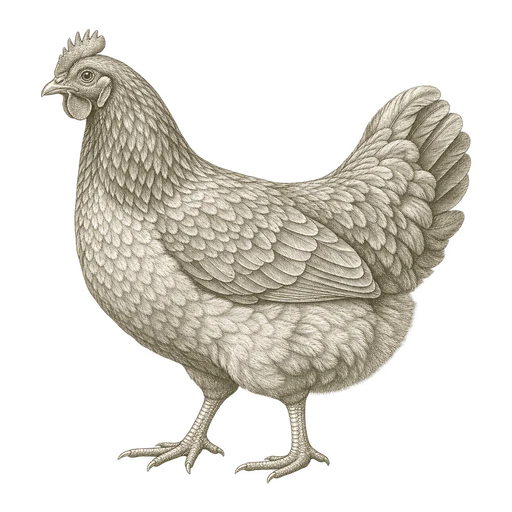
Rendered ingredient quality covers products that share fat as a major component but differ in composition and use. Poultry Fat is a bulk animal-fat ingredient, while Suet Cakes Ingredients can include fat combined with grains, seeds, nuts, fruit or other additions. Buyers should assess each against its intended use rather than treating the collection as one interchangeable product class.
Poultry fat is a rendered fat used as an energy ingredient in poultry feed. Compare source identity, quality analysis and handling instructions so the offered lot fits your formulation and receiving setup.
Suet cake ingredients combine fat with dry inclusions to make formed wild-bird feeder products. Compare the fat’s source and processing state, the blend’s ingredients, and the physical form needed for your production and receiving setup.
Rendered fat and formulated suet are not equivalent
Poultry Fat is a bulk animal-fat ingredient. Suet Cakes Ingredients describes a broader mixture that can combine animal fat with grains, seeds, nuts, fruit or other additions. A cake is not necessarily pure suet, so its ingredient list and declared fat source matter.
These products serve different buying needs: poultry fat can be evaluated as a fat ingredient for a defined formulation, while suet cakes are prepared wild-bird foods. A single rendered-fat quality measure cannot establish suitability for both.
Match quality checks to the intended use
For poultry fat, useful lot measures can include moisture, free fatty acids (FFA), insoluble impurities, color, odor and melting point. Iodine value indicates fatty-acid unsaturation. The relevant measures depend on the formulation and application; none alone confirms universal suitability.
For suet cakes, check the full ingredient declaration, fat source, format and handling directions. For either member, clarify product identity, intended use, analytical methods and results, and any additives or antioxidants. Agree on what documentation accompanies each shipment rather than assuming a certificate of analysis is automatic.
Keep specifications specific to product and use
Feed-ingredient definitions, human-food standards and rules for particular fats are not interchangeable. For example, a cattle-tallow restriction should not be treated as a general poultry-fat limit. Confirm that the specification and any regulatory or species restrictions apply to the actual product and intended use.
Common questions.
Is poultry fat the same product as suet-cake ingredients?+
No. Poultry fat is a bulk fat ingredient; suet cakes can be mixtures of fat and dry additions such as grains, seeds or fruit.
Which analyses are useful when buying poultry fat?+
Depending on the application, review moisture, FFA, insoluble impurities, and potentially iodine value, color, odor or melting point. Use the measures relevant to the product specification and formulation.
Does an animal-fat specification automatically apply to poultry fat?+
No. Check that the definition or standard names the product and applies to its intended use. Requirements for tallow or human-food fats should not be assumed to govern poultry fat.
What should buyers check for suet-cake ingredients?+
Confirm the declared fat source, complete ingredient list, intended feeding context, cake format and handling directions.
Rendered ingredient quality · BUYER INSIGHTS
Go deeper before you source.
Focused guides to the specification, application, and delivery questions behind this ingredient.