Independent sourcing. Better connections.Commercial buyers · Bulk ingredients
topic

Pulse ingredient specifications

Pulse ingredient specifications cover distinct crops and product forms, not one shared grade. This topic brings together faba beans, green lentils, lentils and yellow peas, with guidance on identifying the material, choosing crop- and form-specific quality criteria, and setting analytical requirements for its intended use.

6 ingredients6 published Insights
EXPLORE THE COLLECTION

Pulse ingredient specifications ingredients

Pulses

Faba Beans

Faba beans are grain-legume seeds used in food and feed, supplied in forms ranging from whole or split seed to milled and more highly processed ingredients. Choose by intended use and form, then compare the relevant lot analysis and handling needs.

Explore ingredient
Pulses

Green Lentil Flour

Green lentil flour is milled from green lentil seed for food product development, including bakery, pasta, snack and other formulations. Compare whole-seed or dehulled status, heat treatment and particle size because these differences can affect color and processing behavior.

Explore ingredient
Pulses

Green Lentils

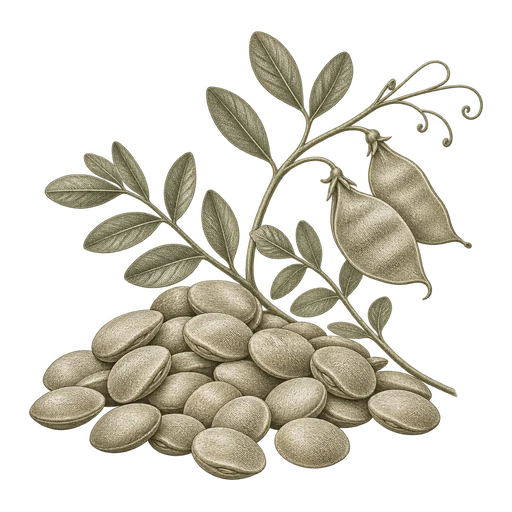
Green lentils are dry pulse seeds sold in forms such as whole, split, dehulled and flour. Compare the processing form, grade documentation, color, moisture and cleanliness against the needs of your food process or reviewed feed formulation.

Explore ingredient
Other Seeds & Grains

Lentils

Lentils are pulse seeds sold as whole, split or dehulled product for food processing and, with lot-specific evaluation, some feed uses. Specify the form, type and quality measures that match your application.

Explore ingredient
Pulses

Pea Flour

Pea flour is milled from dried peas and used in foods including baked goods, pasta, snacks, batters and sauces. Whole-seed, dehulled, fractionated and pregelatinized forms differ in composition and function, so compare processing details and application-relevant specifications.

Explore ingredient
Pulses

Yellow Peas

Yellow peas are dry field peas sold whole, split or milled into flour for food ingredients and feed. Choose the form for the receiving process, and compare lot quality against the intended use.

Explore ingredient

Start with crop identity and product form

Faba beans, green lentils, lentils and yellow peas are distinct crops, not interchangeable grades of one ingredient. Green lentils are a type of lentil; the name alone does not define a separate grade. For lentils, buyers can specify the required type, size or color rather than assuming that a general lentil description captures those needs.

The crop name also does not establish processing. Confirm whether the material is whole, split, dehulled, milled into flour or fractionated into a protein-, starch- or fiber-rich ingredient. These forms differ in composition and functionality, so a whole-seed specification is not suitable for defining a processed ingredient.

Match quality criteria to the intended use

For whole or split pulses, define the physical traits that matter to receiving and processing: moisture, foreign material, damaged seed, size distribution, color and splits or breakage. Choose crop-specific tolerances; lentil grading references are not universal standards for faba beans or yellow peas.

For flour or fractionated ingredients, specify the form and intended function, then set analytical criteria with units, basis and test methods. Protein, moisture, ash, fiber, starch and particle size may be relevant depending on the material and use. Human-food, feed and pet-food purchases should identify their intended-use requirements separately.

Make the specification usable in a contract

A useful purchase specification identifies the crop and type, product form, intended use, acceptance limits and test methods. For a lot, review analytical results against the agreed limits and clarify whether the certificate of analysis represents that lot. Also define the required delivery form and packaging or bulk conditions; those terms affect how the product can be received and handled.

Common questions.

Are green lentils a separate specification category from lentils?+

Green lentils are a type of lentil, not automatically a separate grade. Specify the required type and relevant size, color or processing characteristics.

Does “pulse ingredient” mean whole seed?+

No. It can refer to whole or split seed, dehulled material, flour or a fractionated ingredient. Confirm the form because processing changes composition and functionality.

Can one specification cover all four crops?+

A single specification should not be assumed to fit faba beans, green lentils, lentils and yellow peas. Set crop- and form-specific criteria for the intended use.

Which analyses matter for pulse flour or fractions?+

Select tests according to the ingredient and application. Protein, moisture, ash, fiber, starch and particle size can be relevant; state units, analytical basis, methods and acceptance limits.

Pulse ingredient specifications · BUYER INSIGHTS

Go deeper before you source.

Focused guides to the specification, application, and delivery questions behind this ingredient.

FIELD GUIDE01Pulse ingredient specifications
Buyer’s guide

Yellow peas: moisture, receiving and storage planning

Plan bulk yellow pea receipt around the form, unloading method and capacity of your facility. Assess incoming moisture and protect stored peas from water and contamination; drying and storage decisions depend on grain condition and local conditions.

Read this Insight
FIELD GUIDE02Pulse ingredient specifications
Buyer’s guide

Yellow pea flour versus whole peas in food formulation

Whole yellow peas, split peas and pea flour enter food production in different physical forms. Match the form to the next process, plant equipment and formulation—and treat protein-rich pea fractions as separate ingredients.

Read this Insight
FIELD GUIDE03Pulse ingredient specifications
Buyer’s guide

How to compare whole yellow peas by grade and condition

Compare whole yellow peas against the use they must serve. Moisture, kernel integrity, cleanliness, damage, color, heating and identity each inform a different quality decision—and a grade reference does not replace a clear contract specification.

Read this Insight
FIELD GUIDE04Pulse ingredient specifications
Buyer’s guide

Pea flour bulk orders: packaging, receiving and storage

Plan bulk pea flour orders around site capacity: define quantity, destination and timing, match packaging to unloading, and prepare dry, protected storage before delivery.

Read this Insight
FIELD GUIDE05Pulse ingredient specifications
Buyer’s guide

Using pea flour in pasta: formulation and process questions

Pea flour can change pasta dough hydration and structure, so formulation decisions depend on the flour’s physical characteristics and the complete recipe and process. Learn what to review and test before scaling up.

Read this Insight
FIELD GUIDE06Pulse ingredient specifications
Buyer's guide

Pea flour specifications: comparing particle size and function

Compare pea flour by what it is made from, how it was processed and milled, and whether its analysis and functional tests match your process. Particle-size distribution, protein and moisture are useful only when their measurement methods and reporting bases are understood.

Read this Insight