Independent sourcing. Better connections.Commercial buyers · Bulk ingredients
topic

Livestock feed

This focused livestock-feed collection features Austrian Winter Peas, a forage-pea variety. Buyers should first distinguish grain, whole-crop forage, hay, silage and pea straw: each is a different material, with different analysis and handling considerations.

2 ingredients6 published Insights
EXPLORE THE COLLECTION

Livestock feed ingredients

Pulses

Austrian Winter Peas

Austrian winter peas are a field pea type supplied for uses including cover cropping, forage and livestock feed. Specify whether you need planting seed, dry grain, hay or silage, since each form serves a different purpose and has different quality considerations.

Explore ingredient
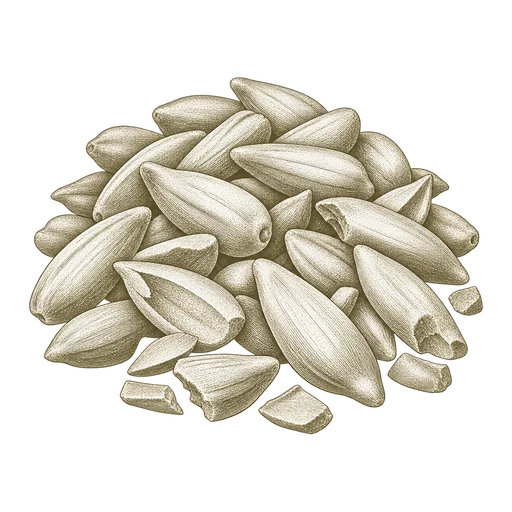
Sunflower Seeds

Premium Blend Chips

Premium Blend Chips is a product name, not a standardized ingredient identity. Establish its constituents, intended use, physical form, and lot analysis before evaluating feed applications or arranging a bulk shipment.

Explore ingredient

A focused collection, not a complete feed range

This collection currently includes Austrian Winter Peas, a forage-pea variety of Pisum sativum. It is a specific example of a livestock-feed ingredient, not a broad catalogue of grains, meals, roughages and supplements. Its presence here does not indicate current availability.

The name alone does not tell a buyer what form is offered. Peas may be supplied as seed or grain, harvested as whole-crop forage, conserved as hay or silage, or left as straw and haulms after grain harvest. Those forms are not interchangeable: crop maturity and processing affect how their feeding value should be understood.

Distinguish forage from grain and residue

Whole-crop pea forage can be used fresh or conserved as silage; pea straw is the dry residue after harvesting grain. Grain-pea nutrient figures should not be used as estimates for forage or straw. Even broad published values for pea straw describe a different material and are not a specification for an Austrian Winter Pea lot.

Forage maturity matters. Later harvest can reduce digestibility, so crop stage is useful context when comparing forage offers. Silage also has different preservation and handling needs from dry straw. The relevant form and analysis should guide evaluation, rather than the crop name alone.

Compare offers using form and analysis

Before comparing bulk offers, confirm whether the material is grain, whole-crop forage, hay, silage or straw, and request a current lot analysis with its reporting basis. For forage, measures such as dry matter, crude protein, fiber and energy can help a livestock nutritionist assess fit for the intended animals and ration.

Keep crop or harvest details, physical condition, delivery form and storage requirements in the comparison. An analysis supports ration decisions; it does not by itself establish an inclusion rate. Suitability depends on the ingredient form, animal group and the rest of the ration.

Common questions.

Does Austrian Winter Peas mean grain or forage?+

Not necessarily. It identifies a forage-pea variety, but the offered material could be seed, whole-crop forage or post-harvest straw. Confirm the actual product form.

Can grain-pea nutrition figures be applied to pea forage?+

No. Grain, whole-crop forage and straw are distinct feed materials. Use analysis for the specific form being offered.

What analysis is useful for comparing pea forage?+

Request a current lot analysis and its basis. Dry matter, crude protein, fiber measures and an energy measure can help a nutritionist evaluate forage for the intended ration.

Does a feed analysis set the inclusion rate?+

No. Inclusion depends on the ingredient form, animal species and production stage, and the composition of the full ration.

Livestock feed · BUYER INSIGHTS

Go deeper before you source.

Focused guides to the specification, application, and delivery questions behind this ingredient.

FIELD GUIDE01Livestock feed
Buyer’s guide

Premium Blend Chips: receiving and storage details to establish

Plan a Premium Blend Chips bulk order around a clear material description, an appropriate receiving method, and written storage guidance—not assumptions about form or packaging.

Read this Insight
FIELD GUIDE02Livestock feed
Buyer’s guide

Premium Blend Chips in livestock rations: questions to resolve

Before considering Premium Blend Chips in a livestock ration, establish what the product is, verify its stated use, and have a qualified nutritionist assess the lot analysis in the context of the animal class and complete ration.

Read this Insight
FIELD GUIDE03Livestock feed
Buyer’s guide

Premium Blend Chips: identifying useful analysis fields

A useful Premium Blend Chips feed analysis begins with a clear product and lot identity, then states each value’s unit and reporting basis. Learn how to interpret core fields without mistaking general bakery-by-product context for product-specific results.

Read this Insight
FIELD GUIDE04Livestock feed
Buyer’s guide

Austrian winter pea storage and bulk delivery planning

Plan an Austrian winter pea grain order by aligning product form, quantity, delivery details and receiving capacity with storage conditions for the specific lot.

Read this Insight
FIELD GUIDE05Livestock feed
Buyer’s guide

Austrian winter peas as whole, rolled or ground feed

Whole, rolled and ground Austrian winter peas differ in particle size and handling. Compare the form, processing details and lot analysis with your feed system and species-specific ration needs.

Read this Insight
FIELD GUIDE06Livestock feed
Buyer’s guide

How to compare Austrian winter pea grain quality

A practical framework for comparing Austrian winter pea grain identity, condition and analysis results, with guidance on measurement basis and lot-specific characteristics.

Read this Insight