Independent sourcing. Better connections.Commercial buyers · Bulk ingredients
tag

Sunflower

Compare sunflower seeds, hearts and meal by physical form, processing and intended use. Bulk buyers should confirm product identity and review lot-specific details relevant to their application.

3 ingredients6 published Insights
EXPLORE THE COLLECTION

Sunflower ingredients

Feed Ingredients

Sunflower Meal

Sunflower meal is a sunflower-seed oil-extraction residue used as a protein ingredient in animal feed. Compare dehulling, extraction method, physical form and lot analysis to determine how a bulk offer fits your feed formulation and receiving setup.

Explore ingredient
Seeds

Sunflower Seeds

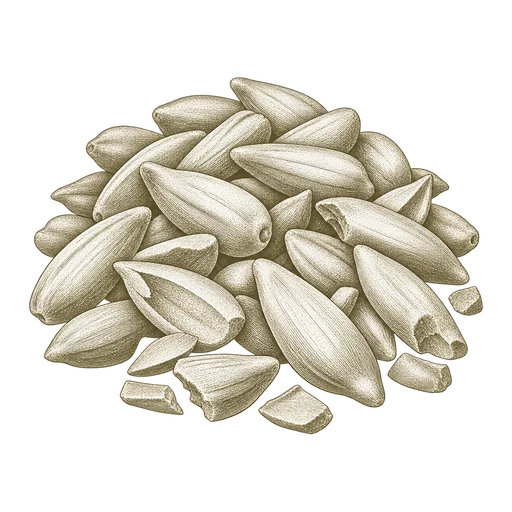
Sunflower seeds are sourced as oil-type or confectionery seed, in-shell seed or kernels, with meal available as a distinct oil-processing co-product. Match the form and quality measures to the intended food, oil, feed, or birdseed use.

Explore ingredient

Sunflower ingredients differ by form and processing

Sunflower is a crop-based collection, not one uniform ingredient. Sunflower Seeds may be sold in-shell or as kernels, while Sunflower Hearts generally refers to kernels with the hull removed. Sunflower Meal is a different product: ground flakes left after most of the oil has been extracted mechanically or with solvent. These forms are not interchangeable, so start with the ingredient’s physical form and intended use.

Choose the product for its intended market

Seed types serve different markets, including oil production and larger-seeded confectionery or bird-food uses. For seeds or hearts, establish whether the product is in-shell or dehulled and whether it is intended for feed or human food. The name alone does not establish food-grade status, food-safety treatment or ready-to-eat suitability.

Meal is primarily a feed ingredient, and its feed value changes with hull retention and oil-extraction method. Compare meal using a lot-specific analysis rather than assuming a standard protein or fiber level. Its suitability also depends on the animal species and the overall ration.

Compare the details that affect a bulk purchase

For seed, ask for the offered type and form, intended use, and applicable grading details such as foreign material or damaged kernels. For hearts, clarify the degree of dehulling and request documentation relevant to the intended application. For meal, review crude protein, crude fiber, residual fat, moisture, hull content and extraction method together. Confirm the analysis basis and lot-specific terms before comparing offers; a grading measure or typical composition is not a substitute for end-use requirements.

Common questions.

Are sunflower hearts and sunflower seeds the same product?+

Not necessarily. Seeds may be in-shell or kernel form; hearts generally refers to kernels with the hull removed. Confirm the actual offered form.

Does a sunflower seed or hearts label mean the product is ready to eat?+

No. The label does not establish food-grade status, safety treatment or ready-to-eat suitability. Request documentation for the intended human-food use.

Why can sunflower meal analyses differ?+

Hull retention and oil-extraction method affect protein, fiber and residual fat. Compare recent lot analyses and processing details rather than relying on one assumed value.

Can sunflower meal be selected by protein percentage alone?+

No. Consider fiber, residual fat, hull content and the animal’s ration needs as well as protein; meal suitability depends on species and formulation.

Sunflower · BUYER INSIGHTS

Go deeper before you source.

Focused guides to the specification, application, and delivery questions behind this ingredient.

FIELD GUIDE01Sunflower
Buyer’s guide

Planning storage for bulk sunflower seed deliveries

Plan bulk sunflower seed receiving and storage around the offered form, lot condition and capabilities of your facility—not a one-size-fits-all moisture target.

Read this Insight
FIELD GUIDE02Sunflower
Buyer’s guide

What to specify when sourcing sunflower kernels for seed butter

A practical guide to specifying sunflower kernels for seed butter, from dehulled form and cleanliness to sensory expectations and food-safety testing.

Read this Insight
FIELD GUIDE03Sunflower
Buyer’s guide

How to compare oil-type sunflower seed grading measures

Understand what test weight, damage measures and dehulled-seed percentage describe in oil-type sunflower grading—and why these results do not establish food-ready or confectionery-kernel quality.

Read this Insight
FIELD GUIDE04Sunflower
Buyer’s guide

Planning bulk sunflower meal receiving and storage

Plan bulk sunflower meal receipt around the offered form, the facility’s unloading and conveying equipment, and a clean, dry storage destination. Include the delivery location and receiving constraints in your sourcing request.

Read this Insight
FIELD GUIDE05Sunflower
Buyer’s guide

Sunflower meal in poultry and swine diets: what to evaluate

A practical guide to evaluating sunflower meal for poultry and swine formulations, with attention to fiber, lysine, processing and lot-specific analysis.

Read this Insight
FIELD GUIDE06Sunflower
Buyer’s guide

How to compare sunflower meal analysis and hull content

Compare sunflower meal lots by reading protein, fiber, residual oil and moisture together. Hull content and as-fed versus dry-matter reporting can change how those results should be interpreted.

Read this Insight