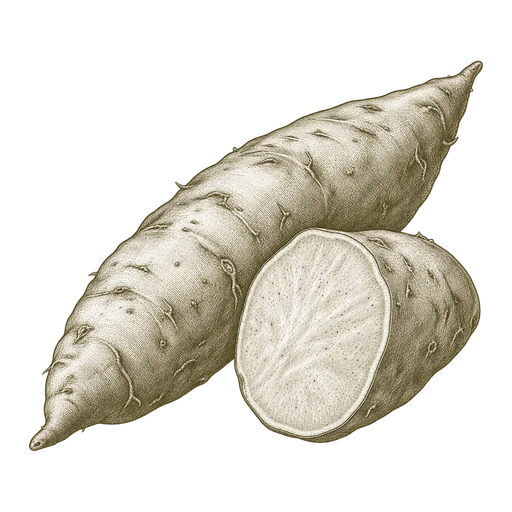
Root crops are plants cultivated for edible underground storage organs. This collection currently includes Sweet Potato as its only supplied member, so it is a focused entry rather than a comparison of several root crops. For bulk buyers, the key distinction is the form being purchased: sweet potato may be handled as a fresh root or processed into dried pieces, flour or meal, flakes, powder, or purée. Those forms differ in moisture, particle size, processing history, and handling needs. Start by
Sweet potato bulk materials include roots, vines and processing co-products. Identify the plant part, form and processing method first, then compare composition and handling needs for the intended food or feed use.
Root crops are plants grown for edible underground storage organs. This collection currently has one supplied member, Sweet Potato, so it offers a focused starting point rather than a comparison across root-crop ingredients. The ingredient name alone does not specify whether the material is a fresh root or a processed ingredient.
Bulk sweet potato can be supplied in forms such as fresh roots, dried pieces, flour or meal, flakes, powder, and purée. These forms differ in moisture, particle size, processing, and handling needs. Choose by the material your process can receive and use, not by crop name alone.
Match the form to its intended use
Sweet potato flour, flakes, and powders are used in processed foods including bakery products, soups, noodles, snacks, and cereals. Their behavior depends on details such as flesh variety, peeling, cooking or blanching, drying, and milling. Confirm these details against the requirements of the intended recipe; an application example does not establish that a particular lot is suitable for food use.
Dried sweet potato root meal has also been studied as an energy ingredient in broiler diets. That evidence does not set a general inclusion rate or establish suitability for other animal species. Feed buyers should evaluate the actual material and ration with a qualified nutritionist.
Compare specifications and handling
For processed forms, clarify whether the ingredient includes peel, whether it was cooked or blanched, and whether additives or anti-browning treatments were used. Compare moisture, particle size, color, and relevant composition or microbial results, and check whether analytical values are reported as-fed or on a dry-matter basis.
Fresh-root handling requirements are not interchangeable with those for dried ingredients. Confirm packaging and storage instructions for the form being purchased. For any lot, align the intended market and use with its documentation, specification, and delivered condition.
Common questions.
Does Sweet Potato identify a particular bulk form?+
No. Confirm whether the material is fresh root, dried pieces, flour or meal, flakes, powder, or purée.
What processing details should I compare?+
Ask about peeling, cooking or blanching, drying and milling methods, and any additives or anti-browning treatment.
Can dried sweet potato meal replace maize in animal feed?+
It has been studied as a partial maize replacement in broiler diets, but study results are not a universal feeding recommendation. Evaluate the specific material and ration with a qualified nutritionist.
Can I use fresh-root storage guidance for dried sweet potato?+
No. Storage needs depend on the supplied form and packaging; confirm instructions for the specific product.
Root crops · BUYER INSIGHTS
Go deeper before you source.
Focused guides to the specification, application, and delivery questions behind this ingredient.