Independent sourcing. Better connections.Commercial buyers · Bulk ingredients
tag

Nut ingredients

Browse bulk nut ingredients across cashew, filbert, peanut and walnut types, including whole, split and piece forms. Compare lot-specific form, size, processing, allergen and storage details before purchasing.

6 ingredients6 published Insights
EXPLORE THE COLLECTION

Nut ingredients ingredients

Tree Nuts

Cashew Pieces

Cashew pieces are broken edible kernels used as a cashew ingredient when whole-kernel appearance is unnecessary. Compare piece size, processing state and quality requirements to match the product with your food formulation.

Explore ingredient
Tree Nuts

Cashews

Bulk cashews are sourced as edible kernels in forms such as whole or broken, raw or roasted. Specify the exact product form and quality measures so the shipment can be compared with your food application and receiving requirements.

Explore ingredient
Tree Nuts

Filberts

Filberts, also called hazelnuts, are sourced as natural or roasted kernels, ground meal and distinct processing by-products. Identify the exact form and compare relevant quality measures, particle size and handling needs for your food or defined feed application.

Explore ingredient
Tree Nuts

Walnut Pieces

Walnut pieces are broken edible walnut kernels used where a fragment format fits the finished food. Confirm species, kernel-versus-meal identity, piece size and lot condition, then plan moisture-protected, cool storage.

Explore ingredient
Tree Nuts

Walnuts

Bulk walnuts can mean shelled kernels, pieces, ground kernel or oil-extraction meal. Identify the species, form and intended use first, then compare the quality measures and handling needs relevant to that product.

Explore ingredient

A mix of nut species and forms

This collection brings together Cashew Pieces, Cashews, Filberts, Peanut Splits, Walnut Pieces and Walnuts. It is a browse category, not one shared product specification: species and physical form differ across the listings. Filberts is another name for hazelnuts.

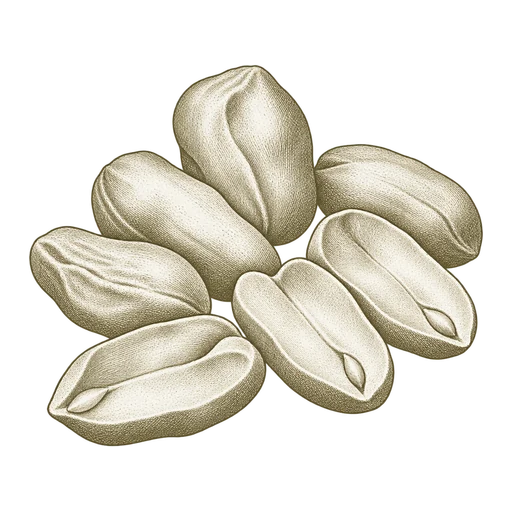
Pieces and splits describe forms, not a guaranteed grade or precise size. A split is a separated half of a kernel; “pieces” can cover different size distributions. For bulk purchasing, match the stated cut and size tolerances to your process and finished-product requirements rather than relying on the product name alone.

Confirm the details behind the product name

Ask for the product identity, form, size distribution and allowable off-size material. Also confirm whether the nuts are raw, roasted, blanched or otherwise processed, and whether coatings or additives are present. These details are not established by membership in this collection.

For walnuts, a published grade standard can provide shared language for quality and condition, but the existence of a standard does not mean a particular lot has been inspected or meets a grade. Review the actual lot specification and supporting quality and safety documents.

Plan for allergens and storage

Peanuts are distinct from tree nuts for allergen communication. Confirm the product’s allergen statement and cross-contact controls; do not infer them from the category name. Check that packaging and handling documentation fit your intended use.

Nut oils can oxidize and develop off flavors. For hazelnuts in particular, chopped or broken forms have more exposed surface and can lose quality faster; storage history and packaging therefore matter. Obtain product-specific storage recommendations and shelf-life information instead of applying one storage assumption to every nut or cut.

Common questions.

Are filberts different from hazelnuts?+

Filbert is another name for hazelnut. Confirm the species and product identity on the supplier’s specification.

Do “pieces” or “splits” specify size or grade?+

No. They describe form, but do not establish a precise size distribution, quality grade or tolerance. Request those details for the lot.

Are peanuts and tree nuts interchangeable for allergen labeling?+

No. Peanuts and tree nuts are distinct allergen categories. Verify the product’s allergen statement and cross-contact controls.

What should I verify before buying these in bulk?+

Confirm identity, cut and size tolerances, processing state, allergen information, packaging, storage recommendations and lot-specific quality and safety documentation.

Nut ingredients · BUYER INSIGHTS

Go deeper before you source.

Focused guides to the specification, application, and delivery questions behind this ingredient.

FIELD GUIDE01Nut ingredients
Buyer’s guide

Planning bulk walnut receiving, packaging and storage

Plan a bulk walnut delivery around its actual form: shelled kernels need protection from breakage, while oil-extraction meal requires handling matched to its particle form. Align packaging and unloading with your facility, then limit moisture and oxygen exposure in storage.

Read this Insight
FIELD GUIDE02Nut ingredients
Buyer’s guide

Questions to assess walnut oil meal in broiler feed

Evaluate walnut oil meal for broilers by establishing whether it is genuine oil-extraction residue, reviewing lot-specific proximate analysis on a clear reporting basis, and separating general product identity from evidence that supports a broiler formulation decision.

Read this Insight
FIELD GUIDE03Nut ingredients
Buyer’s guide

How to compare bulk walnut kernel quality specifications

Compare bulk walnut kernel offers by product identity, cut, appearance, cleanliness, dryness, damage, and freshness—and verify that the inspection basis applies to the offered lot.

Read this Insight
FIELD GUIDE04Nut ingredients
Buyer’s guide

Planning bulk receiving and storage for walnut pieces

Plan bulk walnut pieces receiving around packaging compatibility, clean and dry unloading, moisture protection and cool storage. The 0–10°C (32–50°F) range is a general walnut reference, not a lot-specific shelf-life promise.

Read this Insight
FIELD GUIDE05Nut ingredients
Buyer’s guide

Choosing walnut pieces for bakery and confectionery formulations

Choose walnut pieces by the visibility and distribution your formulation needs. Larger fragments stand out; smaller pieces create a finer inclusion. Define the required physical format and verify the offered lot’s food-use documentation.

Read this Insight
FIELD GUIDE06Nut ingredients
Buyer’s guide

How walnut pieces and small pieces are defined by sieve size

Understand how voluntary U.S. walnut piece-size terms use round-opening sieves, why “pieces” and “small pieces” are not grade guarantees, and what else to specify when comparing bulk lots.

Read this Insight