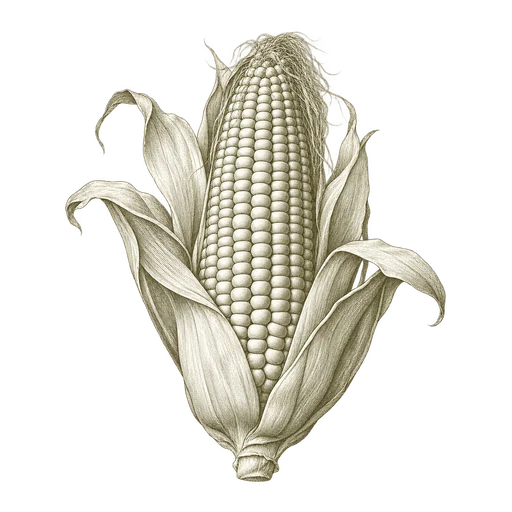
Cracked Corn
Cracked corn is mechanically broken corn grain used as an energy ingredient in livestock feed. Compare particle size, fines and lot analysis with the ration and receiving system before arranging a bulk order.
Explore ingredientA focused overview of the corn grain collection, whose supplied member is Cracked Corn, with guidance on distinguishing forms and assessing bulk lots.
Cracked corn is mechanically broken corn grain used as an energy ingredient in livestock feed. Compare particle size, fines and lot analysis with the ration and receiving system before arranging a bulk order.
Explore ingredientCorn, also called maize, is a cereal grain used in animal feed and in food and industrial processing. This collection currently has one supplied member: Cracked Corn. The collection describes a related ingredient, not every form of corn or a guarantee of availability.
Cracked corn consists of kernels broken into smaller pieces. The name identifies physical form; it does not by itself establish a nutrient profile, cleanliness grade, or suitability for a particular use.
Cracked corn is different from corn meal, which is milled, and from corn-processing coproducts such as corn gluten feed. These forms are not interchangeable simply because they originate from corn. Confirm the form and intended use before comparing offers.
Corn is used in poultry diets, but that general use does not establish that every cracked-corn lot suits every species or ration. Treat cracked corn as an ingredient to evaluate within a complete formulation, rather than assuming it is a complete feed.
For a bulk purchase, clarify the particle-size range or screen profile if it matters to your equipment or formulation. Review current lot documentation for moisture and nutrient measures relevant to your use, and ask about foreign material, visible mold, insects, and storage history. Broken kernels can be more prone to mold growth than intact grain, so appearance alone is not a substitute for appropriate testing.
Ask whether mycotoxin testing is available and which analytes and methods it covers; select testing in light of the intended species and use. Corn-associated fumonisins are a particular concern for horses. Confirm lot-specific quality data and commercial terms for the offer you are evaluating.
No. Cracked corn is broken kernels; corn meal is a milled form. Corn-processing coproducts are distinct products as well.
Do not assume so. Its suitability depends on species and ration formulation; have a qualified feed formulator assess the complete diet.
Confirm form and particle size, relevant lot-level analysis, foreign-material information, available mycotoxin testing, and storage history.
No. General use does not verify a particular cracked-corn lot. Check its documentation against the intended species and formulation.
Focused guides to the specification, application, and delivery questions behind this ingredient.
Plan bulk cracked corn receiving around the particle profile your equipment can handle, then protect the ingredient with clean, dry, pest-conscious storage.
Read this InsightCracked corn supplies starch-rich grain energy, but its role in a beef cattle ration depends on the cattle, forage, other ingredients and feeding management. Understand when processing matters and what to review with a nutritionist.
Read this InsightCracked corn is not defined by a uniform particle size. Compare screen distributions and fines separately, and keep moisture, test weight and nutrient-analysis basis distinct when evaluating a lot.
Read this Insight